

Audio By Carbonatix
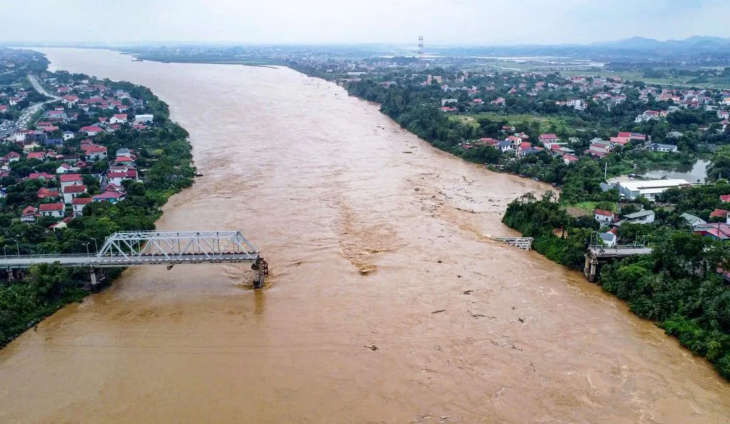
A busy bridge in northern Vietnam has collapsed in the wake of super typhoon Yagi, plunging 10 cars and two scooters into the Red River, Deputy Prime Minister Ho Duc Phoc said on Monday.
At least three people have so far been rescued and 13 are missing after the Phong Chau bridge in Phu Tho province collapsed, Mr Ho added. It is unclear if there have been any deaths.
Part of the 375-metre (1230 feet) structure is still standing, and the military has been instructed to build a pontoon bridge as soon as possible.
Yagi, Asia's most powerful storm this year, has killed more than 60 people since it made landfall in Vietnam on Saturday, bringing strong winds of up to 203 km/h (126 mph).
In the days since, the storm has wreaked havoc in northern Vietnam.
At least 44 victims were killed by landslides and flash floods, the country's Ministry of Agriculture and Rural Development said on Monday - a 68-year-old woman, a one-year-old boy and a newborn baby among them.
More than 240 people have been injured, while some 1.5 million are still without power.
The typhoon also tore roofs from buildings and uprooted trees.
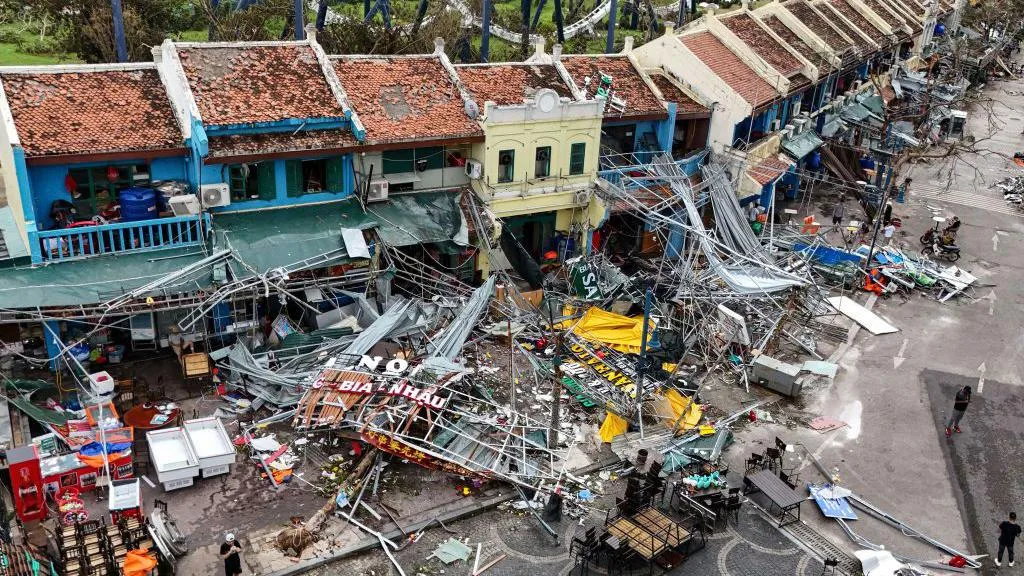
Although it has weakened into a tropical depression, authorities have warned of more flooding and landslides as the storm moves westwards.
In the Yen Bai province, flood waters reached a metre (three feet) high on Monday, with 2,400 families moved to higher ground as the water levels rose, AFP news agency reported.
Yagi also sunk and swept adrift dozens of fishing boats. On Sunday, search and rescue personnel found 27 people drifting at sea after a dozen fishermen were reported missing.
Nearly 50,000 people have been evacuated from coastal towns in Vietnam, with authorities issuing a warning to remain indoors.
Schools were temporarily closed in 12 northern provinces, including Hanoi.
Before hitting Vietnam, Yagi left 24 people dead across southern China and the Philippines.
Scientists say typhoons and hurricanes are becoming stronger, more frequent and staying over land for longer due to climate change. Warmer ocean waters mean storms pick up more energy, which leads to higher wind speeds.
A warmer atmosphere also holds more moisture, which can lead to more intense rainfall.
Latest Stories
-
GCAA backs more domestic airlines to drive down airfares
5 minutes -
SHC launches nationwide audit, gives occupants 21 days to regularise property interests
16 minutes -
Manhyia South MP describes EOCO arrest attempt as ‘provocation’
21 minutes -
Appiagyei appeals to Lordina Mahama, Jane Naana over detention of Ghana Jollof accused
26 minutes -
New regional hospitals will bring specialist care closer to Oti, Savannah and Western North – Health Ministry
31 minutes -
Gender Minister delivers Mahama’s address at launch of State of Africa’s Children Report
36 minutes -
Lambussie NCCE engages stakeholders on rule of law, anti-corruption fight
41 minutes -
Lands Minister cuts sod for Phase Three of Appiatse Redevelopment Project
46 minutes -
GNFS swift response saves three bedrooms from fire at Amasaman
52 minutes -
Hate speech, vitriol, threats, and inciting comments: Can we stop it already?
57 minutes -
African states must strengthen safeguards against AI-driven electoral manipulation – Kwasi Prempeh
1 hour -
Volta Economic Forum shifts from talk to real investments
1 hour -
Investing in jobs, livelihoods critical to sustaining peace – Omanhene
1 hour -
Fisheries Minister rallies scientists to develop solutions for sustainable Blue Economy
1 hour -
197% jump in drug arrests proof of stronger enforcement under NDC – Majority
1 hour