


Audio By Carbonatix
Online has for the first time overtaken television in an annual survey of the UK's news habits.
Research by the broadcast regulator Ofcom reveals 71% of the population said they used online services for news versus 70% for TV news bulletins.
Over the last year, online sources grew from 68% to 71%, while social media also saw a rise from 47% to 52%. For people aged between 16 and 24, the number saying they use social media for news was 82%
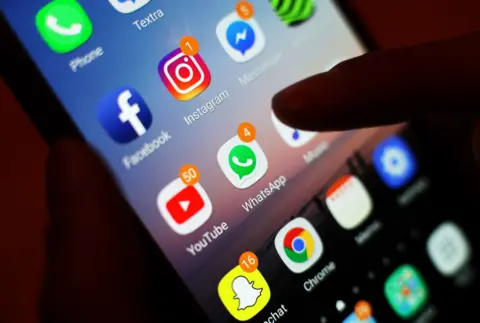
The most commonly mentioned online news sources were Facebook, YouTube and Instagram.
Meta which owns Facebook, Instagram and WhatsApp, was the second biggest news source in the survey with 40% saying they used it for news.
The BBC remains the biggest single source, with 68% of people saying they turn to it for news. However, this is a survey of what people say they do - analysis based on actual usage can paint a different picture, showing for instance that BBC News reaches 75% of the UK population on an average week.
The biggest falls in the survey were for traditional news providers. Newspapers and their websites saw the number of people saying they used them drop from 39% to 34%. TV news fell from 75% to 70%. BBC News online also fell from 22% to 18%.
The survey, however, does not measure usage of specific sites. The BBC (1.2 billion visits) and CNN (710 million visits) are the two largest news websites in the world, according to the UK Press Gazette's most recent monthly survey. Both saw significant increases in traffic over the last year.

The source that saw the biggest increase is YouTube. 19% of those surveyed say they used it for news. In 2023, it was just 7%. However, last year YouTube was not mentioned by name and was just referred to as "other online", which Ofcom says probably accounts for the large rise.
Other sources such as the Guardian (10%) and the Daily Mail (14%), which have both a large online presence as well as a print newspaper, had similar figures to last year.
The largest UK newspaper website was the Guardian with 365 million visits in July 2024.
However, traditional newspapers saw a big decline, with even those over 55 saying they read a print newspaper dropping from 38% to 32% in just a year.
Nevertheless, the most mentioned single news source in the survey remains BBC One. TV as a whole maybe in decline but 43% of those surveyed said they turned to BBC One for news, 13% ahead of its nearest rivals, ITV and Facebook, both on 30%.
Latest Stories
-
Ablakwa seeks Russian support for Africa-led fight against Sahel extremism
7 minutes -
Host mining communities are partners in development, not obstacles – GJA President
9 minutes -
Ghana to sign 5 new petroleum agreements soon – Energy Minister
9 minutes -
GJA President urges Ghana to weigh environmental and social costs alongside mining revenues
21 minutes -
Irresponsible mining: The land is not your own – Prof Mike Oquaye cautions
29 minutes -
62 Ghanaians killed, 15 missing in Russia-Ukraine war – Ablakwa
29 minutes -
GJA President urges responsible, sustainable mining
31 minutes -
Ghana must take charge of its mineral resources – Prof. Mike Oquaye
37 minutes -
KickedIn uses technology to connect African football talent with global opportunities
38 minutes -
GoldBod did not record GH¢22bn loss; audited accounts show GH¢5.44bn surplus – Institute of Fiscal Policy Governance
42 minutes -
Mining comes with responsibility to future generations – Ga Mantse
44 minutes -
Ga Mantse calls for measurable CSR and stronger local participation in mining communities
51 minutes -
Ga Mantse urges mining industry to protect communities beyond the life of mines
1 hour -
Empowerher in Upper West region
1 hour -
Ga Mantse challenges mining stakeholders to consider long-term impact of Ghana’s mineral wealth
2 hours