

Audio By Carbonatix
African Coalition for Epidemic Research, Response, and Training (ALERRT) is urging researchers to prioritize transforming research outcomes into actionable public health policies for pandemic preparedness.
The abrupt outbreak of COVID-19, Mpox and Ebola, the researchers say exposed Ghana’s underused research outcomes and ill-preparedness towards emergency outbreaks.
Infectious disease research leaders are admonishing the policymakers to pay attention to improving the health system to leverage the potentials of clinical research.
COVID-19, and numerous epidemics have tested the resilience of Africa’s health systems and uncovered their shortcomings and disparities.
Response to these outbreaks, when not proactive and effective put several people’s lives in danger.
This phenomenon underscores the necessity of learning from past epidemics and preparing for future threats to improve health care.
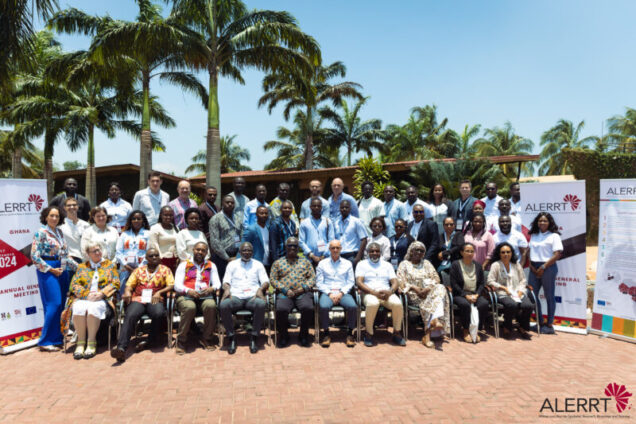
The Annual General Assembly of the African Coalition for Epidemic Research, Response, and Training (ALERRT), held over two days, converged leading African researchers, public health experts, policymakers, and healthcare professionals in the Greater Accra region to examine strategies to bolster epidemic preparedness.
Secretary General of the African Research Universities Alliance (ARUA), Professor John Owusu Gyapong spoke on clinical research for health systems strengthening and pandemic preparedness.
The epidemiologist expressed the need for researchers to present stakeholder tailored research outcomes and seek partnerships to facilitate the integration of research into public health policies.
“The success of our collective efforts in dealing with infectious disease outbreaks depends in no small part on responsive clinical research. It contributes to strengthening our health systems and prepares us to fight and win when the next epidemic or pandemic rears its head.
“It is not enough to get research published; we must ensure there is integration into policy.
“Governments have the unique ability to create environments where research can thrive. Research does not only remain in academic journals; it becomes the cornerstone of health improvement.
“Training and Capacity Building has a direct impact on core competence at all levels and encourages collaborations,” he said.
ALERRT fosters collaboration between doctors, nurses, researchers and other stakeholders across nineteen partner organizations from twelve countries in French and English enabling them work towards improving understanding of emerging infectious diseases and making sure we are better able to treat patients and control outbreaks.
The annual general meeting aimed to explore the strategic role of research in shaping response mechanisms to pandemics and epidemics across the African continent.
Professor of Emerging Infectious Diseases, University of Oxford and co-lead of the AERRT consortium, Sir Peter Horby, believes there are many challenges facing African nations in terms of pandemic preparedness and response. An important one is the lack of sustained investments in health care systems and research as an important component of quality care and preparedness.
“Political engagement is very transient. There is a lot of political engagement in the middle of a crisis, but it quickly wanes, and we need to keep reminding politicians that these risks are very real, and the impacts are very substantial.
“Through modest investments and good preparedness, we really can protect the heath of populations and the economies of nations.”
Dr John Amuasi lead for the Global Health and infectious Diseases research group at the Kumasi Centre for Collaborative Research in Tropical Medicine, KNUST, and co- lead of the consortium shared on ALERRT’s plans to expand it partnerships.
"Recognizing that infectious diseases don't respect borders or carry passports, the more partners we can bring into the fold, the better. We aim to include many more collaborators across the subregion and beyond.
"We plan to expand beyond clinical research to include trials of drugs, vaccines, and diagnostics that address specific research needs," he said.
The General Assembly reaffirms the ALERRT’s commitment to advocate for strengthened partnerships between research institutions to advance epidemic research and translating them into real-world solutions.
ALERRT
The African coaLition for Epidemic Research, Response and Training (ALERRT) is a multi-disciplinary consortium building a patient-centered clinical research network to respond to epidemics across sub-Saharan Africa.
Latest Stories
-
MOBA must reduce reliance on donations to protect Mfantsipim’s future – Patrick Kittoe
9 seconds -
GCB extends Customer Service Week into month-long customer engagement
1 minute -
Africa risks widening inequality if it fails to build AI expertise – Kweku Awotwi
2 minutes -
Women’s Voices Matter Movement petitions Gender Ministry over women’s rights and development
3 minutes -
Huel ad banned for suggesting its products could replace all meals
15 minutes -
Global InfoAnalytics poll puts John Boadu, Justin Kodua and Titus Glover ahead in NPP executive race
2 hours -
Ghana to establish skills development university with $50m from German support package
2 hours -
Baffour Awuah under EOCO investigation over alleged financial loss and money laundering – Deputy AG
2 hours -
How healthy is Ghana’s health sector?
2 hours -
HACSA Tech4Girls graduates 80 young women with digital and technology skills
2 hours -
Arrest of Manhyia South MP should involve Parliament, not police station – Kpebu
3 hours -
Two Nigerians sentenced to 189 months in US prison over $2.4m cyber fraud
3 hours -
Cristiano Ronaldo leaves Portugal’s training camp after rift with Head Coach
3 hours -
Ghana Energy Awards opens nominations for landmark 10th anniversary edition
3 hours -
Aayalolo contra-flow: Are we treating the symptom instead of the disease?
3 hours