

Audio By Carbonatix
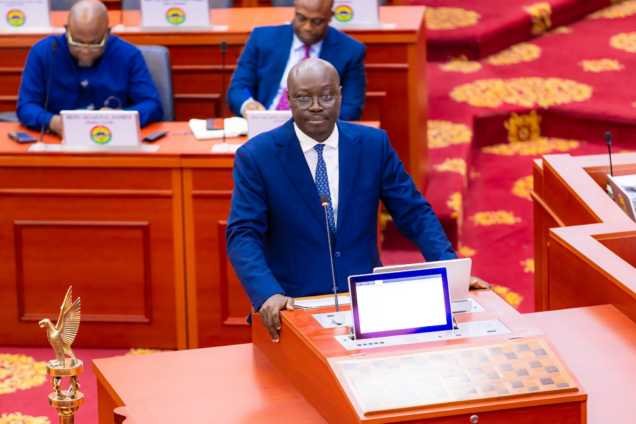
Finance Minister Dr. Cassiel Ato Forson has declared that Ghana’s economy has significantly improved, stating that the country has moved “from the ICU to the wellness center” following a series of fiscal reforms and policy measures introduced by the government.
Presenting a statement on the state of the economy to Parliament on Thursday, May 28, Dr. Forson said the government had taken difficult but necessary decisions to stabilise the economy after inheriting what he described as a challenging fiscal position in 2025.
He emphasised that Ghana’s economic recovery reflects disciplined policy actions and improved macroeconomic stability.
Dr. Forson used a medical metaphor to describe the country’s economic progress.
“Mr. Speaker, Ghana has moved from the intensive care unit to the wellness center. We have moved from ICU to wellness center,” he said.
The Finance Minister also provided an update on Ghana’s engagement with the International Monetary Fund, confirming that the country will continue its collaboration under Article IV consultations and other policy instruments.
“We will continue our collaboration with the IMF under Article IV and other instruments. I repeat, no further IMF financial bailout is currently required in the foreseeable future,” he stated.
Dr. Forson noted that Ghana has now transitioned from a financial assistance arrangement to a more reform-focused partnership with the IMF, marking a shift in the country’s economic engagement with international partners.
He further announced that Ghana has successfully completed the final review of its current IMF-supported programme, pending approval by the IMF Executive Board.
According to him, the next phase of engagement will be through a Policy Coordination Instrument (PCI), a non-financing IMF framework designed for countries that no longer require financial support but still seek structured reform guidance, regular assessments, and credibility in economic management.
The minister explained that the PCI will help Ghana sustain reform momentum while strengthening investor confidence and improving the country’s credit outlook.
“The policy coordination instrument is a non-financing IMF instrument designed for countries that do not require IMF financing but seek a credible framework for reform, regular policy reviews, and a stronger signal to investors and development partners,” he said.
He added that the arrangement will allow Ghana to continue benefiting from IMF expertise and periodic policy assessments, which he described as important signals to investors and development partners.
“The PCI will enable us to continue leveraging the IMF’s regular policy assessments and expertise as a signal to investors, thereby certifying the credibility of our stewardship and further strengthening our credit rating,” he stated.
Latest Stories
-
New York Times executive fatally shot allegedly by elderly in-laws
2 hours -
Teacher Payment Crisis: GES races to protect academic calendar
2 hours -
US prosecutors reopen case of alleged gang rape at Cornell University
2 hours -
Journalist to be crowned king in Uganda after bitter succession dispute
3 hours -
OpenAI scraps rollout of new model over safety concerns
3 hours -
Nigerian attempts to break world record by dancing non-stop for seven days
3 hours -
GES urges government agencies to end blame game over teacher payments
5 hours -
GES sets Oct. 5 deadline to resolve teachers’ payment dispute
5 hours -
GES working around the clock to get teachers back to class, says Daniel Fenyi
5 hours -
French PM warns against escalation of school protests after 164 arrested
6 hours -
UK tries to stop Trump’s diesel export ban
6 hours -
Late Olise goal gives France win over Belgium
6 hours -
Mancini enjoys first win since return as Italy boss
6 hours -
Interest payments to average a high 20% of government revenue over next 4 years
6 hours -
Anthropic warns AI may pose ‘existential risks to humanity’ in IPO filing
6 hours