

Audio By Carbonatix
Ghana is set to resume the payment of debt it owes to Eurobond holders in about two weeks, having completed its $13 billion external debt exchange programme.
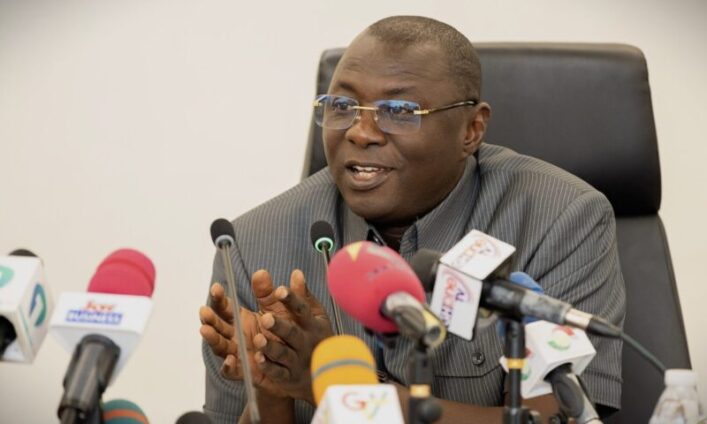
Meanwhile, the repayment of debt owed to the Official Bilateral Creditors has been postponed to 2028, Dr Mohammed Amin Adam, Finance Minister, announced at a press in Accra on Thursday, October 3.
“By the 98 per cent we’ve achieved, we’ve all consented to the exchange, but the actual exchange will take place over the next two weeks, and once we exchange, it means that we can start servicing our debts,” he said.
“We’ll not service at the levels we’d have done because of the reduction in the interest rate and principal… with the Official Bilateral Creditors, the servicing of the debt has been postponed until after 2028,” he added.
The Finance Minister stated that the government was building enough buffer for the repayment of the country’s debt, by growing the Sinking Fund and increasing revenue to Gross Domestic Product (GDP) to 18 per cent.
“With increased revenue, our capacity to pay back our debts is going to be enhanced, and we’re taking the proposed amendments to Cabinet for Parliament for amendments to the Fiscal Responsibility Act, which limits our debt,” he said.
Dr Amin Adam noted that the completion of both the Domestic Debt Exchange Programme (DDEP), and external debt, including the Eurobond exchange, would provide relief to the country, making its debt sustainable.
That, he said, would enhance the performance of the cedi against its major trading currencies, particularly the Dollar, lead to a credit rating upgrade, and boost investor confidence in the country.
“With this development, Ghana is likely to get positive upgrades, and when you get upgrades, the international community and investor confidence in your economy increases,” he said.
“So, investors will come in more than they’ve done over the last two years to invest in your economy, and when they’re coming, they’re bringing in forex, which then strengthens your currency,” he echoed.
Ghana suspended all of its debt service payments for some of its external debt, including Eurobonds, commercial term loans, and bilateral debts in December 2022, as part of a restructuring process.
It was an emergency measure to prevent a further deterioration in the economic, financial, and social situation in the country, as the government engaged the International Monetary Fund (IMF) for a US$3 billion loan-supported programme.
The three-year Extended Credit Facility was aimed at restoring macroeconomic stability and ensuring debt sustainability, caused by large external shocks and pre-existing fiscal and debt vulnerabilities.
Latest Stories
-
PRESEC, Augusco and Accra Academy battle for 2026 NSMQ crown today
4 minutes -
GH₵12 cement price increase: GPHA clarifies attribution to port congestion
5 minutes -
Pythagoras won’t balance your books
7 minutes -
Pay me by Sept. 11 or face the court – Kow Essuman demands salary, benefits from Finance Minister
26 minutes -
Bawumia’s destiny lies in the hands of God; not you – Muslim Forum for Peace and Unity replies Rev. Owusu Bempah
28 minutes -
NPP NEC meets today to discuss and approve party’s position paper on Constitution Review proposals
35 minutes -
Today’s frontpages: Thursday, September 10, 2026
42 minutes -
Ghana Garden and Flower Show returns on Sept 11 with focus on green jobs, business and wellbeing
43 minutes -
Titus-Glover camp says Mustapha Salam wasn’t pressured to withdraw from National Organiser race
44 minutes -
Ghana’s acclaimed Christian – Muslim unity bigger than Owusu Bempah’s hatred and bigotry – Muslim Forum for Peace and Unity
47 minutes -
Karpowership lights up young minds on International Literacy Day
56 minutes -
Banking sector NPLs fall to GH¢19.9bn as asset quality improves
60 minutes -
Republic Bank Ghana, UPSA sign strategic MoU to advance professional development and industry-academia collaboration
1 hour -
MTN 30th Anniversary CEO Invitational Golf Tournament set to tee off at Achimota
1 hour -
Ghana woos Australian investors into critical minerals
1 hour