

Audio By Carbonatix
Nigeria has blocked Shell's sale of its entire onshore and shallow-water oil operations, but approved a similar deal by Exxon Mobil, the country's upstream oil regulator said on Monday.
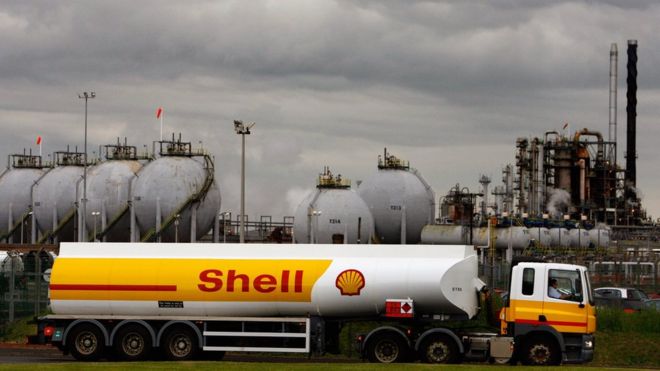
Shell's asset sale for up to $2.4 billion to the Renaissance consortium, comprising five companies, was first announced in January.
Exxon's deal with Seplat Energy has awaited regulatory approval for more than two years since a $1.28 billion fee was announced in February 2022.
In a speech at an event in the capital Abuja, Nigerian Upstream Petroleum Regulatory Commission (NUPRC) CEO Gbenga Komolafe said the Shell deal "could not scale (the) regulatory test," but did not elaborate. Exxon's transaction was granted ministerial approval.
President Bola Tinubu had signalled on Oct. 1 that the Exxon-Seplat deal would receive ministerial approval in a matter of days after getting clearance from the regulator.
"We welcome the regulator’s announcement and look forward to formally receiving the ministerial consent as we work toward the conclusion of the sale," Exxon said in a statement.
A Shell spokesperson did not immediately respond to a request for comment.
The rejection is a blow to Shell's strategy to pivot toward deepwater for future investments and reflects the growing challenges that oil companies face in Nigeria.
Oil majors operating in Nigeria, Africa's largest oil exporter, have been retreating from onshore operations hampered by theft and sabotage, opting to focus future investments on newer and more lucrative deep offshore fields.
The Shell assets hold a combined estimated volume of 6.73 billion barrels of oil and condensate and 56.27 trillion cubic feet of associated and non-associated gas.
Under Exxon's deal, Seplat will own 40% of four oil mining leases and associated infrastructure, including the Qua Iboe export terminal, and 51% of the Bonny River natural gas liquids recovery plant previously owned by Mobil Producing Nigeria Unlimited, Exxon's local unit.
In trying to exit the oil-rich Niger Delta, Shell follows Exxon Mobil, TotalEnergies and Eni who wanted to do so due to security concerns.
NUPRC approved the sale of onshore assets by Eni's local unit to Oando in July and another from Equinor (to new entrant Project Odinmim.
Environmental activists and some communities opposed the Shell-Renaissance deal, tying Shell to a string of lawsuits for environmental restoration and compensation for land and rivers damaged by oil spills.
In April, NUPRC started evaluating Shell's divestment to the consortium, which comprises four Nigerian exploration and production companies and an international energy group.
Latest Stories
-
SSNIT says La Beach clearance was to protect hotel investments, beaches to remain public
8 minutes -
APSU congratulates St Augustine’s College after back-to-back National Investment Quiz wins
12 minutes -
Renewed flood intervention at Mallam Junction raises hopes among residents, businesses
52 minutes -
St Augustine’s College retain National Investment Quiz title after nail biting grand finale
1 hour -
Education infrastructure investment will drive Banda’s development – Ahmed Ibrahim
1 hour -
Teacher unions strike: Gov’t presents fresh proposals as talks end inconclusively
2 hours -
51,000 teachers’ promotion arrears to be validated for October payment – Education Minister
2 hours -
Kwabena Boamah appointed Board Chair for Impact Investing Ghana
2 hours -
Striking teacher unions to meet Fair Wages and Salaries Commission on October 6
3 hours -
EOCO working with AG to arraign Nana Baffour Awuah before weekend court
3 hours -
Duraplast reassures customers after fire, announces October 5 reopening
3 hours -
Call off strike, gov’t will not renege on promotion arrears pledge – Haruna Iddrisu to teacher unions
3 hours -
Committee set up to validate teachers eligible for 20% deprived-area allowance – Education Minister
3 hours -
Five-member committee to search for new Black Stars coach after Sports Ministry-GFA meeting
4 hours -
Pinktober: Breast cancer survival exceeds 90% when detected early – Breast Society of Ghana
4 hours