


Audio By Carbonatix
The number of babies born in England and Wales is now the lowest since the 1970s, official statistics show.
The fertility rate - which measures how many children are born per woman during her child-bearing years - is the lowest on record at 1.44. Scotland's is even lower at 1.3.
Britain is not unique - most countries are experiencing declining fertility and some are even going to great lengths to create a baby boom.
So what's causing the fall-off in fertility? There's the high cost of bringing up children, the pressure to stay in work and the challenge of finding the right partner.
But there's also evidence that more and more young adults don't plan on having any children at all.
BBC News has spoken to two women and two men in their thirties - the average age at which people in England and Wales become parents - to get their thoughts on the issue.
Chris and Jemma: Vasectomy aged 33
HGV driver Chris Taylor and dog groomer Jemma Wrathmell jointly earn an income of about £60,000 and have been together for 11 years.
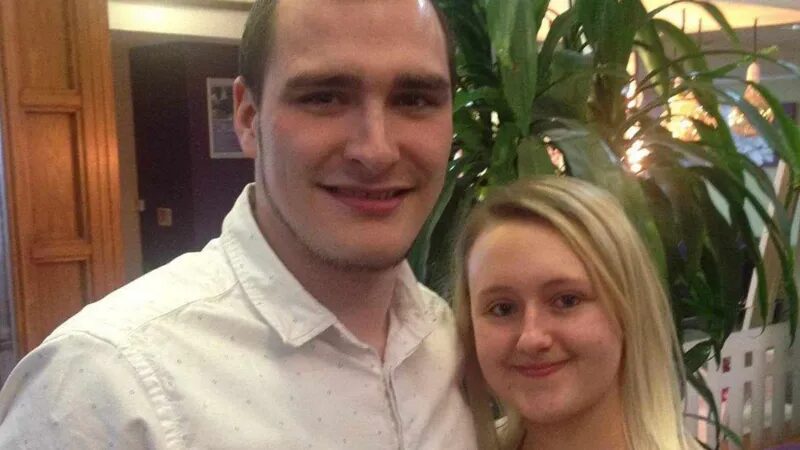
The couple, who live in Wakefield in West Yorkshire, considered having children.
"We have had deep conversations where we go through the options and discuss things like school, cost and routine," Gemma says.
But the conclusion was that the cost was too high.
"After all our bills and essentials there is no room in the budget to accommodate a child," Chris says. "We don't see how our finances will get any better within the next few years."
As a result, they have taken a "definitive decision" - Chris is seeking to have a vasectomy, after years of Gemma having a contraceptive implant.
"Some people have said you'll change your mind, but they know it's our decision," says Jemma.
"I'm also not that maternal," she adds.
Ellie, 39: I've frozen my eggs
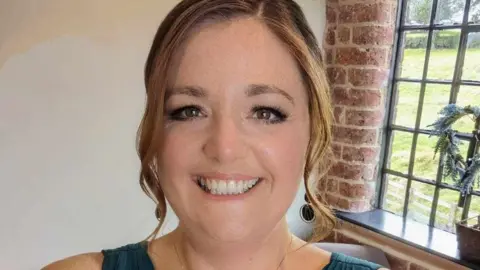
Ellie Lambert, who lives in Sheffield, wants to have children but says she hasn't found a suitable partner.
Two years ago, she spent £18,000 on two cycles of egg freezing. "I find it really frustrating, it's a lot of cost for something that may not ever lead to anything," she says.
She hopes to use them if she meets someone, or if she reaches a financial situation where she can "go it alone" with the aid of a sperm donor.
Ellie says she 's concerned about the additional financial pressure on single-parent households.
A report from the Child Poverty Action Group last year found the average cost of raising a child to age 18 was £166,000 for a couple and £220,000 for a lone parent.
Though Ellie thought she would meet someone by her late 20s, "despite proactively being on all of the apps, it just didn't happen."
She says dating had become "fruitless", citing the seemingly endless choice that dating apps offer as a factor, with fewer people wanting to commit.
But going it alone would be "a big decision", says Ellie, who considers herself fortunate to earn a good salary.
Having already spent her savings on egg freezing, she says it would cost a further £10,000 to use a sperm donor with IVF.
Dami, 34: I'm waiting until I'm ready

For Dami Olonisakin, a sex and relationships podcaster who lives in London, improvements in fertility treatments - such as egg freezing - are "empowering" and give women "more control than ever".
Motherhood, she says, is not something to "be taken lightly".
"Childcare costs are soaring, maternity policies are limited, women basically have to think really hard," she says.
She also wants to have the "support system" of a long-term partner in place before having children.
But she isn't in a hurry. "I don't feel I'm in a rush to settle down and have kids just because it's expected," she says.
Instead she is focusing on her career after growing up in a household that "didn't have anything".
"I remember thinking to myself, 'I am never ever putting a child through this'," she says.
"[My parents] absolutely did their best, but I've always said I will not have a child until I'm... ready."
Kari, 34: I like the idea of adopting

Kari Aaron Clark, a senior research fellow at the Royal Academy of Engineering, earns £53,000 but feels he can't afford to raise a child in London.
Four years ago, his salary was £22,000 while completing his PhD.
His partner Kaitlyn, who is currently a PhD student, is under similar financial strain.
It means despite Kari's above-average salary, he has had less time to save for a property - something he thinks is essential before becoming a parent because of the "relatively insecure" nature of renting.
He also cites the costs of childcare. According to a recent report by children's charity Coram, the average weekly price for a full-time childcare place for children under three in the UK is about £300, compared with nearly £430 in inner London.
Kari says his views are shared by Kaitlyn - and they are both concerned about the effects of the climate crisis.
"I'm quite happy with the idea of adopting. That way I'm helping someone already struggling in the system," he says.
"I can adopt after they've got through the childcare stage."
But despite his current pessimism about the viability of becoming a biological parent, Kari says he "wouldn't write it off".
What does this mean for the future?
This all raises the question of what the future holds if fewer children are being born.
Declining fertility rates are not just about people delaying parenthood, but about a growing trend of people not having children, says Brienna Perelli-Harris, professor of demography at the University of Southampton.
Data from the recent UK Generations and Gender Survey suggests that childless adults today are far less confident they will have children, with a quarter of 18 to 25-year-olds saying they would probably or definitely not have a child.
"Gen Z are more likely to want to stay childless," she says. "Before, it might have been more of a taboo - it's now more acceptable.
"And it's down to economic factors like future income, childcare costs and employment."
"In the long term... the population will start to shrink," Prof Perelli-Harris adds.
"If it gets to 1.3 [children per woman] - that's seen as very low and government should start getting concerned."
Concerns have previously been raised about shrinking fertility rates in countries where there's long been a downward trend, including the need for more young people to work as carers for an ageing population and pay tax.
But populations can continue to grow for a long time after fertility falls below 2.1 children per woman, known as the replacement level - the number of children required to ensure a population replaces itself from one generation to the next - the ONS says.
This is the case in the UK and other countries like Spain and Italy, where the fertility rate is even lower.
"Immigration can stall population decline or even reverse it," says Prof Perelli-Harris.
"I do not think we will see the UK population start to decline for the foreseeable future, although the ageing of the population will become even more pronounced."
Latest Stories
-
A Minister under watch: Zanetor’s burden of expectations
10 minutes -
Don’t make funding your starting point for green businesses – Entrepreneurs urged
16 minutes -
Skills gap in electric vehicles presents jobs opportunity for Ghanaian youth
23 minutes -
Mahama heads to Serbia for 65th anniversary of Non-Aligned Movement
28 minutes -
National Children’s Day 2026: Child Online Africa calls for child-led digital protection in Ghana
34 minutes -
Manasseh sets the record straight on Northshore Apparel GH; dispels 1D1F claim
34 minutes -
Supreme Court dismisses injunction bid seeking to halt Skytrain trial
38 minutes -
AU Chairperson reaffirms commitment to global African unity
47 minutes -
Air Pollution in Accra is not random; it is a burden carried by the poor
53 minutes -
GEXIM Bank grows loan portfolio to GH¢1.56bn as equity hits GH¢2.1bn in 2025 – SIGA Report
1 hour -
Ghana Shippers’ Authority grows surplus by 272% as assets reach GH¢979.92m
1 hour -
Government designates 13 blocked-out areas for small-scale mining to curb illegal mining
1 hour -
Number of advertised jobs increased significantly in half-year 2026 – BoG
1 hour -
GAFM demands retraction from GTEC over ‘unrecognised universities’ listing
1 hour -
Saltpond residents renew call for return of Founders’ Day celebrations
1 hour