

Audio By Carbonatix
The Ghana Export Promotion Authority (GEPA) has reaffirmed its commitment to building robust systems that empower Micro, Small, and Medium Enterprises (MSMEs) to compete effectively in the global market.
Osafohene Dr Afua Asabea Asare, Chief Executive Officer, GEPA through her representative Mr Banda Z.K. Abdallah at a day’s validation workshop at Aflao Border, said the Authority recognised the critical role MSMEs played in Ghana’s economic development and was dedicated to providing them with the necessary support to thrive.
“Cross-border trade is a cornerstone of Ghana’s export development strategy. However, challenges such as limited access to trade information, unclear processes, and infrastructure gaps at border posts continue to impede the efficiency and competitiveness of exporters.”
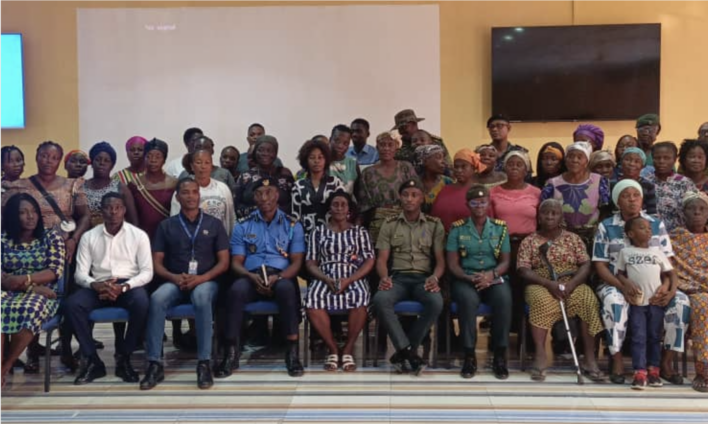
The workshop on Friday was to assess the establishment of information desks at selected borders in Ghana aimed at enhancing cross-border trade under the African Continental Free Trade Area (AfCFTA).
It formed part of a project on the theme: “Building Resilience of Women and Youth-Led MSMEs through AfCFTA for Green and Inclusive Recovery and Growth,” being implemented by GEPA in collaboration with the United Nations Development Programme (UNDP) to empower women and youth-led MSMEs across Ghana.
Osafohene Dr Asare envisaged that the establishment of information desks across key border posts in the country was critical to the success of cross-border trade and AfCFTA, which she described as not just a policy but a “transformative opportunity that we, as Africans, must embrace to foster economic growth, integration, and resilience.”
“These trade information desks will serve as critical hubs to provide timely, accurate, and accessible trade-related information to businesses and traders. They will streamline processes, reduce bottlenecks, and enable smoother operations for exporters, particularly those transitioning to seize opportunities under AfCFTA.”
“As we forge ahead, let us remember that the success of AfCFTA and cross-border trade hinges on partnerships, collaboration, and innovation. Let us commit to building robust systems that empower MSMEs, reduce trade barriers, and unlock prosperity for all,” she added.
Findings and recommendations from all three borders, Elubo, Paga and Aflao, presented by Dr Martin Akogti, Researcher at GEPA, identified challenges faced by small-scale cross-border traders including complicated Customs procedures, high transaction cost, lack of clarity on trade regulations and compliance, poor infrastructure and transport logistics and language barrier.
It found that there existed few information desks/front desks in some of the agencies at the borders providing information on cross-border trade but the “establishment and operationalisation of a one-stop information desk was a key component in creating an efficient, transparent and supportive environment for cross-border trade, benefitting traders, governments and the economy as a whole.”
Stakeholders and participants, deliberating on the presentation made inputs to ensure the successful implementation of trade information desks across the country’s key border posts.
Mr Wonder Akpese of the Food and Drugs Authority, Aflao said it was important to have in addition, a call centre, voice over in different languages sensitising traders on trade regulations, citing the ban on hydroquinone-containing cosmetics saying, “Some of this information may be helpful to the traders.”
Mr Bernard Gyasi Abrokwah of the Small Arms Commission, Aflao advised the cross-border traders not to misuse the opportunity being given to them but to consider the security of the nation by providing information on people who would want to trade in arms and ammunition saying, “most of the arms and light weapons come through the land borders.”
Mr Oscar Akaba-Norvixoxo, National Coordinator of, the National Cross Border Women Traders Association, appreciated the efforts of GEPA and UNDP to build a thriving, resilient, and inclusive trade environment for women and youth and asked that the Association be involved from the planning stage as would help in “understanding the real issues on the ground.”
Mad Dzifa Dufe, a cross-border woman trader, in an interview with Ghana News Agency, described the workshop as engaging and revealing with all key stakeholders, including officers from the Customs Division of Ghana Revenue Authority and Ghana Immigration Service making inputs to facilitate cross-border trade.
“We look forward to actual implementation of these findings and recommendations to boost our trade because as it is now, we face hurdles in our trade almost on a daily basis.”
Latest Stories
-
New oil agreements should spur economic development – Deloitte Senior Partner
3 minutes -
Health Ministry, Peace Corps mark 65 years of partnership between Ghana and US
10 minutes -
One injured in fire outbreak at Akyeremade, several tenants rendered homeless
11 minutes -
Joint security operation in Binduri recovers AK-47 and 28 rounds of ammunition
14 minutes -
GSE ranked best-performing stock market in Africa as of August 2026
15 minutes -
Ace National Junior Tennis Camp 2026 ends in Accra, strengthens pathway for young talent
21 minutes -
I cannot be intimidated, I’ll bring new administration to NPP women’s wing – Hawa Koomson
27 minutes -
Hawa Koomson pledges to reconcile aggrieved NPP members if elected Women’s Organiser
28 minutes -
Beyond megawatts: Africa’s energy transition will succeed or fail on its people
37 minutes -
GJA calls for swift investigation into alleged assault of Adom Brands journalist in Nkwanta South
40 minutes -
NACOC partners CSIR to advance research and development of 0.3% THC cannabis
45 minutes -
Somoco Ghana launches “Safe Journey” 2026 road safety campaign with NRSA
59 minutes -
PPL Net Ghana unveils new board, vows to build ‘genuinely Ghana-flavoured’ AT Ghana
1 hour -
Canoe races, drumming and pageantry mark Oguaa Fetu Afahye Regatta
1 hour -
An open letter to the Chief Justice of Ghana
1 hour