

Audio By Carbonatix
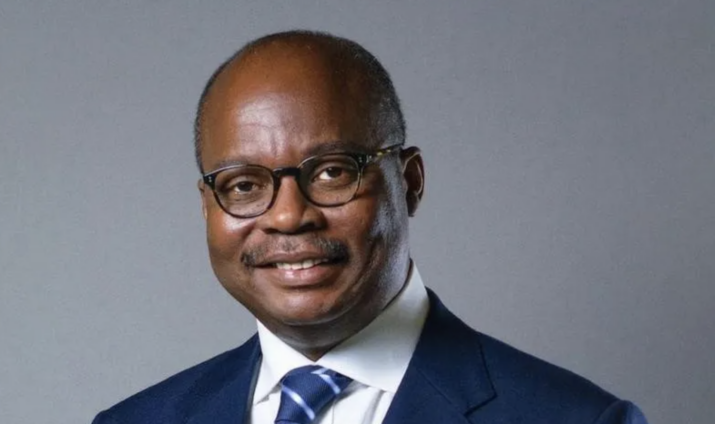
The Governor of the Bank of Ghana (BoG) Dr. Ernest Addison has disclosed that he inherited a challenging banking sector that had the International Monetary Fund (IMF) already recommending strict reforms, including the revocation of the banking licenses of UT Bank and Capital Bank.
The banking licences of the two banks were revoked in August 2017, the same year Dr. Addison assumed office at the central bank.
Speaking at this year’s Governor’s Day dinner organised by the Chartered Institute of Bankers, Dr. Addison said the Bank of Ghana was faced with no option but to take tough measures in revoking the licenses of the banks to protect the financial sector.
“There are a few requirements which the IMF calls the prior actions, you have to do this, you have to do that otherwise they are not even going to organize a board meeting to discuss Ghana and disburse any funds to you”.
He stated that such requirements compelled the Bank of Ghana to undertake the reforms.
“This was one of the prior actions to dissolve UT and Capital Bank. Ghanaians had never seen that in a long period of time. People were shocked when the licences of those two banks were pulled”.
According to Dr. Addison, the measures taken to clean up the financial sector strengthened the banks to withstand external shocks associated with the COVID 19 and the Russian Ukraine war.
Background
In 2017, Dr. Addison blamed the lack of good corporate governance for the collapse of UT and Capital bank.
Speaking at a breakfast meeting at the Banking College, Dr. Addison said good corporate governance is not only essential to minimizing risk but it is also fundamental to improving economic performance.
He said, “Corporate governance plays an important role in promoting a sound financial system, contributing significantly to improving overall performance not only in profits but in credibility.”
Addressing the revocation of the licenses of UT and Capital Bank earlier in the year, he said “the revocation of banking licenses of UT and Capital bank due to significant capital deficiencies, also partly reflected poor corporate governance practices within these institutions.
Latest Stories
-
Government brings home remains of Ghanaian killed in alleged South Africa mob attack
50 seconds -
41 more Ghanaians return home from South Africa after xenophobic attacks
3 minutes -
GH¢70,000 gift allegation gives Parliament chance to clean up vetting process – Dr Dramani
5 minutes -
Ghana will be present at Prof Arday’s funeral to pay our respects – Ablakwa
6 minutes -
CJ must avoid appearing as government ‘cheerleader’ – Prof Boadi
8 minutes -
ATU launches HND in Paramedical Trichology to formalise hair and scalp care training
9 minutes -
Health HR practitioners charged to lead sector transformation at 2nd Annual AHRMPHG conference
11 minutes -
NCCE steps up efforts to consolidate nation’s democratic gains
12 minutes -
Government raises GH¢3.15bn in 4-year bond at 12%
23 minutes -
Ampem Darkoa Ladies set sight on CAF Champions League return with Edo Queens the hurdle
38 minutes -
Government unveils five-pillar plan to build resilient economy
39 minutes -
GJA opens entries for 30th Media Awards, introduces 2 new categories
44 minutes -
Ghanaian winger Ibrahim Sadiq joins Colorado Rapids in MLS
56 minutes -
Sister Love by Naina J.M.D. draws international praise ahead of October release
58 minutes -
Ghana Gas CEO calls for more investment in gas infrastructure
1 hour