


Audio By Carbonatix
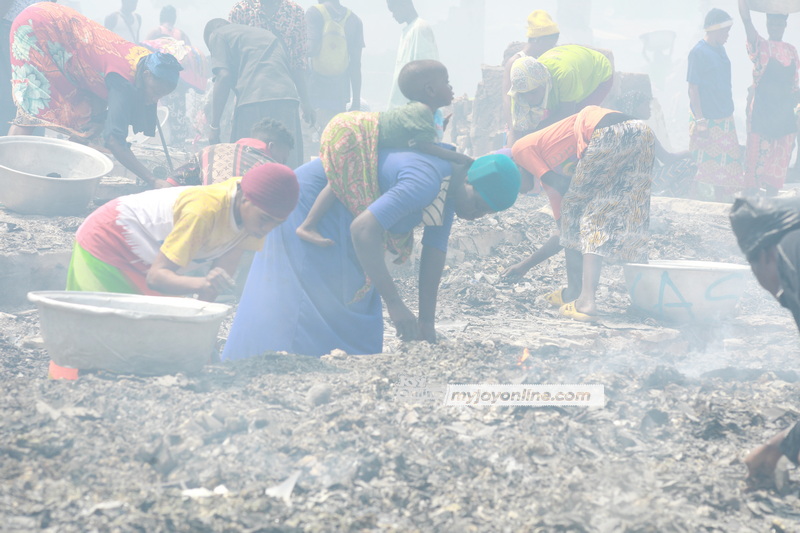
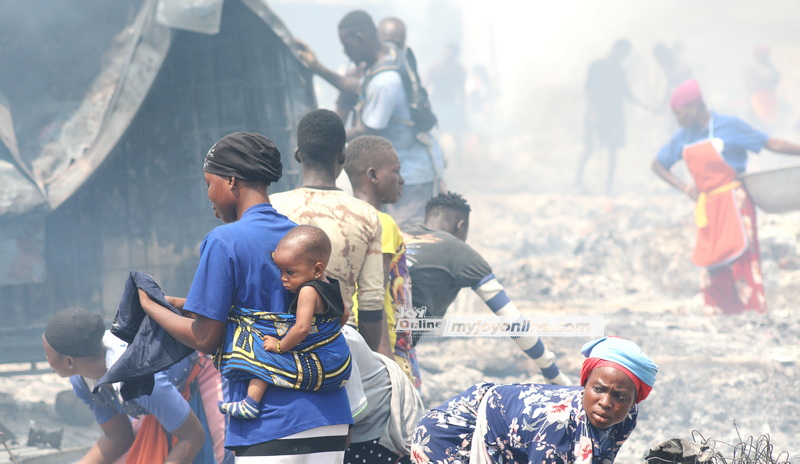
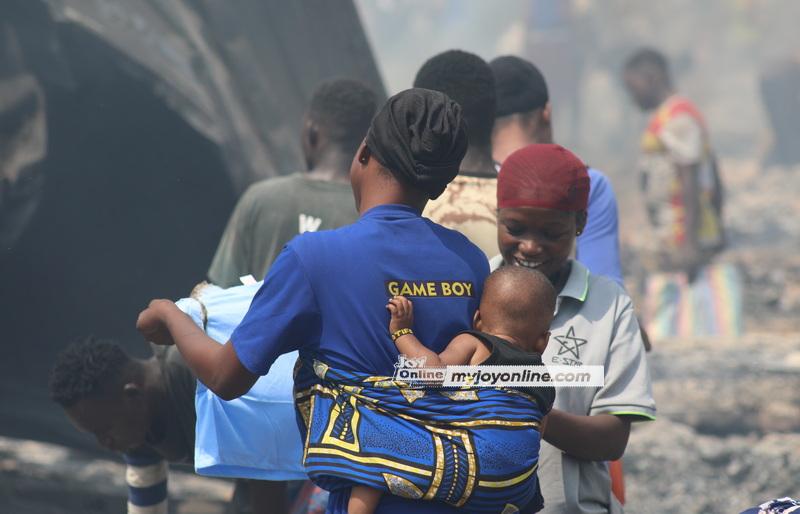
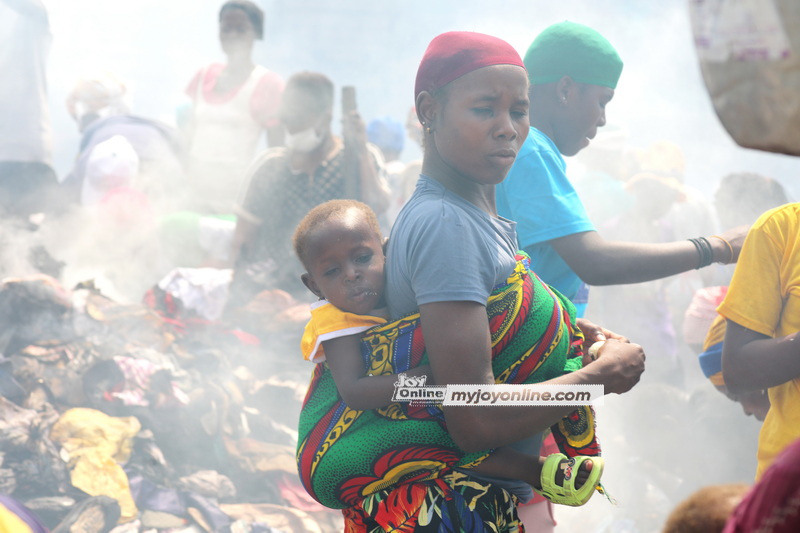
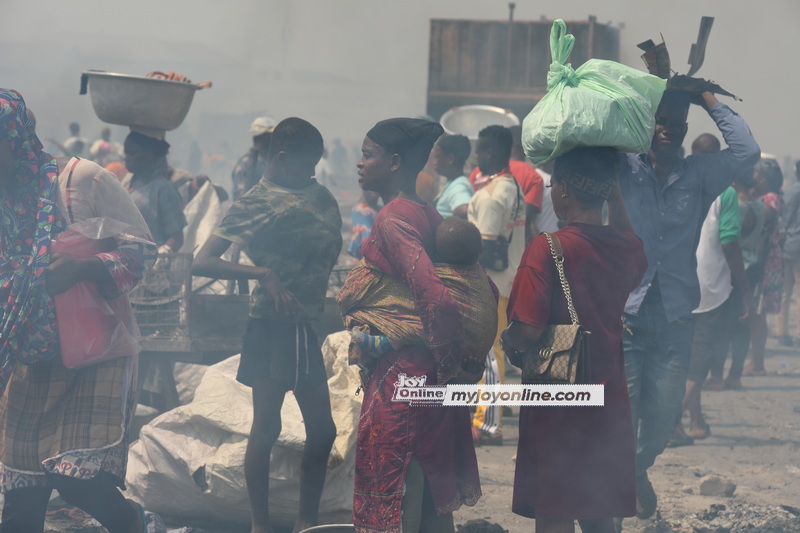
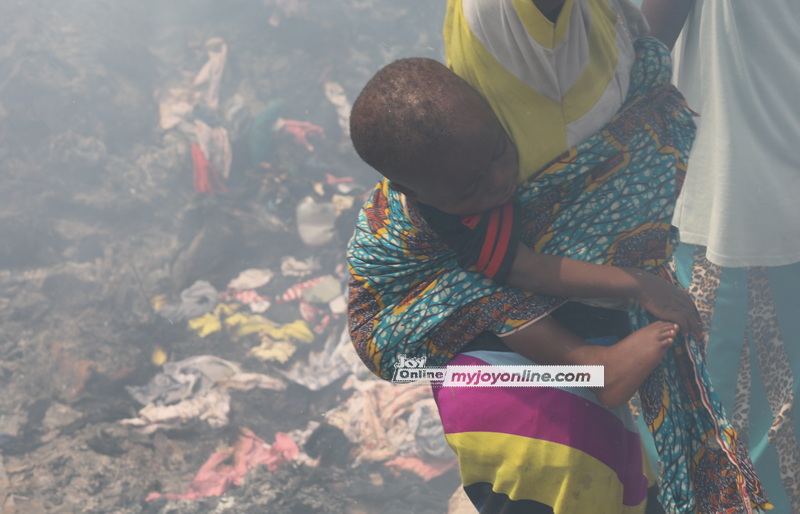
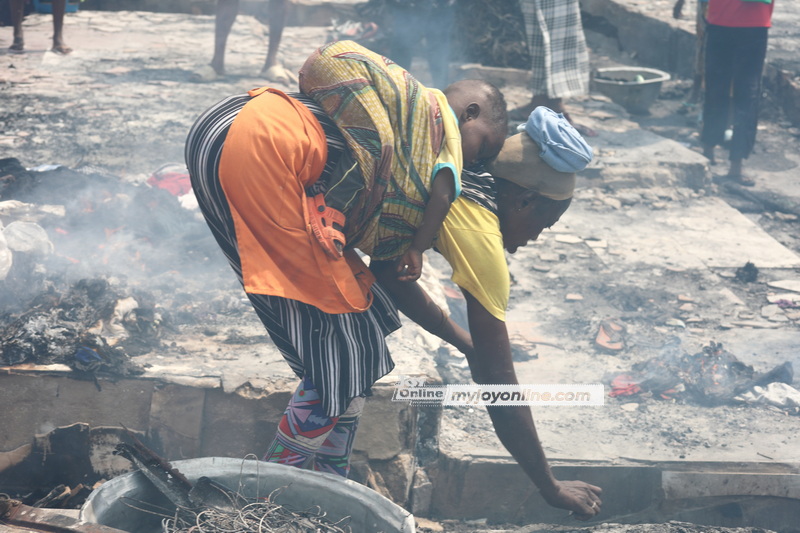
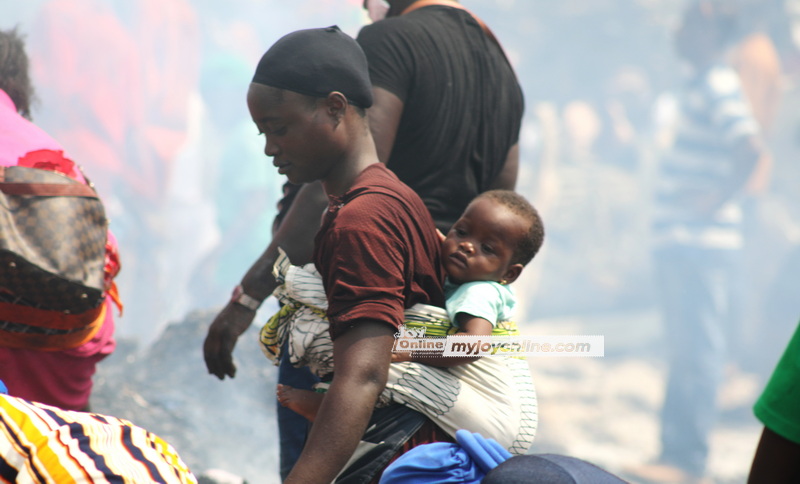
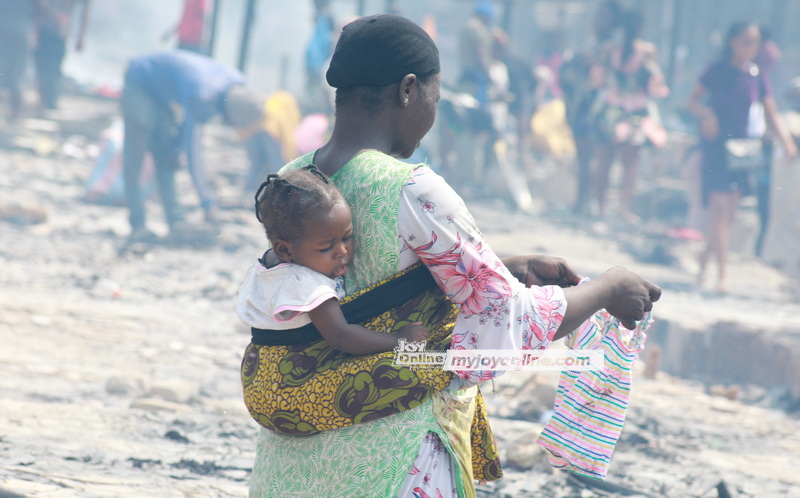
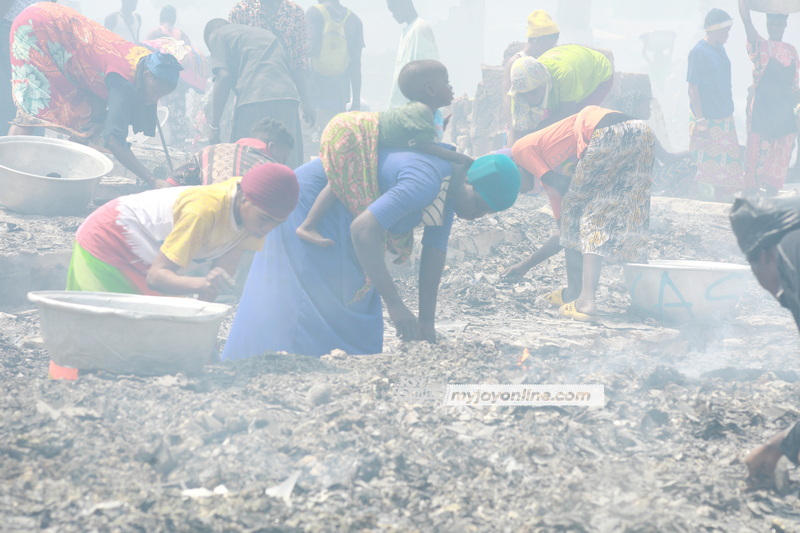
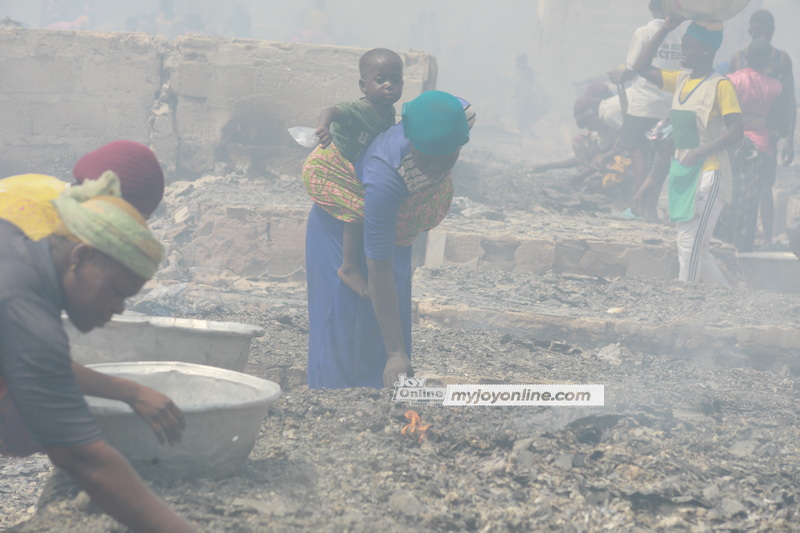
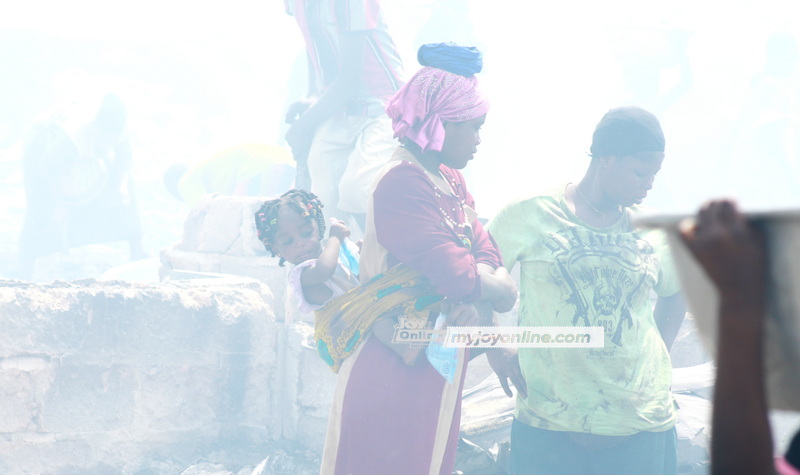
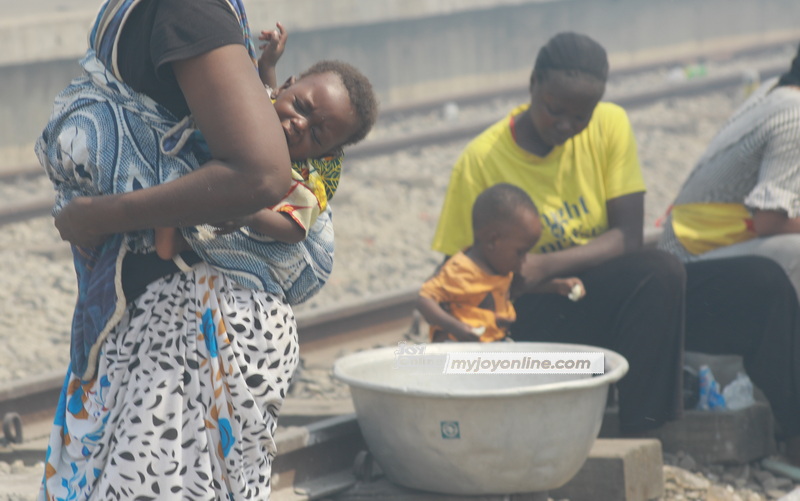
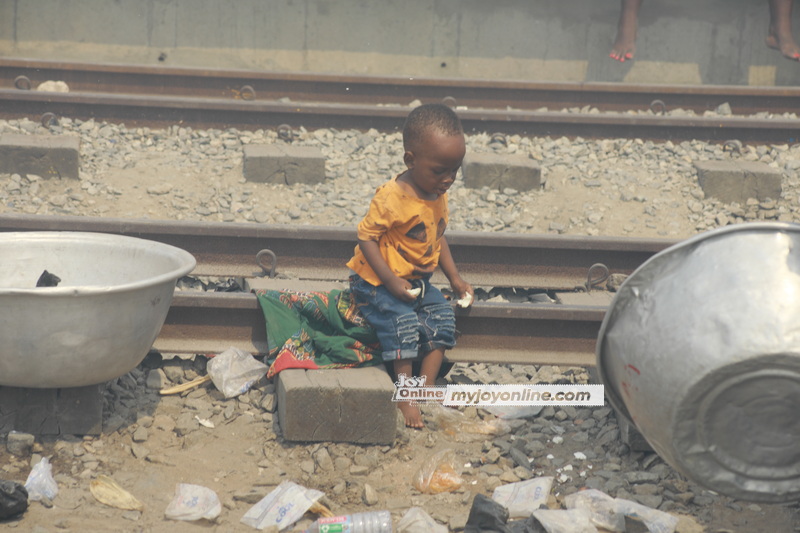
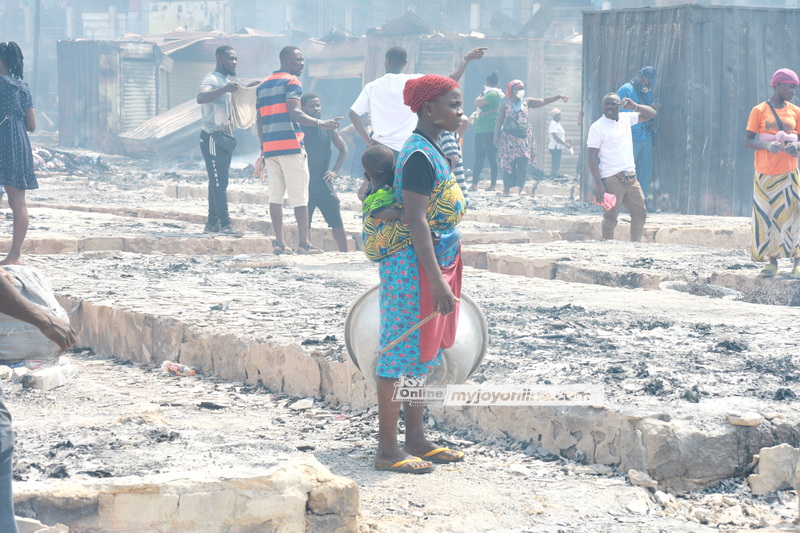
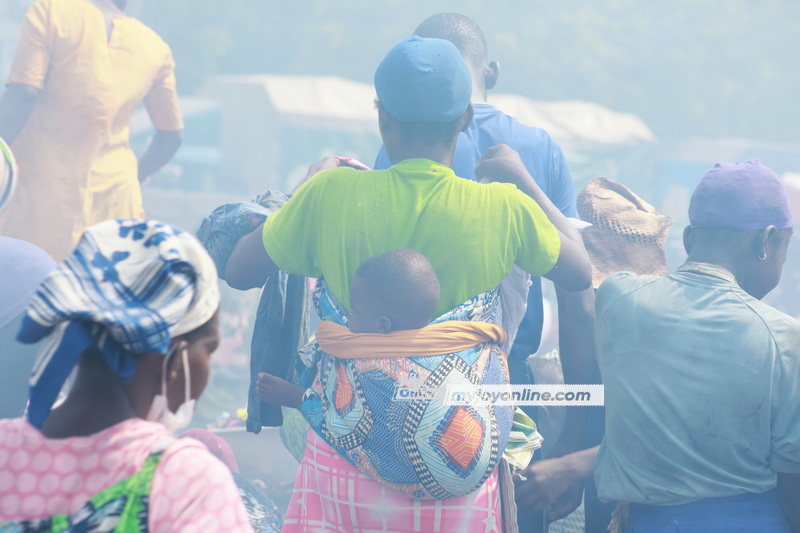
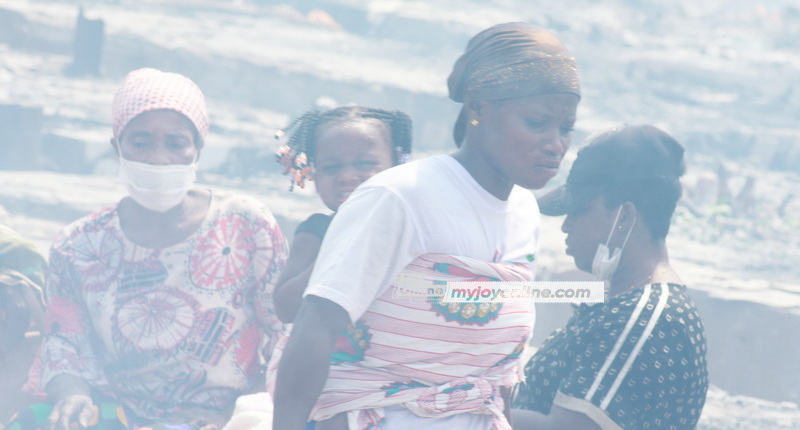
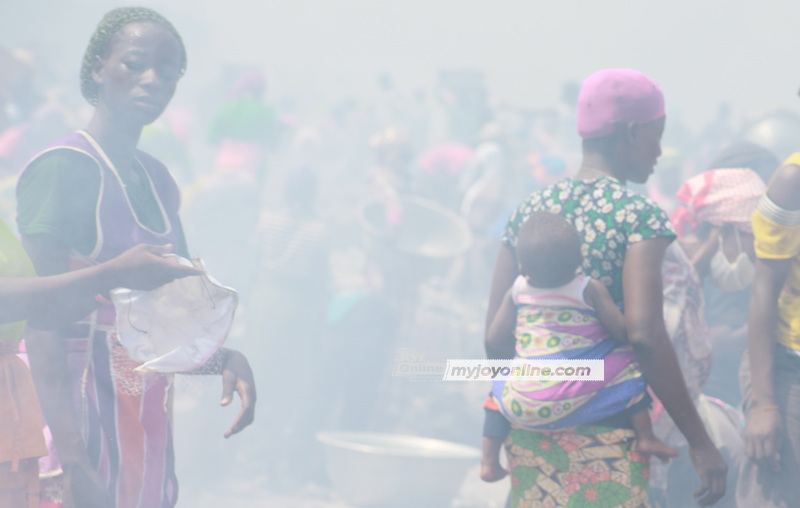
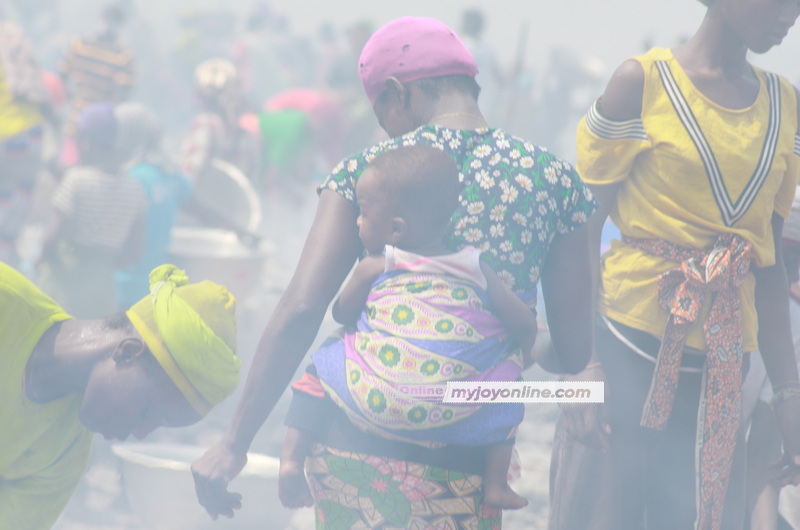
Scavenging mothers who defied the choking smoke that emanated from the Kantamanto devastating fire outbreak in the early hours of Thursday, January 2, appeared to care very little about the toxic smoke their children inhaled, as they braced the extreme health risks themselves, in the name of survival.
The immediate aftermath of Kantamanto’s worst fire disaster saw many people ignore the offensive toxic smoke to pick metal scraps to sell to nearby scrap dealers.
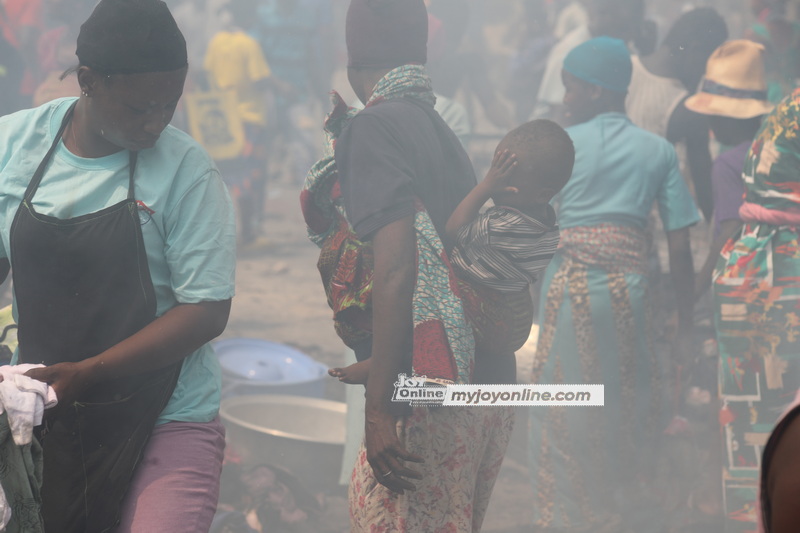
Some of the children coughed continually while others, strapped to the backs of their busy mothers, rubbed their agitated eyes in protest.
That attitude was condemned by some onlookers who argued that the mothers should have left the children, including babies, in safer environments.
Experts point to the fact that wildfire smoke is comprised of a mixture of gaseous pollutants (e.g., carbon monoxide), hazardous air pollutants (HAPs) (e.g., polycyclic aromatic hydrocarbons [PAHs]), water vapour, and particle pollution. Particle pollution represents a main component of wildfire smoke and the principal public health threat.
“Particle pollution” (also referred to as particles, particulate matter, or PM) is a general term for a mixture of solid and liquid droplets suspended in the air.
There are many sources of particle pollution; the most common is combustion-related activities, such as wildfires.
Particles can be made up of different components, including acids (e.g., sulfuric acid), inorganic compounds (e.g., ammonium sulfate, ammonium nitrate, and sodium chloride), organic chemicals, soot, metals, soil or dust particles, and biological materials (e.g., pollen and mold spores).
During a wildfire or other combustion-related activities, concentrations of particles can substantially increase in the air to the point that particle pollution is visible to the naked eye.
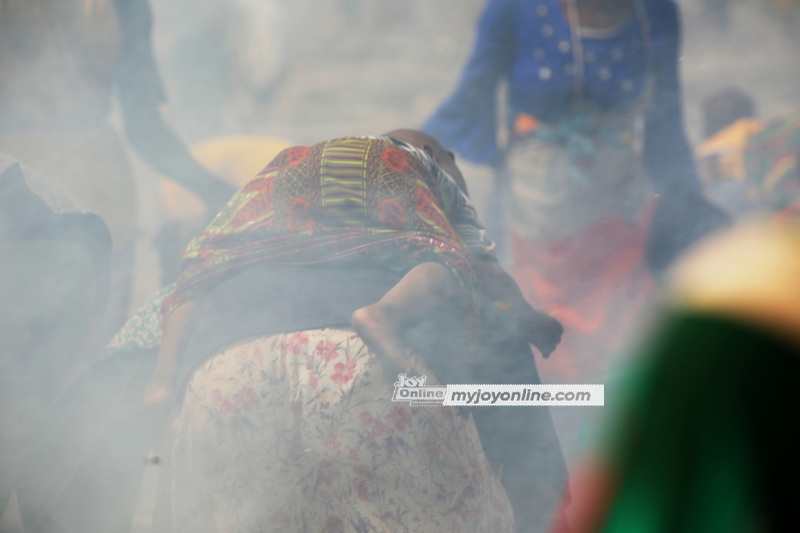
Smoke can irritate the eyes and airways, causing coughing, a scratchy throat, irritated sinuses, headaches, stinging eyes or a runny nose. If you have heart or lung disease, smoke might make your symptoms worse.
The fire which started around 1 a.m., destroyed stalls and goods worth millions of cedis. Devastated traders recounted their losses, with many calling on the government for urgent support.

Latest Stories
-
Allround Baby Pants launched in Ghana to ease diapering for mothers
2 hours -
Aggrieved Gold Coast Fund Management Company customers to petition Mahama over locked-up funds
2 hours -
NSMQ 2026: PRESEC, Legon dethrones defending champions Mfantsipim in thrilling battle to book semi-final spot
3 hours -
NPP set to overhaul constitution as delegates prepare to vote on sweeping reforms
3 hours -
Ghana’s cashew industry faces processing gap as Côte d’Ivoire moves to capture more value
3 hours -
“Our greatest wealth is not in our soil but our people” — Upper West Minister
3 hours -
Luex Healthcare launches children’s health education book series with Luey the Lion
3 hours -
NAGRAT urges gov’t to communicate early if September deadline cannot be met
4 hours -
We trust government to meet September deadline on teachers’ promotions – NAGRAT
4 hours -
“We dare not fail” – Gov’t promises to honour teachers’ promotion pay deal
4 hours -
The GH¢19.8 billion mirage: Inside Ghana’s state enterprise turnaround
4 hours -
Luv FM High School Debate: KNUST SHS and Osei Adutwum SHS set up thrilling final after dramatic semi-finals
4 hours -
KNUST AI Coordinator urges structured adoption of AI in teacher education
4 hours -
Nepal rescuers blast hillside in search of hydropower workers as families wait anxiously
5 hours -
Teachers who pass promotional exam to get January 2026 start date after gov’t resolves promotion dispute – Dr Apaak assures
5 hours