

Audio By Carbonatix
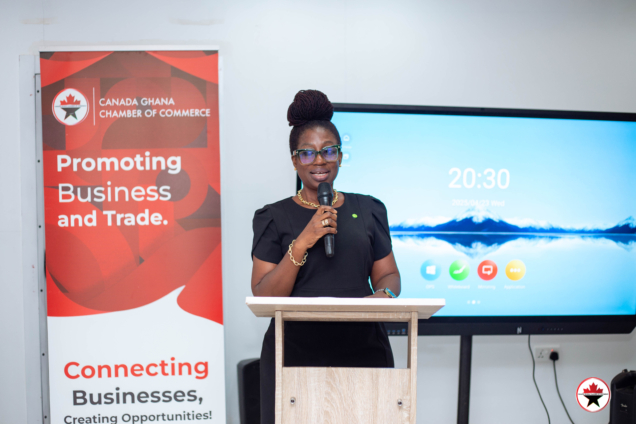
A Consulting Partner at Deloitte Ghana, Serwa Atiase Dzogbenuku has stated that the 10% tariff imposed by the US government presents an opportunity for Ghana to emerge stronger and bigger.
According to her, the tariff will not have a significant impact on the Ghanaian economy since the US is not a major trading partner of Ghana, compared with the level of trade with countries like the United Arab Emirates and China.
Sharing her perspectives on the topic “US Tariffs: Navigating the Challenges and Creating Opportunities for the Ghanaian Economy” at a Thought Leadership event organised by the Canada Ghana Chamber of Commerce, Madam Dzogbenuku said despite the anticipated associated challenges the tariffs posed to some sectors, it offers a unique opportunity for the country to strengthen domestic industries, diversify trade partnerships, and enhance economic resilience.
Opportunities for Ghana
Amidst the global economic uncertainties worsened by US tariffs, gold prices have surged, reaching record highs of $3,000 per ounce in March 2025 as reported by the Financial Times. The rise in gold prices is driven by investors seeking safe-haven assets in times of uncertainty.
Serwa Atiase Dzogbenuku said the increased demand for gold has the potential to boost Ghana’s external revenue, supporting the country’s foreign exchange and contributing to the stabilisation of the Ghana Cedi.
On supply chain alignment, she pointed out that Ghana, with its political stability, improving infrastructure, and expanding industrial base, can position itself as a preferred supplier of goods like cocoa derivatives, cashew nuts, and gold.
According to her, this window allows Ghana to capture new market share and strengthen long-term trade relationships.
She also indicated that the tariff-induced trade shifts present a unique chance to reorient Ghana’s economy from raw material exports to value-added production.
“By attracting investment into processing industries (especially cocoa, palm oil, and rubber), Ghana can build an export-driven manufacturing base to take advantage of the rising global demand for ethically sourced and sustainable products”, she mentioned.
Navigating the Challenges
Serwa said the African Continental Free Trade Area (AfCFTA) serves as a strategic tool for Ghana to trade more easily with other African countries, to strengthen local value chains, and reduce the country’s reliance on distant markets like the US.
She also urged the government to invest more in agro-processing, manufacturing, and small industries to reduce dependence on finished goods imports.
She cited the 24-hour economy initiative and the One District One Factory (1D1F) implemented by the previous government.
These she believes will help boost industrialisation in the country.
Latest Stories
-
GRA blames system failure for delay in issuing receipt over passenger’s customs duty
5 minutes -
Livestream: Newsfile discusses World Cup visa scandal, beach demolitions, education strikes, BRICS bid
9 minutes -
NC-PTAs welcomes end of teachers’ strike, urges parents to prepare children for Monday
19 minutes -
Government procures over 2,000 transformers as Ghana’s electricity access hits 89.13% – Energy Minister
45 minutes -
UTAG-UG threatens strike on October 19 over unpaid allowance
54 minutes -
Let The Constitution direct Chieftaincy to deliver “All Development Is Local”
2 hours -
John Jinapor outlines renewable energy, nuclear power priorities for 2027
3 hours -
Ghana explores centre of excellence for hearing, communication and cochlear implant care
3 hours -
Schizophrenia-related disorders lead mental health cases recorded in Ghana
4 hours -
Dutch authorities enlist Ghana in hunt for fugitive drug lord Bolle Jos
4 hours -
Ghana housing finance conference adopts communiqué to improve affordable housing access
9 hours -
Special Initiatives Minister urges Wa Technical Institute to enrol more girls as EU-backed solar training lab opens
9 hours -
In the matter of my first year at the Bar
9 hours -
ActionAid Ghana calls for an end to child marriage, greater investment in girls’ rights
9 hours -
Newsfile to tackle World Cup visa scandal, beach demolitions, education strikes, BRICS bid
10 hours