

Audio By Carbonatix
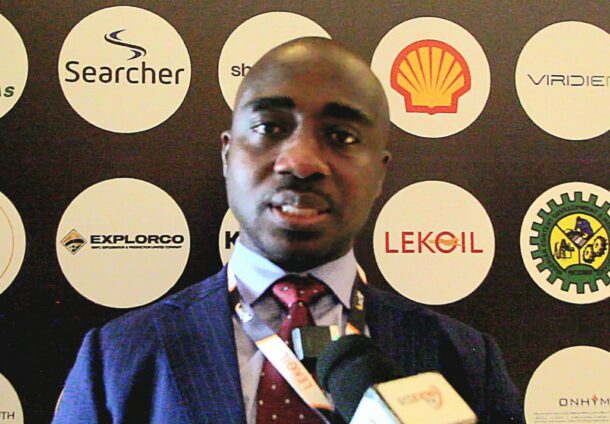
Deloitte Africa Leader for Infrastructure & Capital Projects (I&CP), Yaw Appiah Lartey, has proposed the establishment of a specialised financial institution dedicated to supporting industrial development and the growth of local businesses in Ghana.
According to him, such an institution could provide affordable, long-term financing to businesses operating across strategic capital-intensive sectors, including oil and gas, manufacturing and other industries to drive economic transformation.
Citing Nigeria’s Bank of Industry (BOI) as an example, Mr. Lartey said Ghana could set up a similar institution that will provide financing to businesses at relatively low interest rates.
“So, the Bank of Industry in Nigeria is specifically supporting industrial development, including oil and gas, and they have interest rates as low as 5% to 7% for companies and businesses. It’s something that elsewhere in Africa, including Ghana, we can learn that and have a bank that’s established for industry.”
According to him, while initiatives such as the women's bank are important, similar energy should be channeled into Ghana’s broader industrial financing needs to support businesses across sectors.
“If we need to establish any financial institution to support industrial growth, we should look at the Nigerian Bank of Industry,” he stressed.
Speaking at the Africa Oil Week Energy Conference held in Accra, Mr Lartey who is also the Partner, Strategy and Transactions at Deloitte Ghana added that the model could complement existing institutions such as the Agricultural Development Bank and the National Investment Bank.
He believes this will make dedicated financing accessible for industrial expansion, SME development and businesses capable of driving economic growth.
He, however, stressed that access to finance alone would not be enough to transform Ghanaian businesses into globally competitive players, particularly in the oil and gas industry.
“We have to build the capacity of our local SMEs, so the local operators need to be empowered. If they are not empowered technically and they don’t have the competence, we probably cannot develop them to become top giants in the oil and gas space. So, the first point is about capacity building,” he noted.
He called for financing to be complemented by technical training, skills development and other forms of support to enable local businesses to compete effectively and take advantage of opportunities in the industrial and energy sectors.
Latest Stories
-
Police restore calm at Larteh following Odwira festival disturbance
22 minutes -
‘All the camps will dissolve’ – Bawumia demands one NPP for 2028
24 minutes -
There is no time to waste – Bawumia orders NPP to begin 2028 work
32 minutes -
Sarkodie visits MobileMoney Fintech LTD
34 minutes -
John Boadu unveils new NPP strategy to win back youth and modernise party
39 minutes -
Hawa Koomson elected NPP National Women’s Organiser
42 minutes -
John Boadu begins NPP rebuild from grassroots ahead of 2028 election
43 minutes -
Titus Glover wins NPP National Organiser race on second attempt
46 minutes -
Winning 2028 election won’t be easy; we must work harder – Bawumia
47 minutes -
You’ll be part of 2028 campaign; there’s enough work for all of us – Bawumia to NPP aspirants
55 minutes -
John Boadu moves to unite NPP after heated leadership contest
57 minutes -
Today is not a day of victory but a day of responsibility and great unity – John Boadu
58 minutes -
Let us choose unity over division – John Boadu to NPP
1 hour -
Our task is to build a renewed NPP – John Boadu
1 hour -
Teamwork, discipline will drive NPP’s 2028 victory – Justin Kodua after retaining General Secretary position
1 hour