

Audio By Carbonatix
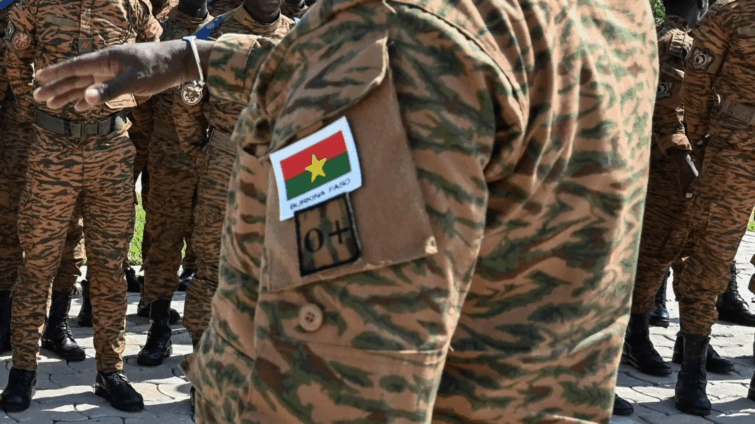
At least 130 civilians were killed by Burkina Faso government forces and allied militia in March near the western town of Solenzo, Human Rights Watch (HRW) says in a new report.
It says the "massacre", following an operation led by Burkinabè special forces, resulted in widespread civilian deaths and displacement of ethnic Fulanis.
The Fulani are a pastoralist, largely Muslim community who the government has often accused of backing Islamist militants - an allegation denied by community leaders.
About 40% of Burkina Faso is under the control of groups linked to al-Qaeda and the Islamic State operating in West Africa's Sahel region.
The attacks, in which thousands of people have been killed and millions displaced, have continued despite promises by the country's military leaders to deal with the insurgency.
Ahead of the release of the HRW findings on Monday, there were reports of more militant attacks over the weekend with dozens of military and civilian casualties.
The BBC has not been able to confirm these reports and the authorities do not routinely comment on reported jihadist attacks.
The BBC has approached the Burkina Faso government for comment on the HRW report.
Last year, the government described as "baseless" another HRW report that had accused soldiers of a "massacre" in which 223 villagers were killed.
It also said that any allegations of human rights abuses committed "in the fight against terrorism" were systematically investigated.
The rights group says it interviewed witnesses, militia members, journalists and the civil society and analysed videos shared on social media to make the findings regarding the army's involvement in the March killings.
HRW previously said the army was "implicated" in the killings, based on videos that were being shared online showing dozens of dead and injured people, although the findings were not definitive.
It now says further research has "uncovered that Burkina Faso's military was responsible for these mass killings of Fulani civilians".
It adds that least 100 more civilians were killed last month in reprisal attacks by jihadist groups against those seen as helping the military.
"Mass killings of civilians by government security forces, militias, and Islamist armed groups amount to war crimes and other possible atrocity crimes," it says.
The rights group has urged the government to investigate and prosecute all those responsible for the crimes.
This came as junta leader Capt Ibrahim Traoré returned from Moscow after a Friday meeting with Vladimir Putin on cooperation and security in the Sahel.
Since the military seized power, Burkina Faso has turned away from colonial power France and towards Russia for help in tackling the Islamist insurgency.
Latest Stories
-
AFCON 2027Q: ‘The last time Ghana won was eight games ago’ – Carlos Queiroz
12 minutes -
AFCON 2027Q: Gambia defeat doesn’t make me a loser – Carlos Queiroz
16 minutes -
2027 AFCONQ: Late goals seal 2-0 for Côte d’Ivoire against Somalia
27 minutes -
AFCON 2027Q: My resignation won’t solve Ghana football issues – Queiroz
32 minutes -
Morocco call off Ghana friendly after Black Stars’ AFCON setback
38 minutes -
‘We have to say sorry’ – Queiroz apologises after Ghana’s humiliating defeat to Gambia
45 minutes -
New Yorker identified as Yaw Boahene, 57, killed after bag was caught in subway train doors
51 minutes -
Former American Idol contestant and pastor found guilty of murdering wife
1 hour -
Trump rules out joint US-China venture to develop AI
1 hour -
‘Beating Ghana did not surprise me’ – Gambia boss
1 hour -
OpenAI agents get rebrand – as ‘dots’ – while safety worries delay new model
2 hours -
US ban on Canadian alcohol and dairy takes effect as trade war drags on
2 hours -
Baffour Awuah’s EOCO case reopens Equity Savings & Loans file as SIC recovery battle emerges
2 hours -
Ghana ranked 5th source of cocaine seized at Antwerp, Belgium in 2025
2 hours -
‘We knew there was disruption’ – Gambia boss claims Ghana players clashed at half-time
2 hours