

Audio By Carbonatix
Chair of the African Group of Negotiators on Climate Change (AGN), Dr. Richard Muyungi, has called for a ‘Just Transition’ that addresses Africa’s energy poverty.
Emphasising the ‘Africa First’ agenda, he said Africa can not talk about just transition while over 600 million people in Africa are without access to energy and 900 million without clean cooking solutions.
“It is for this reason that the inclusion of the Clean Cooking agenda, which is being championed by H.E, Dr. Samia Suluhu Hassan, President of the United Republic of Tanzania in the just transition work programme, is key,” he noted.
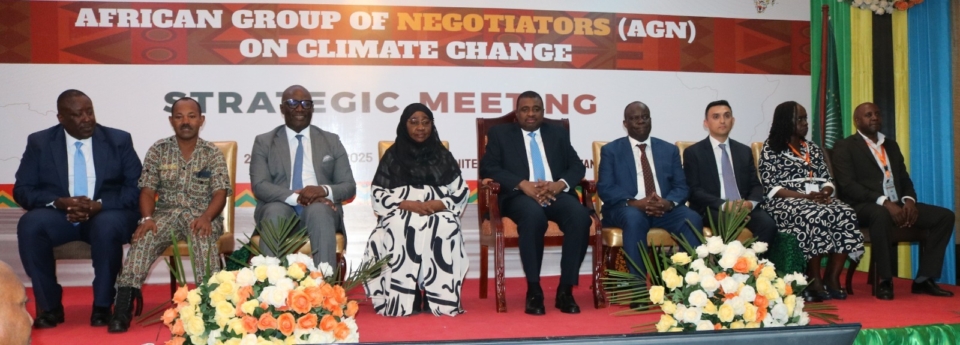
Dr. Muyungi was addressing the first Strategic Meeting of AGN in Zanzibar, under the chairmanship of the United Republic of Tanzania.
“I am delighted to note that the African Union, at its last assembly, adopted both the AU declaration on Clean Cooking and the Dar-es-Salaam Declaration on Mission 300 Energy Summit that focuses on providing energy access to at least 300 million people in Africa by 2030.
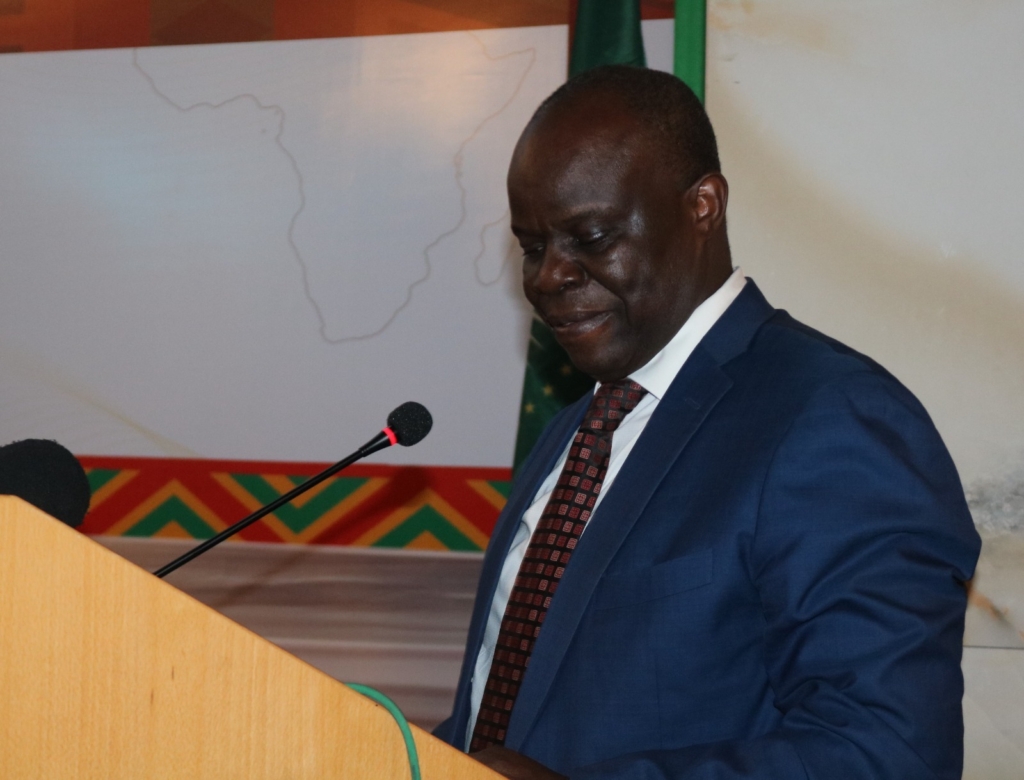
"At this meeting, we have resolved to ensure these two important decisions by the AU Assembly are embedded in the Just transition and mitigation work programmes towards Belem and beyond,” added the AGN Chair.
In the context of climate change, a ‘just transition’ refers to a strategy that ensures a fair and equitable transition to a low-carbon economy, minimising negative impacts on workers and communities while maximising social and economic opportunities.
It aims to balance climate action with social justice, creating decent work, reducing inequalities, and ensuring no one is left behind.
At its fourth session, the Conference of Parties to the Paris Agreement (CMA) decided to establish a work programme on ‘Just Transition’ pathways to advancing the goals of the Paris Agreement.
The decision emphasized that just transition pathways must be based on nationally defined development priorities and include social protection so as to mitigate potential impacts associated with the transition.
Other priorities discussed and agreed at the AGN meeting included;
- Finalizing Africa’s approach towards the new round of Nationally Determined Contributions (NDCs 3.0), ensuring they are ambitious, equitable, and supported by adequate means of implementation;
- Securing clarity and operationalization of the New Collective Quantified Goal on climate finance, building upon AU and CAHOSCC relevant guiding decisions and the "Baku to Belém Roadmap to 1.3 trillion USD by 2035";
- Ensuring decisive progress on adaptation, including the adoption of robust indicators under the Global Goal on Adaptation, and tangible progress on National Adaptation Plans;
- Defending Africa’s equity-centered positions in the evolving global climate governance, particularly in loss and damage, technology transfer, just transition work programmes, and transparency frameworks;
- Reaffirming the critical importance of youth and gender inclusion in advancing an equitable, inclusive, and sustainable climate future for the African continent, recognising that youth and women are not only disproportionately affected by the impacts of climate change but are also powerful agents of change and innovation in driving transformative climate action; and
- Reaffirming that Africa’s natural wealth presents a transformative opportunity to drive global climate change mitigation while catalysing inclusive, sustainable economic growth across the continent, with particular attention to how Africa’s endowment of 60% of the world’s highest-quality solar potential, significant wind, vast hydropower capacity, could enable Africa to leapfrog into a low-carbon future while contributing meaningfully to global emissions reductions.
Meanwhile, the AGN Chair reaffirmed the group’s crucial role in technically advising the African Union’s key institutions notably, the African Ministerial Conference on the Environment (AMCEN) and Committee of African Heads of State on Climate Change (CAHOSCC), ensuring that Africa's priorities are consistently, coherently, and effectively articulated within the UNFCCC process and beyond.
“Our Group remains the only technical backbone that sustains Africa’s political decisions on climate change,” said Dr. Muyungi.
“It is for this reason that this meeting is designed, among other objectives, to address decisions emanating from the February 2025 CAHOSCC meeting in Addis Ababa, and to provide clear technical advice that will guide the African continent throughout this year towards COP30 and beyond.”
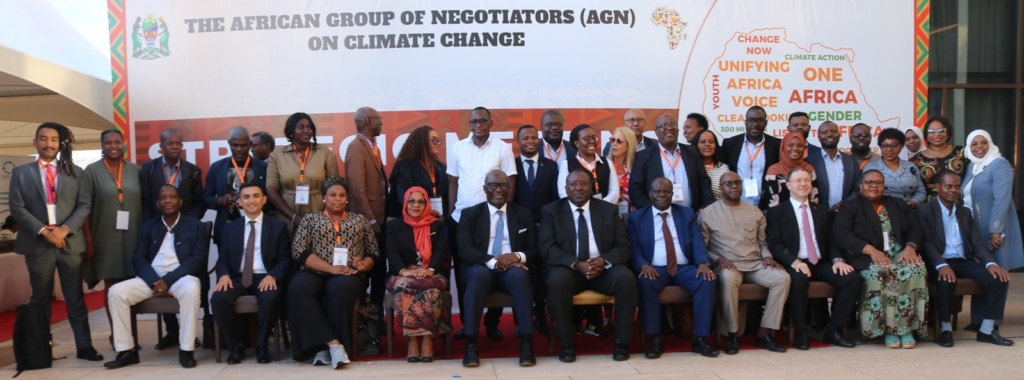
Generally, the meeting reaffirmed Africa’s unwavering commitment to a unified, science-driven, and justice-centred approach to climate negotiations, emphasising the centrality of adaptation, climate finance, clean energy access, just transition, and institutional strengthening anchored in mandates from the African Union, AMCEN, and CAHOSCC as essential pillars of Africa’s climate agenda.
"Africa’s adaptation and resilience building must remain at the heart of our conversations, both in Africa and globally. Our countries and communities are on the frontlines of climate impacts—yet we have contributed the least to the crisis. Belem must deliver stronger commitments that prioritize the urgent needs of vulnerable communities, protecting livelihoods, ecosystems, and economies,” said Dr. Mithika Mwenda, Pan-African Climate Justice Alliance (PACJA) Executive Director.
He added that “central to this is adaptation finance. It is not enough to promise – finance must flow, and it must be accessible, predictable, adequate and scaled up dramatically. We must demand concrete delivery on the new collective quantified goal on finance. Africa must lead the call for a goal that is not only ambitious but based on real needs, reflecting the scale of the adaptation and mitigation challenges we face.”
Latest Stories
-
Mobile Money Fintech LTD, UMB train hairdressers and beauticians
32 minutes -
Asylum votes show people want help, says Kemi Badenoch
2 hours -
Badenoch welcomes expanded grooming gangs inquiry
2 hours -
GACL MD sues Samuel Buabeng over alleged Facebook defamation
2 hours -
Christa Pike in critical condition after surviving two lethal injections, lawyer says
2 hours -
Kemi Badenoch backs face covering ban at protest
2 hours -
Man City not ‘above the rules’, says No 10 after backlash to Burnham remarks
2 hours -
Real Madrid submit ‘substantial’ dossier in Barca payments case
2 hours -
Messi completes purchase of second Spanish club
2 hours -
Government must engage horticulturists on tomato crisis – GhIH
3 hours -
King Promise’s ‘Can’t Tame Us’ becomes official Chelsea anthem
3 hours -
Afenyo-Markin demands Baffour Awuah’s release from EOCO’s custody, end to alleged political intimidation
3 hours -
Rapper Rick Ross arrested on domestic violence charges
3 hours -
Minority demands security review of Ghana-Colombia visa waiver and port deals
3 hours -
Pursue drug kingpins, not persecute political opponents – Afenyo-Markin tells EOCO
3 hours