

Audio By Carbonatix
Co-Founder and Executive Partner of Arthur Energy Africa, Harriette Amissah-Arthur, has attributed Ghana’s recurring power sector crisis to longstanding inaction and poor accountability rather than solely financial constraints.
Speaking in an interview on JoyNews' Newsfile on Saturday, May 17, the expert stressed that the root of the energy sector’s problems lies in a failure to take deliberate, structured action over the years.
"I think that if you look at what has been happening over the decades now, the problems we're facing with our power sector are a combination of inaction on our part as Ghanaians," she noted.
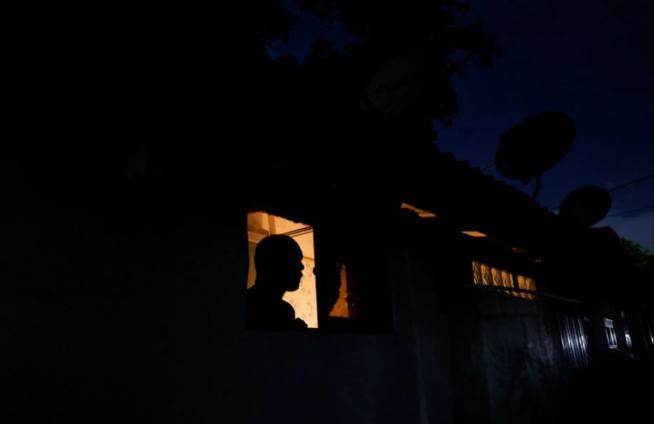
Her comment comes after the Energy Minister John Jinapor warned of an imminent nationwide power crisis, revealing that Ghana has less than three days of liquid fuel left to operate its power plants.
Appearing before Parliament’s Energy Committee, he stated that the country urgently requires over GH¢1.1 billion to procure fuel and settle a $1.7 billion debt owed to Independent Power Producers (IPPs). He also noted that Karpower, a key power provider, has threatened to halt operations if payments are not made promptly.
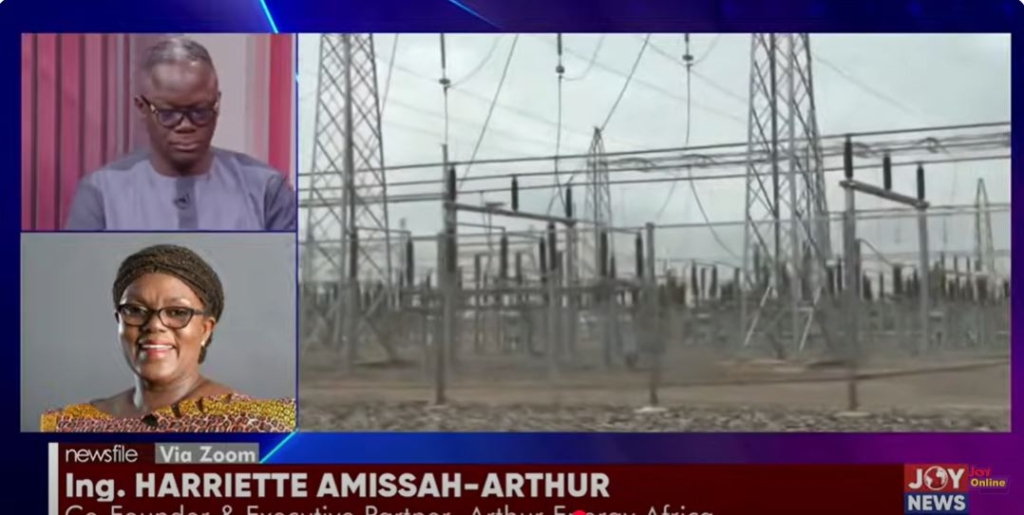
According to Madam Amissah-Arthur, the energy sector has operated with a flawed model that neglects basic business principles, such as cost recovery and accountability.
She criticised the current system, which fails to track energy consumption across sectors or quantify subsidies for critical public services like hospitals and educational institutions.
Madam Amissah-Arthur argued for intentional policy decisions where such facilities are clearly identified and the cost of subsidising them is shared transparently among other consumers.
“Every unit of power must be accounted for,” she insisted. “Operators should be able to tell us how much power goes into street lighting, educational institutions, or hospitals, and how much is lost due to non-payment or technical issues. Right now, everything is lumped together, and we’re just guessing.”
The Co-Founder and Executive Partner of Arthur Energy Africa also highlighted overlooked areas of loss in the sector, such as inefficiencies in procurement and the purchase of power capacity at costs above international benchmarks.
“Globally, we have benchmarks for power procurement. If we're paying above that, we need to justify it with clear reasons,” she added.
Latest Stories
-
Gold edges lower with focus on Fed minutes, rate path clues
19 minutes -
Oil prices rise as storms and air strikes threaten supply
28 minutes -
Nigeria nears 2,000 repatriations from South Africa after latest evacuation flight
37 minutes -
World Bank maintains Ghana’s growth rate forecast at 4.8% in 2026
2 hours -
Cedi was worst African currency in quarter 2, 2026 – World Bank
2 hours -
AI gains can lift three times as many people out of poverty in Ghana – World Bank
2 hours -
Scammers target ECG customers with fake meter sales and MoMo payment calls
4 hours -
Banker in court for allegedly stealing GH¢1 million
4 hours -
Police arrest suspect over jewellery theft during fire outbreak
5 hours -
EOCO returns Hanan’s £6,700, GH¢2,750 and devices after defence challenge
5 hours -
Opplift Youth Entrepreneurs Summit 2026 equips entrepreneurs with skills, mentorship and support
5 hours -
Rival clubs want range of punishments for Man City
5 hours -
Tear gas in Paris and Marseille as school protests grow across France
5 hours -
Kane inspires England to win over Czech Republic in UEFA Nations League
5 hours -
Finland orders halt to work on two Google data centres
6 hours