

Audio By Carbonatix
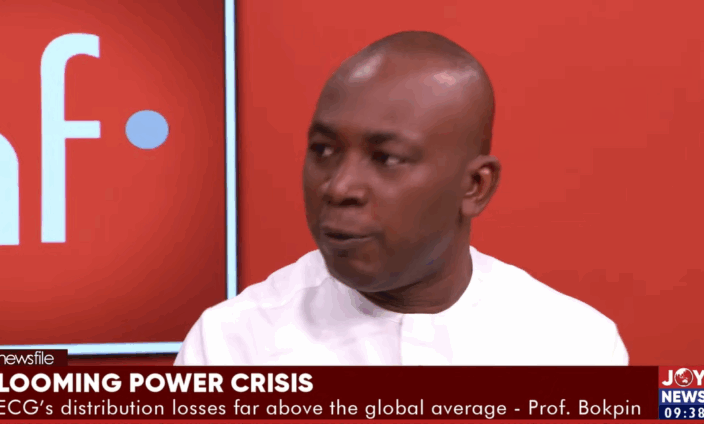
An economist at the University of Ghana Business School, Professor Godfred Bopkin, has emphasised the urgent need for Ghana to strengthen its foreign reserves in order to achieve long-term economic stability and predictability.
Speaking on JoyNews' Newsfile programme on Saturday, May 17, Professor Bopkin expressed his support for the Bank of Ghana’s current stance.
“What the market is looking for is stability, and we need to build our reserves. And I agree,” he said. “I heard the First Deputy Governor of the Bank of Ghana saying that they are not burning the reserves, and I agree with that.”
According to the economist, Ghana had already exceeded the floor set under the IMF-supported programme prior to the last general elections, giving the country some leeway to intervene in the forex market without breaching critical thresholds.
“There’s some kind of margin that we can still intervene in the market without going below that threshold,” he noted.
However, Professor Bopkin warned that short-term interventions must not overshadow the long-term goal of building a strong reserve buffer.
“Anytime the cedi strengthens, the question is always about sustainability,” he said. “The ups and downs are not good for the market and not good for planning.”
He advocated for a more forward-looking approach: “Once we have favourable external conditions, the timing is right. We should rather build our reserves to allow for predictability over the long term, so that in the next 10, 15 or 20 years, we have enough reserves to keep the cedi stable. That would be more helpful.”
Professor Bopkin acknowledged that efforts to stabilise the exchange rate could help bring down inflation.
However, he cautioned that such a strategy tends to favour imported goods over local production.
“That only makes imports cheaper and imported inflation lower than locally produced,” he explained.
“If you look at the data, since November 2023, inflation on locally produced goods has been higher than on imported goods. That means you are far better off importing – even after paying all the duties at the port – than producing locally,” he added.
He warned that such a trend risks undermining Ghana’s productive capacity and job creation potential.
“When you do it that way, you are only outsourcing the productive capacity of the economy to other countries. And that will not create decent jobs.”
Professor Bopkin called for more granular inflation data going forward, particularly to track the disparity between imported and locally produced goods, arguing that policy must be guided by evidence that supports local enterprise and long-term economic resilience.
Latest Stories
-
10 arrested in illegal mining operations at Kpali
1 minute -
“Styrofoam ban is first phase of single-use plastics crackdown” – EPA
13 minutes -
US Treasury’s Bessent faces G20 diplomacy test amid tariffs, Iran war, bond turmoil
15 minutes -
One dead, several injured as fire ravages parts of Abotaose Market
17 minutes -
Accra ranks among world’s top 20 cities for nightlife in 2026
1 hour -
Police arrest two suspects over murder of Yidani chief and son
2 hours -
How Albert Bondah, Fredima, Socrate Safo, Counselor Lutterodt engineered Dan Kwaku Yeboah’s comedy show
2 hours -
Yidani chief’s murder: Police arrest two suspects following intelligence tip-off
2 hours -
Government to connect 206 Volta communities to national grid within six months – Energy Minister
2 hours -
Petrol, diesel and LPG prices expected to rise marginally in September – COPEC
3 hours -
Canada installs large Lake Ontario sign in latest jab at US
3 hours -
Energy Minister commends Roads Minister for massive road projects in Volta Region
3 hours -
Executive support professionals must reposition as strategic partners – Centre for Executive Development
4 hours -
Ablakwa calls for end to African conflicts, urges leaders to create jobs
4 hours -
NSMQ 2026: Prempeh College withstands late Keta SHTS push to grab first semi-final spot
4 hours