

Audio By Carbonatix
The past week kicked off in unusual tranquillity, many wondering if they were in another city as the deafening noise had vanished overnight, paving the way for native gods to concoct blessings to be unleashed after a month.
Then the skies burst, and scattered rains descended like gravity pulling one US dollar to break the eight. Death snatched five, and the destruction was immeasurable, another grim reminder of Accra's endless battle with flooding.
The digital streets flooded too, not with water, but with a haunting relic of a Daily Graphic newspaper clipping from April 18, 1960, headlined ‘When the rains came to Accra’.
Sixty-five years on, the rains are still tormenting Accra residents without any solutions, like ‘Ryan Giggs: Tearing Liverpool apart since 1990!’.
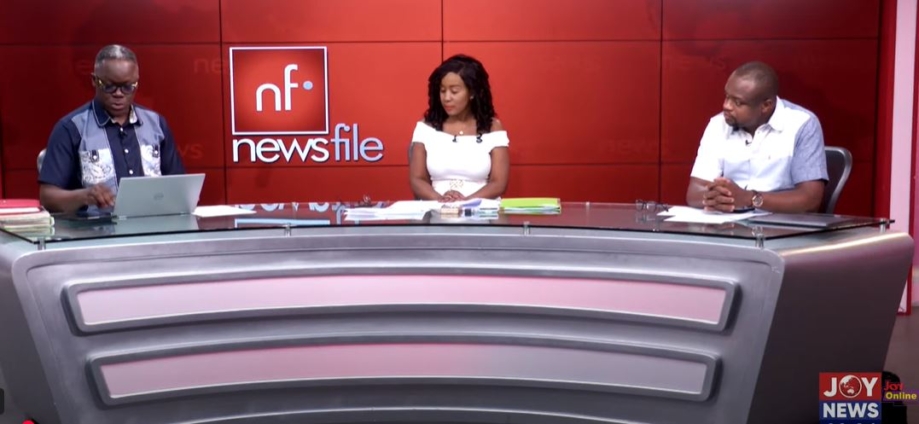
Unsurprisingly, flooding dominated discussions on the Saturday, May 24 edition of the JoyNews Newsfile programme hosted by Samson Lardi Anyenini.
His assembled panel of experts had to take a bite into one of Ghana's most pressing issues.
Buckle up, as MyJoyOnline presents you with five interesting takeaways from the conversation:
- Planning, design and enforcement problem
Even though the rainy season is known and weather warnings are issued periodically, not much is done to prevent disasters.
The perennial flooding problem seems to be far from over, with areas such as Kumasi and Sunyani, which were free from floods, now also being affected.
Even though there are laws, they are not enforced to the letter.
"We don't necessarily have a flooding problem in Ghana. We have a planning and enforcement problem, essentially, and we need the boldness to prevent it," Head of Chambers at Clinton Consultancy, Amanda Akuokor Clinton, stated.
She queried why Ghana, which historically had good sanitation, is now facing such a crisis.
Economic Adviser to the Vice President, Prof. Sharif Mahmud Khalid, was in support.
“I'm thinking or saying that it's not just only the sole preserve of the government to fix this. We, individually, have personal responsibilities and the state institutions as well and civil servants who have the object responsibility to ensure and enforce this; that's where I look at it from, more from the enforcement angle.”
2. Blistering indictment: It's all about indiscipline
For former Deputy Attorney General and Minister for Justice Alfred Tuah-Yeboah, indiscipline is the main cause of flooding in Ghana and nothing else.
"Everything about flooding has to do with indiscipline. Indiscipline on the part of the law enforcers, indiscipline on the part of those of us who build when it comes to the laws of the land," he complained.
He pointed fingers at both law enforcers and citizens who disregard building codes, dump refuse, and even blackmail governments to avoid eviction from illegal settlements.
“Now, you look at a situation where you have the various assemblies which have been given the power to enact bylaws to regulate activities within the various municipalities and assemblies. People block the streets; they throw trash into our drains. They do all manner of things. When confronted, they tend to blackmail the government in power.”
READ ALSO: Parliament resumes sitting tomorrow
3. Building on waterways and illegal structures as major contributors
Another problem which contributes to these disasters is structures situated in waterways.
Individuals build directly on roads and in places not designated for construction, like the middle of a planned road in a residential area, with no action from local authorities.
This systemic disregard for zoning laws and permits is exacerbated by a lack of political will to demolish illegal structures.
People are emboldened to build on waterways and in slums (green belts), often blackmailing governments with threats of electoral defeat if confronted or evicted.
President John Dramani Mahama embarked on a tense inspection tour of flood-prone areas in the capital, where illegal constructions on wetlands and watercourses have worsened flooding, leaving communities submerged each rainy season.
In his speech, he said the government would demolish all illegal structures in waterways.
The government has taken some action, but many of these structures remain standing.
“You confront them and they try to blackmail you by telling you that if you are in government, we are going to show you the exit when it comes to elections. I mean, these are some of the things that you should confront head-on,” Alfred Tuah-Yeboah pointed out.
4. Funding and institutional failures in flood mitigation
There is a disconnect between allocated funds and tangible improvements. The recurring nature of the problem since the 1960s highlights a lack of sustained treatment after diagnosis.
The estimated cost to solve Ghana's flood crisis is $5 billion. Despite this, funds allocated for sanitation and flood projects, like the 'Odaw project', have not yielded expected results.
In 2024, GH₵8.2 million was allocated by the World Bank for flood mitigation in Accra, and a $150 million loan from the 2024 Garrett Project was approved for flood resilience in Greater Accra alone.
For Ms Clinton, it is a "national embarrassment" to continue losing lives in such a manner.
5. Societal attitudes and corruption fuelling the problem
Associate Professor, School of Law, University of Ghana, Legon, Prof. Kwadwo Appiagyei-Atua Juan notes that communities affected are typically poor areas where infrastructure is not well-preserved, and residents may lack proper waste disposal means, leading to choked drains.
Beyond planning and enforcement, "people's attitudes" are crucial, he elaborated.
He highlighted fund diversion by officials instead of the funds being used for their intended purpose.
He called for a "mind change", as some individuals and even officials appear to profit from the recurring problem. Prof. Appiagyei-Tua cited bribery and corruption within municipal assemblies as other major issues derailing the flooding fight.
“Those who are making money out of this – it's like a venture. Every year, they make big money out of it because they present budgets, they get the money, and they don't do anything, and so we see this recycling of the problem going on.
“Poverty production: we are producing poverty, and this is the leadership producing this poverty, and people are suffering because of that, so every year the people who die are not the rich and famous; these are people in poor communities…
“Bribery and corruption at the assemblies is a big problem, and people put up buildings without permits and so on,” he lamented.
Latest Stories
-
Mobile Money Fintech LTD, UMB train hairdressers and beauticians
1 hour -
Asylum votes show people want help, says Kemi Badenoch
2 hours -
Badenoch welcomes expanded grooming gangs inquiry
2 hours -
GACL MD sues Samuel Buabeng over alleged Facebook defamation
2 hours -
Christa Pike in critical condition after surviving two lethal injections, lawyer says
2 hours -
Kemi Badenoch backs face covering ban at protest
3 hours -
Man City not ‘above the rules’, says No 10 after backlash to Burnham remarks
3 hours -
Real Madrid submit ‘substantial’ dossier in Barca payments case
3 hours -
Messi completes purchase of second Spanish club
3 hours -
Government must engage horticulturists on tomato crisis – GhIH
3 hours -
King Promise’s ‘Can’t Tame Us’ becomes official Chelsea anthem
3 hours -
Afenyo-Markin demands Baffour Awuah’s release from EOCO’s custody, end to alleged political intimidation
3 hours -
Rapper Rick Ross arrested on domestic violence charges
3 hours -
Minority demands security review of Ghana-Colombia visa waiver and port deals
4 hours -
Pursue drug kingpins, not persecute political opponents – Afenyo-Markin tells EOCO
4 hours