

Audio By Carbonatix
The IMANI Centre for Policy and Education (IMANI-Africa), has called for a bipartisan approach to solving the country’s recurrent energy sector challenges.
The call comes on the heels of government’s postponement of the implementation of the GHS1 energy sector levy from June 9 to June 16, aimed at addressing the country’s US$3.1 billion energy sector debt crisis.
Mr Felix Kwakye Ofosu, the Minister of State in charge of Government Communications, noted that it would be insufficient to clear the sector debt if the Electricity Company of Ghana collected 100 per cent of all revenue, hence the levy.
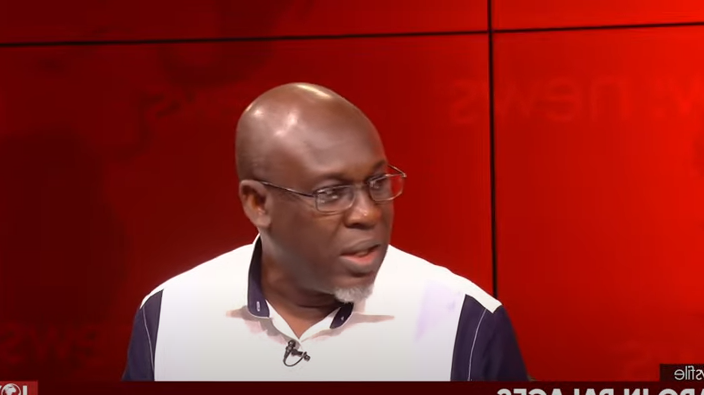
However, Mr Kofi Bentil, Senior Vice President of IMANI-Africa, said the longstanding debt was “a bipartisan problem of ineptitude,” that would not be solved through the imposition of taxes on Ghanaians.
Contributing to discussions on the country’s energy sector, he stated that for the past 20 years, Ghanaians had been constantly told by both political parties about the numbers, analysis of energy economics and fuel dynamics, yet no action had been taken to holistically solve the energy sector challenges.
The discussions centred on the introduction of a GHS1 levy, applicable to petrol, diesel and marine gas oil, heavy fuel oil, partially refined oil (naphtha) and liquefied petroleum gas.
“Before President Mahama’s first term, we’ve been coming towards ‘dumsor’ (intermittent power outages) and analysts warned that we’re going to hit a rock, [but] they sat down and made arguments back and forth,” Mr Bentil noted.
“We are suffering the effects of bad governance, and we are seeing it in our energy sector. If the same incompetence persists, I don’t see the changes we need to see to put the right people in the right places.”
The IMANI-Africa Senior Vice President, therefore, called for a bipartisan approach and the use of technocrats in finding lasting solutions to the challenges.
“The tax looks like it is necessary because somebody has to pay that bill. If we have a competent government, they will structure… we fought for deregulation. If they do their work well and tax us, we will pay on condition that these problems will not recur,” he said.
He lauded the Energy Sector Levy Act (ESLA), introduced in 2015, to consolidate several energy-related levies in the country and address various energy sector debts, including power and fuel supply liabilities.
Latest Stories
-
EchoWave earns praise for sound quality at 10th Women in Worship
10 minutes -
Crackdown on South Africa’s unsafe streets ordered by president to keep women safe
21 minutes -
Banks are responding to improved monetary policy conditions – John Awuah
40 minutes -
Judges’ conference forces further adjournment of Salomey Baffoe case to Oct. 5
52 minutes -
GRA assures Tullow of collaboration to settle $393m tax liability without disrupting its petroleum operations
1 hour -
South Korea demands apology from Pyongyang for landmine blasts that injured three
1 hour -
Carlos Queiroz not the sort of coach Black Stars need – Nii Lante Vanderpuye
2 hours -
AFCON 2027Q: ‘Our Black Stars team is gone’ – Former Sports Minister
2 hours -
Prof. Prempeh calls for public review of draft constitutional reform bills
2 hours -
AFCON 2027Q: ‘I have never seen a poor performance from Black Stars like against Gambia’ – Nii Lante Vanderpuye
3 hours -
Bawumia backs insurance sector reforms after engagement with IBAG
3 hours -
Nigeria set to launch National Digital Address System 9 years after Ghana showed the way
3 hours -
Policy rate decision takes time to reflect in lower lending rates – BoG
3 hours -
Polytanks Ghana supports GNFS with water storage tanks
3 hours -
Western Regional Minister applauds Karpowership’s role in Ghana’s power sector
3 hours