

Audio By Carbonatix
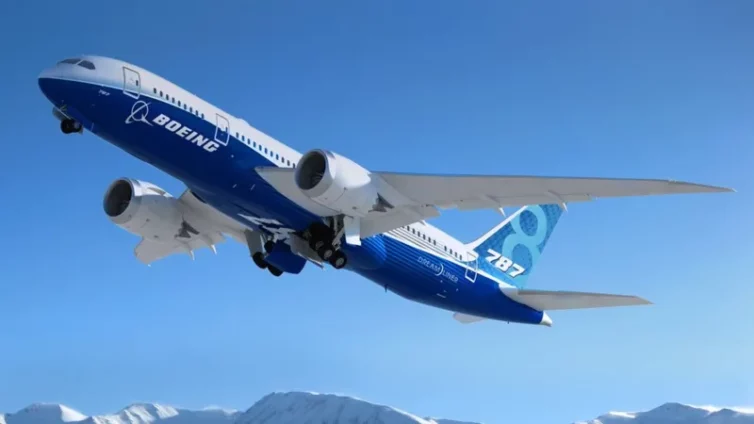
Last month, Boeing celebrated carrying its billionth passenger on the 787 Dreamliner - an impressive feat given it only launched 14 years ago.
Until today's tragic Air India crash in Ahmedabad, the model was a mainstay of intercontinental travel and had an exemplary safety record.
This is a different plane from the Boeing 737 Max, which was in the headlines after fatal crashes in Indonesia and Ethiopia, which killed hundreds of people in 2018 and 2019, respectively.
A software fault was found to have caused those incidents, and the model was grounded worldwide for 18 months.
So far, there is nothing to suggest any fault on Boeing's side today in India. A much fuller picture will come once the plane's black boxes - the electronic recording devices that store vital flight information - have been recovered.
Various theories have been posited as to what could have caused the crash in Ahmedabad, but one pilot I spoke to said that nowadays it's rare for a manufacturer's fault to cause a fatal incident.
Barring the very notable exception of the Boeing 737 Max crashes, he said, most were down to human error in the cockpit.
It's also important to remember that when you fly commercially, you will almost always either be on a Boeing or an Airbus model, as the plane-making industry operates as an effective duopoly.
Even so, Boeing has found its name associated with yet another tragic aviation incident.
The company said its "thoughts are with the passengers, crew, first responders and all affected" and added that it was working with Air India to gather more information on the crash.
Boeing chief executive Kelly Ortberg said the firm's "deepest condolences go out to the loved ones of the passengers and crew" on the flight, and that Boeing would support the investigation into the crash led by India's Aircraft Accident Investigation Bureau.
When stock markets closed in New York on Thursday, Boeing shares were down nearly 5%.
The tragedy is another problem for a firm that lost nearly a billion dollars a month last year, as it grappled with a safety crisis, quality control issues, as well as a damaging workers' strike which lasted seven weeks.
After one of its doors flew off midway through an Alaska Airlines flight in 2024, Boeing was forced to pay $160m (£126m) in compensation.
Before that, the company also reached a $428m settlement with Southwest Airlines for the financial damages caused by the long-term grounding of its 737 Max fleet.
In addition to severe financial issues, Boeing has faced serious questions over its safety practices. In April, the company said it had seen "improved operational performance" from "our ongoing focus on safety and quality".
In 2019, a former employee told the BBC that under-pressure workers had been deliberately fitting sub-standard parts to aircraft on the production line.
John Barnett, who worked as a quality control manager during his more than 30 years at Boeing, took his own life in March last year. Boeing denied his assertions.
Another whistleblower, engineer Sam Salehpour, told US politicians that he was harassed and threatened after he raised concerns about the safety of Boeing's planes.
Boeing said retaliation was "strictly prohibited" and it had seen a "more than 500% increase" in reports from employees since January, "which signals progress toward a robust reporting culture that is not fearful of retaliation".
Boeing has also been embroiled in a series of legal battles related to the crashes in Indonesia and Ethiopia.
Last month, the firm narrowly avoided criminal prosecution by coming to an agreement with the US Department of Justice (DoJ).
To the dismay of victims' families, the DoJ said Boeing would admit to "conspiracy to obstruct and impede" an investigation by the US Federal Aviation Administration and would pay more than $1.1bn in fines.
Unsurprisingly, Boeing's top executive team has undergone a pretty significant shake-up over the past couple of years.
Its new boss, Kelly Ortberg, came out of retirement a year ago to try to revive the ailing company.
He has promised an improvement to Boeing's safety culture and recently said he was confident the aviation giant would soon return to profitability.
Today he faces more awful news to navigate.
Latest Stories
-
T-bills auction: Government fails to achieve target; yield on 91-day-bill remains unchanged
2 minutes -
It’s Ghana’s shame to denigrate Nkrumah when the whole world honours him as African of the Century – Asiedu Nketiah
10 minutes -
No other nationalist can compare to Nkrumah – Asiedu Nketiah
17 minutes -
Collateral Registry: Foreign banks accounted for GH¢19.9bn of secured credit in quarter 2, 2026
17 minutes -
This government should expect scrutiny – Asiedu Nketiah
42 minutes -
Two-year-old girl dies in domestic fire at Cantonments
1 hour -
Asiedu Nketiah urges better working conditions for journalists
2 hours -
JoyNews’ Precious Semevoh wins climate change reporting award at Bono GJA Awards
2 hours -
Kumasi Central Market phase 2 to begin in October after years of abandonment
2 hours -
Sentuo offers fuel supply reassurance as NPA sees steady output through December
3 hours -
Ghanaian smock showcased at Lesotho Tourism Summit
3 hours -
Four pupils to one desk: The painful plight of schools in New Juaben North
4 hours -
Ipswich launch investigation into racist abuse of Abdul Fatawu
4 hours -
Arrest of Techiman nurse is purely political persecution – ‘Ghana Jollof’
4 hours -
Isak nets winner as Liverpool edge Bournemouth
5 hours