

Audio By Carbonatix
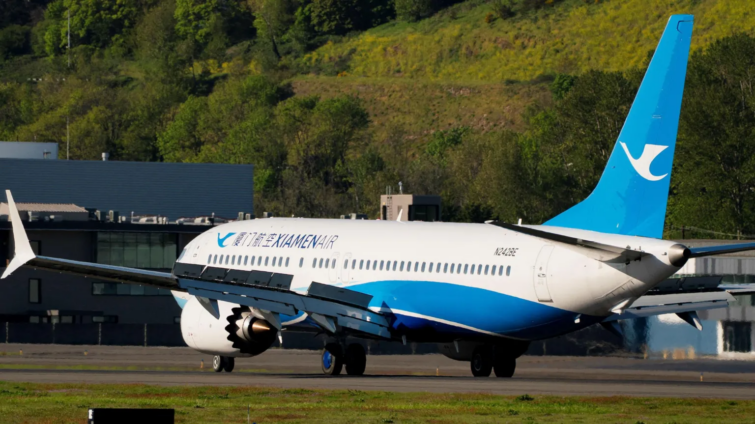
China has sent back planes it ordered from the US in its latest retaliation over Trump tariffs, the boss of aircraft maker Boeing has said.
Kelly Ortberg said two planes had already been returned, and another would follow after trade tensions between the two countries escalated.
Boeing's chief executive told CNBC that 50 more planes were due to go to China this year, but their customers had indicated they will not take delivery of them.
The US put 145% tariffs on imports from China and it hit back with a 125% tax on US products.
Speaking in the Oval Office on Tuesday, Trump said he was optimistic about improving trade relations with China, saying the level of tariffs he had imposed would "come down substantially, but it won't be zero".
However, Mr Ortberg said China "have in fact stopped taking delivery of aircraft because of tariff environment".
Boeing is America's largest exporter with about 70% of its commercial aircraft sales outside of the US.
Mr Ortberg said Boeing was assessing options to re-market 41 of the already built planes to other customers as there was high demand from other airlines.
He said there were nine planes not yet in Boeing's production system and he wanted to "understand their intentions and if necessary we can assign to other customers".
He added Boeing was "not going continue to build aircraft for customers who will not take them".
Boeing in daily talks with Trump's team
Later in the afternoon, Mr Ortberg told an investor call "there is not a day that goes by that we're not engaged with either cabinet secretaries or either POTUS himself (President Trump) regarding the trade war between China and the USA."
He added he was "very hopeful we'll get to some negotiations".
On Wednesday, America's Treasury Secretary Scott Bessent told the International Monetary Fund (IMF) conference there was an opportunity for a "big deal" between the US and China on trade.
Asked about an upcoming meeting between the countries, Bessent said it would be an "incredible opportunity" to strike an agreement, if China was "serious" on making its economy less dependent on manufacturing exports.
Mr Ortberg also told investors others in the Boeing supply chain were now exposed to tariffs - mainly in Japan and Italy where universal tariffs of 10% are being implemented.
Brian West, Boeing's chief financial officer said during the call "free trade policy is very important to us" and Boeing will continue to work to with suppliers to ensure continuity.
Boeing has reported smaller losses for the first quarter of the year after it manufactured and delivered more planes.
Production had slumped in 2024 due to a series of crises and a strike by about 30,000 American factory workers.
It wants to increase output of its 737 MAX jets to 38 a month in 2025.
Latest Stories
-
The 7-foot giant of Ngleshie Amanfro: Seven-foot Ghanaian Ephraim Saawa dreams of joining the national basketball team
5 seconds -
Government promises support for Kumasi Central Market fire victims
7 minutes -
Vibes The Movie: Big Ghun’s Ghanaian film earns five nominations at 2026 REFFA
37 minutes -
MamaCare CEO warns unresolved conflicts among health workers could undermine maternal and neonatal care
1 hour -
Health professionals urged to translate medical knowledge into practice to save mothers
1 hour -
Conflicts among care providers linked to maternal, neonatal deaths – Expert
3 hours -
GIS marks 10th TIME conference, champions improved teaching practices
3 hours -
BRICS Or Balance? What Ghana’s bid really means
3 hours -
GPRTU wants full TRAFFITECH-GH implementation to start in 2027
4 hours -
Mahama announces plans to import electric wheelchairs for PWDs
4 hours -
KGL U17 Colts 2026: Western beat Prempeh Elite Academy to set up final final with Greater Accra Region
4 hours -
Late Solanke strike salvages 10-man Spurs draw at Man United
4 hours -
Gender Ministry to monitor welfare of Nana Akua Addo’s children amid domestic violence case
4 hours -
Benedict Okyere Yeboah: Ghana’s football problem goes beyond sacking a coach
4 hours -
GPL 2026/27: Darkwah Wiafe’s winner sees All Blacks beat Kotoko
4 hours