

Audio By Carbonatix
The State of Israel has called on Ghana to re-evaluate its longstanding non-aligned foreign policy position in critical global matters, particularly where international peace and security are concerned.
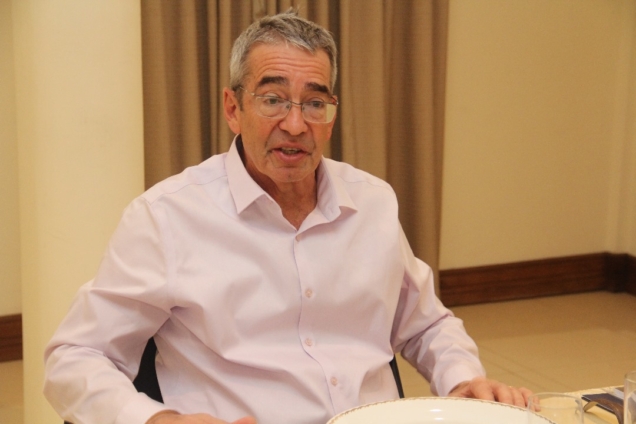
This counsel, described as a friendly and respectful suggestion, came from the Israeli Ambassador to Ghana, Sierra Leone, and Liberia, Mr Roey Gilad, during a media engagement in Accra following Ghana’s abstention in a key vote at the International Atomic Energy Agency (IAEA) Board of Governors on Thursday, June 12.
The vote, which was the first of its kind in nearly 20 years, saw the 35-member IAEA Board formally declare that Iran is in breach of its nuclear non-proliferation obligations. The resolution was supported by 19 countries, opposed by three — Russia, China, and Burkina Faso — while 11 nations, including Ghana, abstained.
The resolution, submitted by the United States, Britain, France and Germany, concluded that Iran had failed to provide the IAEA with full and timely cooperation since 2019 concerning undeclared nuclear material and activities. It marks a significant escalation in the agency’s standoff with Tehran.
Ambassador Gilad disclosed that Israel had engaged Ghana ahead of the vote, anticipating a supportive stance on the resolution given the close and historical ties between the two nations.
Ghana abstained in the vote at the IAEA. Eventually, 19 States voted that Iran is in non-compliance with its nuclear programme. We’ve lobbied Ghana very strongly to support the resolution, yet Ghana abstained,” the Ambassador revealed.
While acknowledging that, traditionally, the country chairing the IAEA board — in this case, Ghana — usually refrains from voting, Mr Gilad noted that this instance was extraordinary and warranted a firm stance.
“The formal reason is that Ghana is the chair of the board of the IAEA, but we felt this is something that is so crucial to Israel, which has to do with the future of Israel — that the State which is a member of the United Nations, Iran, is completely for the destruction of the Jewish sovereign state in Israel. A State which is considered by Ghana since 1957 as a good friend. We thought this was one place where Ghana could express its support for Israel and vote for the non-compliance. It did not happen, and we’re disappointed.”
Despite the expressed disappointment, the Israeli envoy was measured and respectful in his tone, stressing that the call for Ghana to reconsider its non-aligned posture was not a criticism, but rather a constructive proposal rooted in mutual respect.
“As much as we have full respect for the sovereign decision-making process in Ghana, including the Foreign Affairs [Ministry], we believe that the traditional policy of non-alignment that has existed here since 1957 under Nkrumah… I personally believe that maybe the policy of non-alignment should be re-evaluated,” Ambassador Gilad advised.
“We do it in Israel day in and day out. We check ourselves, we check our policy at every stage. I humbly say, with full respect to the sovereign decision-making process in the Foreign Ministry here, that rethinking or re-evaluating non-alignment is something that will be healthy for the State.”
He also underlined the evolving nature of international diplomacy and encouraged Ghana to occasionally prioritise global peace and allied interests over rigid neutrality, especially when fundamental issues such as nuclear threats are involved.
Nonetheless, Ambassador Gilad was quick to clarify that this development would not negatively affect the longstanding bilateral ties between Ghana and Israel, describing their relationship as “one of the best on the continent.”
“This is not going to cast a heavy shadow on our relations, but we cannot ignore it. If we discuss just among ourselves, it will bring no benefit. I think a mature relationship is the one between Israel and Ghana. We can discuss and iron out disagreements. If we don’t do that, then I will say that the relationship is not mature. Since I consider Ghana to be mature and stable, I think, as grown-up people, we can address it with the government. We did it in the past, and we will do it again,” he stated.
The International Atomic Energy Agency (IAEA), established in 1957, promotes the safe, secure and peaceful use of nuclear technology globally. It plays a key role in preventing the spread of nuclear weapons while supporting countries to harness nuclear science for development in areas such as energy, health, and agriculture.
Israel, which is not a party to the Treaty on the Non-Proliferation of Nuclear Weapons (NPT), remains particularly sensitive to Iran’s nuclear ambitions, citing existential threats and regional security risks.
As global geopolitical alignments continue to evolve, Ghana’s position as a non-aligned nation remains under scrutiny, particularly by allies who feel that neutrality may no longer serve mutual security interests in an increasingly polarised international arena.
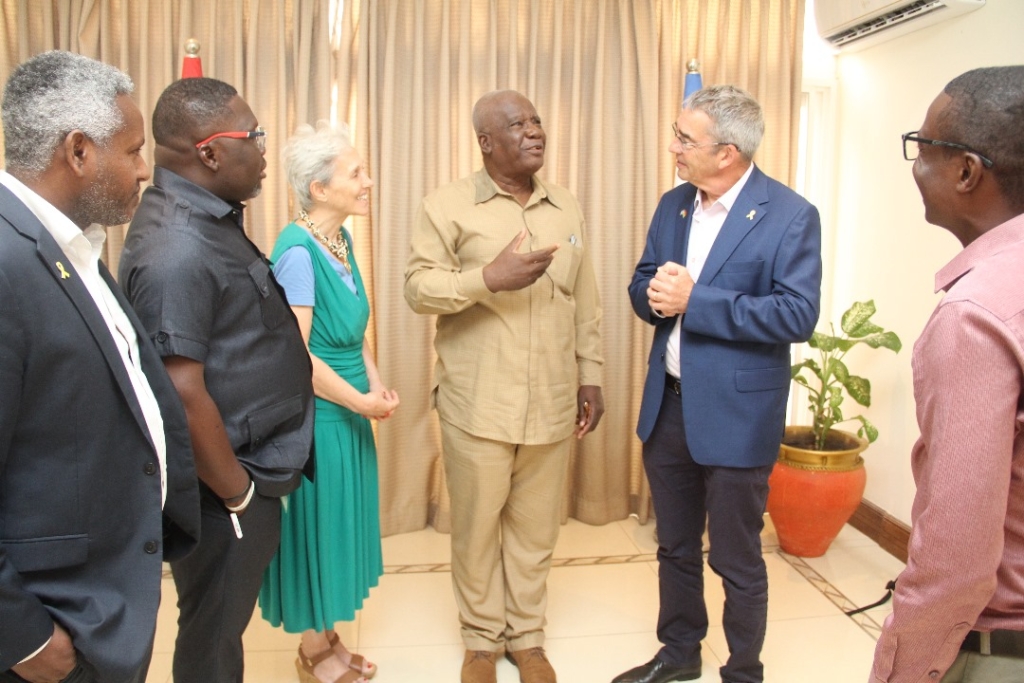
Israeli Ambassador to Ghana, Sierra Leone, and Liberia, Mr Roey Gilad and wife engage journalists at his residence in Accra.
Latest Stories
-
Drug money allegedly finances Ghana’s political parties and real estate – Global Organised Crime Index
3 minutes -
NSA outlines seven steps for successful posting and validation of national service personnel
4 minutes -
GPRTU taskforce clamps down on unapproved fares at Kasoa
5 minutes -
Prime Insight: Making room for meaningful national conversations on Joy Prime
16 minutes -
FABAG commends Ato Forson’s over removal of 20% excise duty on locally manufactured fruit juices
23 minutes -
HIV stigma discourages testing, prevention and treatment in Ghana – Ghana AIDS Commission
25 minutes -
Blocking cocaine probe lends weight to claims of political protection for traffickers – Assin South MP
29 minutes -
NPP Vice Chair race: I may be the youngest, but most experienced – Nana B
31 minutes -
Last UK and US troops leave Iraq as anti-Islamic State mission ends
31 minutes -
Don’t stay home idle, embrace entrepreneurship while awaiting posting – Unemployed nurses urged
43 minutes -
Aayalolo buses not speeding on contra-flow lanes – GAPTE assures commuters
46 minutes -
Effia MP calls for Kurt Okraku’s removal, overhaul of Ghana football structure
47 minutes -
CAS hearing on AFCON final appeal by Senegalese Football Federation set for October 8
47 minutes -
STC fares to go up by up to 8% this week – Deputy MD
48 minutes -
Photos: Accra-Kumasi bypasses get new lease of life as contractors return to site
48 minutes