

Audio By Carbonatix
Archaeologists have announced the discovery of an ancient city in Peru's northern Barranca province.
The 3,500-year-old city, named Peñico, is believed to have served as a key trading hub connecting early Pacific coast communities with those living in the Andes mountains and Amazon basin.
Located some 200km north of Lima, the site lies about 600 metres (1,970 feet) above sea level and is thought to have been founded between 1,800 and 1,500 BC - around the same time that early civilisations were flourishing in the Middle East and Asia.
Researchers say the discovery sheds light on what became of the Americas' oldest civilisation, the Caral.
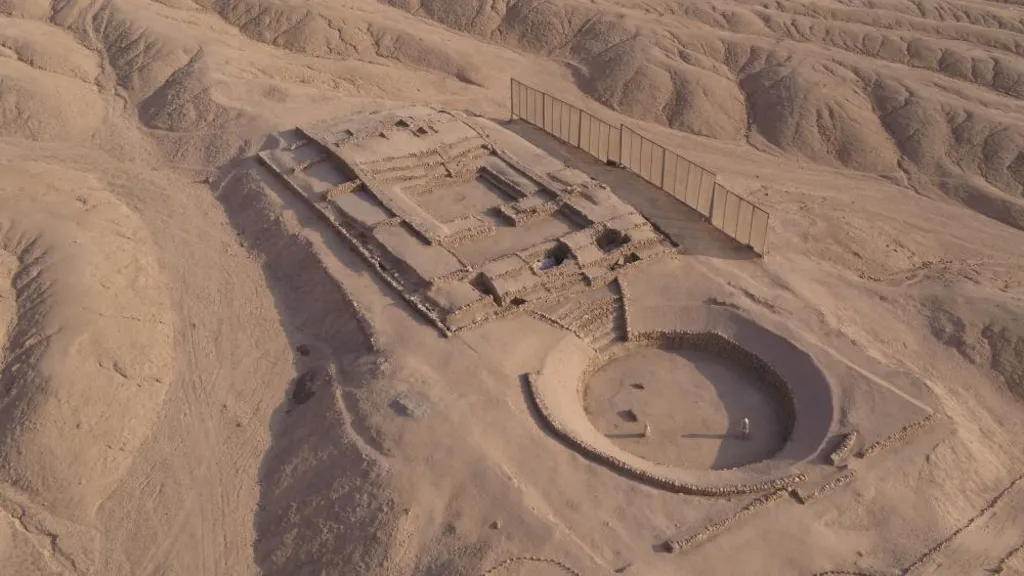
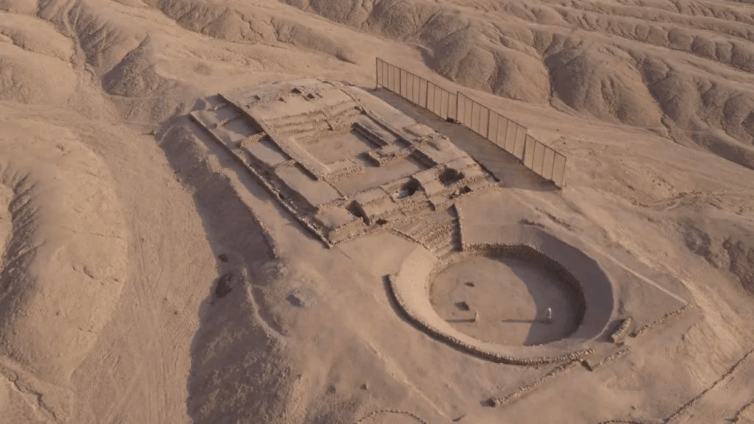
Drone footage released by researchers shows a circular structure on a hillside terrace at the city's centre, surrounded by the remains of stone and mud buildings.
Eight years of research at the site unearthed 18 structures, including ceremonial temples and residential complexes.
In buildings at the site, researchers discovered ceremonial objects, clay sculptures of human and animal figures and necklaces made from beads and seashells.
Peñico is situated close to where Caral, recognised as the oldest known civilisation in the Americas, was established 5,000 years ago at around 3,000 BC in the Supe valley of Peru.
Caral features 32 monuments, including large pyramid structures, sophisticated irrigation agriculture and urban settlements. It is believed to have developed in isolation to other comparative early civilisations in India, Egypt, Sumeria and China.
Dr Ruth Shady, the archaeologist who led the recent research into Peñico and the excavation of Caral in the 1990s, said that the discovery was important for understanding what became of the Caral civilisation after it was decimated by climate change.
The Peñico community was "situated in a strategic location for trade, for exchange with societies from the coast, the highlands and the jungle", Dr Shady told the Reuters news agency.
At a news conference unveiling the findings on Thursday, archaeologist Marco Machacuay, a researcher with the Ministry of Culture, said that Peñico's significance lies in it being a continuation of the Caral society.
Peru is home to many of the Americas' most significant archaeological discoveries, including the Inca citadel of Machu Picchu in the Andes and the mysterious Nazca Lines etched into the desert along the central coast.
Latest Stories
-
Hawa Koomson pledges experienced and mature leadership of NPP women’s wing
46 minutes -
Young woman found dead at Kasoa Peace Town
1 hour -
Playback: The Law examined lawful arrest in Ghana
2 hours -
Mahama urges African governments to treat healthcare as an investment, not budget cost
2 hours -
Bawumia congratulates John Boadu and new NPP executives, pledges support ahead of 2028
2 hours -
‘No talent should be left out’ – Bawumia pledges inclusive NPP campaign for 2028
2 hours -
Prof. Mike Oquaye recounts how he blocked the Special Prosecutor’s attempt to arrest Bawku Central MP
3 hours -
Make health sovereignty a priority for Africa – Mahama
3 hours -
Dorimon Naa, Wa West DCE lead massive clean-up exercise; threaten sanctions against recalcitrant residents
3 hours -
Photos from Adom FM Y2K Jam
3 hours -
Praye Tiatia steals the show at Adom FM Y2K Jam [Watch]
3 hours -
Boakye Agyarko congratulates John Boadu, pledges support for NPP leadership
4 hours -
Antwi HiMight thrills fans with Antwi ne Antwi hits at Adom FM’s Y2K Jam [Video]
4 hours -
Amb. Edward Boateng congratulates Boadu, Kodua on election wins
4 hours -
John Boadu pledges to rebuild NPP from grassroots and restore ‘winning machinery’
4 hours