

Audio By Carbonatix
The Chamber of Cement Manufacturers Ghana (COCMAG), has expressed deep concern over the growing influx of imported bagged cement, particularly from Togo.
According to the Chamber, the unregulated entry of these products poses a grave threat to the survival and competitiveness of Ghana’s local cement industry.
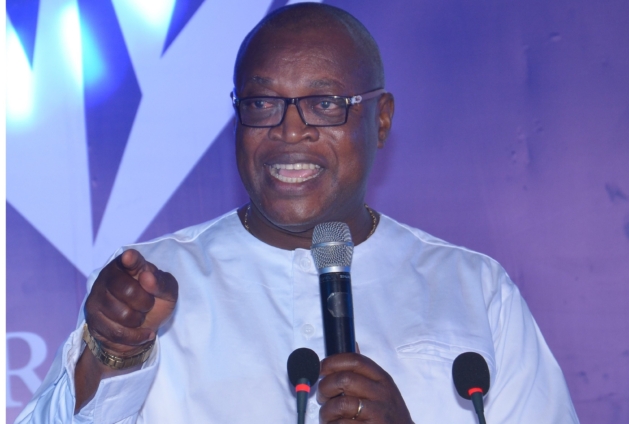
In a formal communication to the Ministry of Trade, Agribusiness and Industry (MOTAI), Dr. George Dawson-Ahmoah (Bishop), Chief Executive Officer of the Chamber, revealed that foreign cement brands especially those originating from Togo are rapidly flooding the Ghanaian market.
He noted that most foreign cement imports bypass mandatory product certification processes of the Ghana Standards Authority, raising safety concerns about the integrity of buildings and infrastructure across the country. Beyond safety, the situation is distorting market dynamics and undermining fair competition.
“Our local manufacturers have made substantial investments to expand production capacity, create jobs, and contribute meaningfully to Ghana’s economic development.
"As such, the influx of imported cement without any value addition to the local economy risks eroding these gains, weakening investor confidence, and destabilizing the entire industry,” Dr. Dawson-Ahmoah stated.
The Chamber advises that if urgent measures are not taken, Ghana could face widespread job losses, reduced domestic production, and a slowdown in industrial growth, potentially undermining the government’s broader industrialization agenda.
As part of its recommendations, the Chamber is urging the Ministry to urgently investigate the matter and adopt corrective measures.
These include stricter enforcement of import regulations, a review of current trade policies, and the introduction of protective interventions to safeguard the viability of local cement producers.
“The long-term sustainability of Ghana’s cement industry and, by extension, the country’s economic transformation efforts depend on swift and decisive action,” the Chamber stressed.
The Chamber also highlighted the imbalance in ECOWAS trade practices.
“While cement from Togo and other countries easily enters Ghana, Ghanaian cement faces significant barriers when attempting to access markets such as Togo, Côte d’Ivoire, and Nigeria due to strict policies even under the ECOWAS trade framework.
"This, the Chamber noted, has effectively turned Ghana into a dumping ground, with no reciprocal benefits for its local industry. COCMAG is therefore calling on the government to implement protective policies for the cement sector, similar to measures adopted by neighbouring countries, to ensure fair competition and industrial growth.
“We remain committed to working closely with the Ministry and all relevant stakeholders to address this matter constructively and collaboratively,” the Chamber affirmed.
Latest Stories
-
He entered at eight. He is now 16: Ghana’s children growing up in prayer camps
43 minutes -
‘Development must not always begin from Accra’ — Anwelle Foundation launched in Jirapa
46 minutes -
PKO trio eye victories at Odwira Festival
3 hours -
346 Ghana Navy recruits pass out after 26 weeks of intensive training
3 hours -
Newsfile to discuss EOCO-MP arrest, drug trafficking, speech arrests and $235m water debt
4 hours -
JoyNews gets results as listeners raise GH¢40,000 to help 17-year-old student with cerebral palsy attend SHS
4 hours -
Vice President calls for stronger local pharmaceutical production to reduce medicine imports
5 hours -
The brewing tension at KNUST; Beware the Ides of October….
5 hours -
Health Ministry moves to integrate traditional medicine into mainstream healthcare
5 hours -
550 pupils in Kintampo South get educational lifeline as ‘Seeds of Hope’ reaches farming communities
6 hours -
Opoku Mensah urges Christian Council, House of Chiefs to speak up on democratic freedoms
6 hours -
Teacher unions’ strike: Minority demands immediate payment of teacher arrears, 20% deprived area allowance
6 hours -
The Accra-Kumasi Expressway: Building it right
6 hours -
Beyond gold exports: Building value and economic resilience from Ghana’s gold
6 hours -
2027 AFCONQ: Ghana under pressure as Gambia beat Somalia 2-1
7 hours