

Audio By Carbonatix
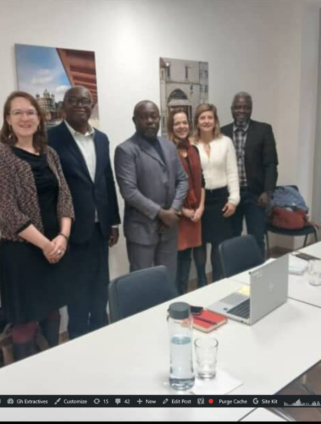
Representatives from Switzerland’s State Secretariat for Economic Affairs (SECO) have held a strategic meeting in Ghana with the Chamber of Bullion Traders Ghana (CBTG) to discuss mechanisms and support systems required to promote responsible small-scale mining in the country.
Providing an overview of the challenges of irresponsible mining, the Director of Research at the CBTG, Mr. Henry Osei, explained that while miners desire increased output, some resort to unsafe and unsustainable practices that harm the ecosystem.
“As a Chamber, we take responsible mining seriously. That is why we accepted your invitation to Geneva last year to engage with SECO, Metalor, and Swiss Better Gold on how best we can collaborate to promote and sustain responsible mining in Ghana,” Mr. Osei said.
He stressed that responsible mining is grounded in technical expertise and practical know-how, which can only be transferred through field-based training.
“Training miners on-site, not in lecture rooms, is the only way to ensure they adopt practices that safeguard their safety, health, and the environment,” he emphasised.
Mr. Osei appealed for Swiss support, noting Switzerland’s long-standing benefits from Ghana’s gold exports.
“This is the time for the Swiss to assist with training and capacity-building for miners,” he urged.
Highlighting further challenges, Mr. Osei pointed to the high cost of equipment. “For small-scale miners, investing between $200,000 and $500,000 is often unrealistic unless they operate in groups.
Support for centralised processing plants would be crucial in promoting responsible and sustainable mining,” he noted.
When asked by the Swiss delegation about key stakeholders, Mr. Osei referenced earlier discussions with Metalor and Swiss Better Gold, stressing that their participation would be vital.
Madam Alexa of SECO further inquired about incentives to encourage miners to adopt responsible practices, given the quick profits often promised by informal or black-market sales.
Mr. Osei responded: “If miners are made aware that responsible gold attracts a premium price, which outweighs the black market returns, they would have every reason to sell responsibly. It becomes a win-win situation for all.”
He also highlighted the inefficiencies in current mining practices, noting that gold recovery rates remain as low as 35–40% in hard rock mining, with similarly poor outcomes in alluvial mining—leading to both economic losses and environmental degradation.
“Pilot tests we conducted on two centralised processing plants showed more than double the recovery rates and reduced processing times, increasing miners’ margins significantly. With the right support, miners will embrace such systems,” Mr. Osei concluded.
Latest Stories
-
Ghana needs a law to sustain constitutional reforms – CDD-Ghana
3 hours -
COVID fumigation audit: Auditor-General has a lot of questions to answer – Akwatia MP
3 hours -
Stranded Ghanaian medical graduates in Cuba appeal to Mahama for immediate return
3 hours -
GNFS contains fire outbreak at Teshie Lekma Road near Lekma Hospital
9 hours -
Samia Nkrumah rejects the narrative that Ghanaians were happy after Nkrumah’s overthrow
11 hours -
A Mother’s pain: Tribute by Ivan Baidoo’s mother
11 hours -
‘Forgive us for staying away’ — Samia Nkrumah leads family back to Nkroful, pledges to preserve Nkrumah’s legacy
11 hours -
Ernest Nuamah scores twice as Lyon beat Rennes
11 hours -
‘My dear Ivan’ – A father’s tribute to a son tragically killed
11 hours -
GNPC Explorco advances Voltaian Basin drilling preparations with 13.5km access road
11 hours -
Cabinet approves facility manager for Borteyman Sports Complex – Kofi Adams
12 hours -
Sanitation is improving; critics may be ‘living in another world’ – Salaga South MP replies Bekwai MP
12 hours -
Government must do more to tackle sanitation crisis – Bekwai MP
12 hours -
World Cleanup Day: GFF begins sanitation education in local communities
13 hours -
EU Ambassador, IGP discuss stronger cooperation on policing and security
13 hours