

Audio By Carbonatix
Elon Musk's SpaceX says it has cut Starlink satellite communication links to more than 2,500 devices used by scam compounds in Myanmar.
More than 30 compounds are believed to be operating along the Thai-Myanmar border, where people from around the world are trafficked and forced to work on scams generating tens of billions of dollars annually.
Announcing the move, Lauren Dreyer, head of Starlink business operations, said the firm takes action on the rare occasion it identifies violations.
The service's termination follows Monday's takeover of one of the largest compounds, KK Park, by the Myanmar military, as it retakes territory lost to insurgent groups over the past two years.
Campaigners have long warned that Starlink technology has enabled the mainly Chinese crime syndicates to operate from remote locations along the border.
Myanmar has become infamous for these operations, which defraud victims through romantic ploys and bogus investment schemes.
Workers are lured under the guise of legitimate jobs, only to be held captive and forced into criminal activity.
Survivors recount gruelling conditions, long hours, torture and beatings for failing to meet targets. Many of the victims come from African countries.
"In Myanmar... SpaceX proactively identified and disabled over 2,500 Starlink Kits in the vicinity of suspected 'scam centers'," Dreyer said in a post on X.
"We are committed to ensuring the service remains a force for good and sustains trust worldwide: both connecting the unconnected and detecting and preventing misuse by bad actors," she added.
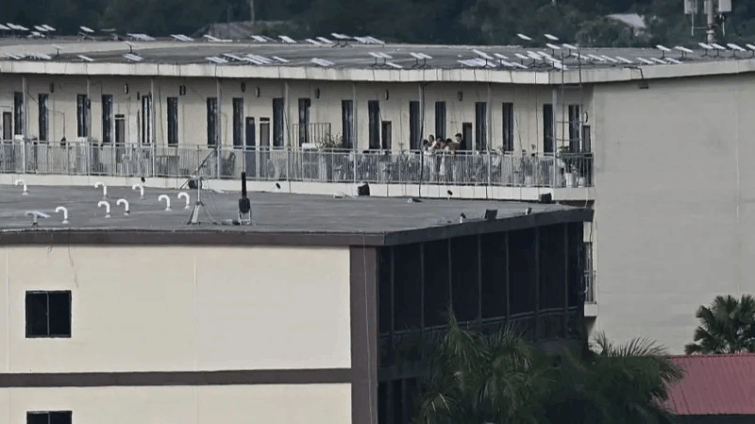
On Monday Myanmar's military said it had "cleared" KK Park, releasing more than 2,000 workers and confiscating 30 Starlink terminals.
Photographs show the satellite dishes on the compound's rooftops and footage supplied to the BBC showed thousands of workers leaving KK Park on foot.
However, at least 30 other scam compounds remain active along the border, employing tens of thousands globally. Many are protected by militia groups loyal to the Myanmar military and it is unclear whether they have also lost access to Starlink services they once relied on.
These centres have become a key component of Myanmar's wartime economy, as the junta battles various rebel groups while relying on Chinese support to maintain its hold on power.
Latest Stories
-
Greater Accra region accounts for 77% of total secured credit in half-year 2026 – BoG
3 minutes -
Founder’s Day: We face forward, but are we moving?
10 minutes -
Sheenah Naturals unveils Akuaba Collection at Beauty Inside Out Conference
19 minutes -
T-bills: 91-day, 364-day yields to trade slightly higher in second half of 2026
24 minutes -
Black Stars: It’s our decision to leave Kudus to recover – Queiroz
50 minutes -
Sammy Gyamfi backs Mahama’s directive to restore NACOC’s at ports
52 minutes -
Queiroz provides insight into Kudus’ decision to withdraw from Black Stars squad
1 hour -
I’m not changing after 47 Years – Queiroz fires back at critics
1 hour -
Nkrumah Never Dies: Celebrating the visionary who awakened a continent
2 hours -
Hassan Ayariga calls for Ghanaian ownership in strategic investment deals
2 hours -
Black Stars: Thomas-Asante receives late call-up for September-October games
3 hours -
NPP Techiman South demands immediate release of detained Nurse Salomey Awiti Baffoe
3 hours -
‘Let’s stop the politics’ — Dafeamekpor calls for united fight against drug trafficking
3 hours -
Chief Justice Baffoe-Bonnie leads new 11-member Council for Legal Education and Training Board
4 hours -
Decades of silent diplomacy: Baba Issifu Kamara at 70
4 hours