

Audio By Carbonatix
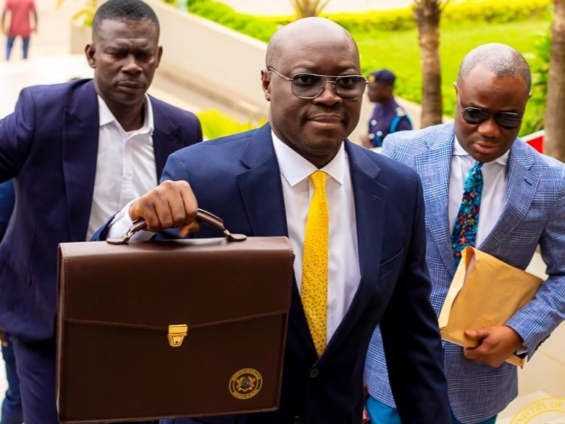
Finance Minister Dr. Cassiel Ato Forson has announced a series of tax reforms under the 2026 Budget aimed at creating a fairer, simpler, and more business-friendly fiscal system.
Presenting the budget to Parliament, Dr Forson said the reforms mark a turning point in Ghana’s tax administration and are designed to make compliance easier for businesses while strengthening domestic revenue mobilisation.
“This is not just a tax reform. It is a step toward a more just, predictable, and business-friendly economy,” Dr. Forson stated. “It honours our pledge to lighten the load on honest taxpayers while building a stronger foundation for national development.”
Among the measures, government has abolished the COVID-19 Health Recovery Levy, reduced the effective VAT rate from 21.9 percent to 20 percent, and raised the VAT registration threshold from GH¢200,000 to GH¢750,000 to ease the burden on small and medium enterprises.
These steps, Dr Forson explained, will return about GH¢5.7 billion to businesses and households and enhance Ghana’s competitiveness.
In addition, VAT on mineral exploration and reconnaissance has been scrapped to encourage new investments, while the zero-rating for locally manufactured textiles has been extended to 2028 to protect local jobs.
The government will also introduce digital VAT monitoring systems, fiscal electronic devices, and a VAT reward scheme to improve compliance and transparency.
Beyond VAT, the Ministry of Finance will undertake a comprehensive review of key tax laws, including the Income Tax Act, the Customs Act, and the Excise Duty Act, to align them with international standards.
Dr Forson said these reviews will simplify compliance, promote equity, and strengthen investor confidence.
“We must move from patchwork reforms to a coherent, modern framework,” he noted. “Our goal is to ensure Ghana’s tax system keeps pace with changing business realities, protects our tax base, and rewards compliance.”
The Finance Minister also indicated that new systems will be deployed at the ports to curb smuggling, under-invoicing, and misclassification.
These measures are expected to close long-standing revenue leakages and improve customs efficiency.
“Through these reforms, we are not merely raising revenue,” Dr Forson emphasised. “We are rebuilding trust between citizens and the state, ensuring that every cedi collected is used to build the Ghana we want.”
The 2026 tax reform package forms a key part of the government’s fiscal consolidation agenda, designed to sustain macroeconomic stability while encouraging private sector growth and job creation.
Latest Stories
-
Educational accountants hold workshop on financial discipline to avert PAC sanctions
4 minutes -
Devtraco Group launches Lotus residential development
11 minutes -
3rd JoyNews-Republic Bank Habitat Clinic kicks off at Junction Mall, Nungua
12 minutes -
KMA cracks down on illegal transport fares; engages 24 unions ahead of Christmas
14 minutes -
No new denominations beyond GH¢200 under Heritage Series – BoG
32 minutes -
Police train 45 personnel ahead of Traffitech-GH rollout on October 1
35 minutes -
Asanko Gold expands agric support programme to 80 farmers in Ashanti Region
40 minutes -
DR Congo running short of health workers as Ebola outbreak intensifies, WHO says
42 minutes -
GBA condemns attempted arrest of Manhyia South MP at Accra High Court
51 minutes -
Richmond Amoateng Foundation drives youth development and community unity in Juaben
57 minutes -
AFCON 2027Q: ‘Why don’t we have VAR in Africa?’ – Queiroz reacts to controversial penalty
57 minutes -
Safe NCD care needs leadership, investment and patient involvement – PharmAccess
1 hour -
Pope warns a ‘paradise of machines’ could undermine humanity as he opens France trip
1 hour -
AFCON 2027Q: Hervé Renard declines to respond to Queiroz over controversial penalty
1 hour -
Teacher unions declare nationwide strike over unpaid promotion arrears and delayed negotiations
2 hours