

Audio By Carbonatix
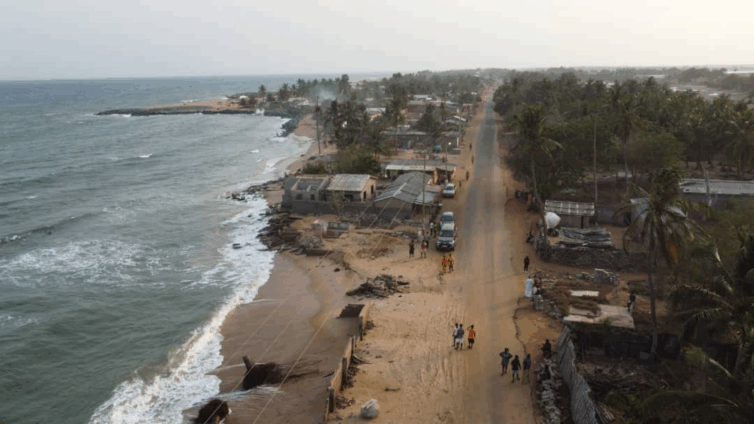
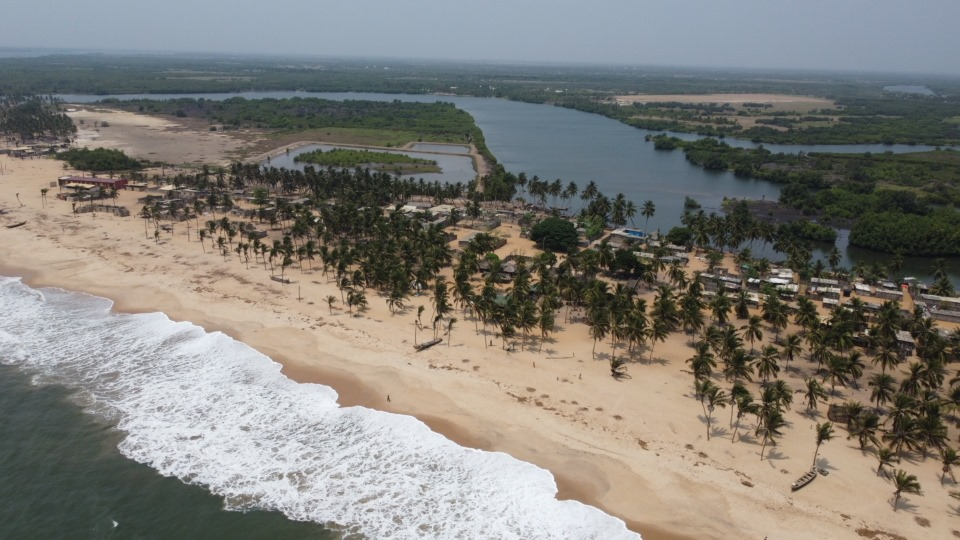
The water rose silently at first, creeping under doors and soaking beds. Then it surged drowning homes, schools, and farmlands from Mepe to Keta, from Anloga to Ketu South.
Today, for thousands of women and children, the floodwaters have taken away not just their houses, but their sense of safety.
The flooding was fuelled by a combination of heavy rains and the spillage of the Akosombo Dam between September 15 and October 30, 2023. The Volta River Authority (VRA) was forced to release water to protect the integrity of the dam, triggering a humanitarian disaster that displaced nearly 38,000 people.
In a cramped classroom in Agbledomi, Ablavi, a mother of four, shares the space with 27 other displaced persons. Her newborn survived a nighttime flood surge only because she clutched him tightly above the water.
“I screamed until my voice finished,” she told JoyNews. “Every night, I fear it will happen again.”
In Kedzi, 17-year-old Edem lives with another type of pain. His WASSCE exams were interrupted when water burst into his classroom.
“I haven’t recovered,” he admits. “I don’t know if I will write again.”
The shelters are overcrowded, wet, and unsafe. Mothers cook on small fires under leaking roofs. Children sleep on cold floors. Privacy is a luxury no one here can afford.
As floodwaters stagnate, a new threat is rising: Malaria cases are increasing, Diarrhoeal diseases are spreading, Cholera fears loom, latrines have collapsed, and open defecation is widespread.
Girls are missing school—some permanently. Mothers trade their last bowls of gari for candles and sachets of clean water.
While NADMO, humanitarian organizations, and local authorities are providing support, the scale of the crisis exposes glaring gaps in disaster preparedness.
“How long will we live like this?” a teacher asked. “How do we rebuild when we have lost everything?”
Farms worth millions of cedis are gone. Businesses destroyed. Boats and nets washed away. The economic scars may last for years.
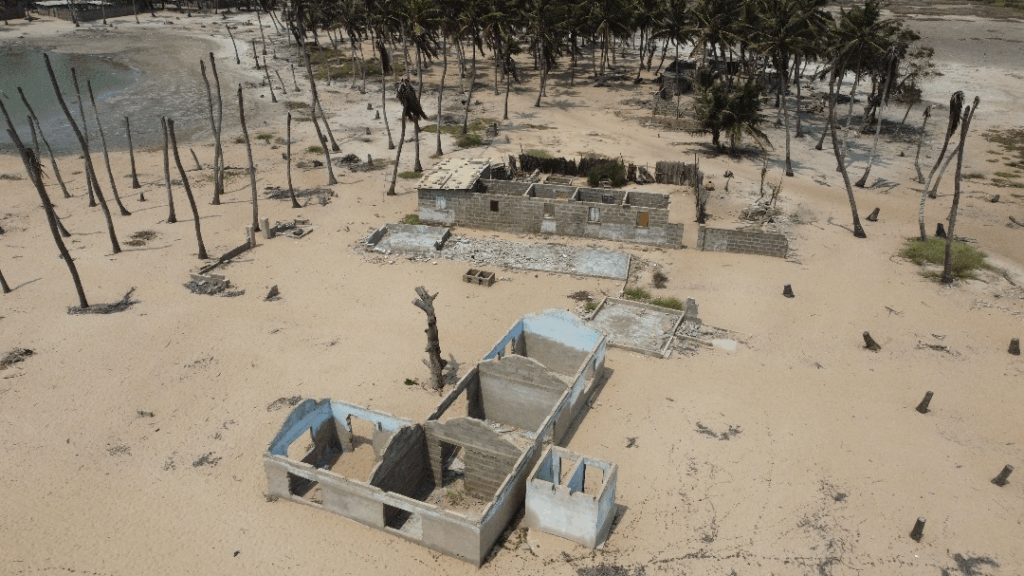
Experts insist that what is unfolding is more than flooding, it is a humanitarian emergency requiring coordinated action.
Immediate needs: Emergency food and water, Mobile health services, Sanitary materials, Temporary shelter.
Long-term needs: Proper drainage systems, Floodplain zoning, Women-centred emergency shelters.
Women and children remain the most vulnerable, and the most forgotten. Their recovery must be at the centre of every intervention.
*****
This article is written as part of a collaborative project between JoyNews, CDKN Ghana, and the Centre for Climate Change and Sustainability at the University of Ghana, with funding from the CLARE R4I Opportunities Fund.
Latest Stories
-
IMANI, Local Government Ministry discuss reforms on sanitation, local revenue and urban infrastructure
3 minutes -
Ghana’s international reserves drop to US$11.04 billion in August as BoG pushes for significant build-ups in coming months
3 minutes -
Four years enough for any government to deliver – IEA rejects five-year term
7 minutes -
‘The most important players are here’ – Queiroz shrugs off Ghana’s injury crisis
21 minutes -
Ayariga pledges stakeholder-led approach to Nzema, Kokomba Market redevelopment
25 minutes -
Professional collaboration is key to Ghana’s land and property development – Western Regional Minister
33 minutes -
‘When you play Ghana, it’s a derby’ – Kessié sets tone for AFCON qualifying showdown
34 minutes -
Mahama urges global institutions to invest in Africa’s cultural infrastructure
40 minutes -
Kuami Eugene joins UNICEF Ghana to promote universal birth registration
43 minutes -
Renard warns Côte d’Ivoire against complacency Ahead of Ghana clash
45 minutes -
‘Can the patient feel the difference?’ – GMTF boss challenges health leaders
46 minutes -
Office of the Registrar of Companies marks Risk Awareness Week with push for risk-smart, resilient institution
57 minutes -
Full text: Mahama’s speech at high-level side event on return and restitution of cultural properties and heritage
1 hour -
ICU urges Ghanaian smock weavers to scale up production for local and export markets
1 hour -
Human remains are not collectibles, specimens – Mahama demands restitution of Africa’s heritage
1 hour