

Audio By Carbonatix
In a bid to strengthen Ghana’s credit ecosystem and reduce rising non-performing loans, the Chartered Institute of Credit Management Ghana (CICMG), under the leadership of President Evelyn Osei Tutu, is combining professional recognition with practical training initiatives to promote responsible lending, effective debt recovery, and long-term business sustainability.
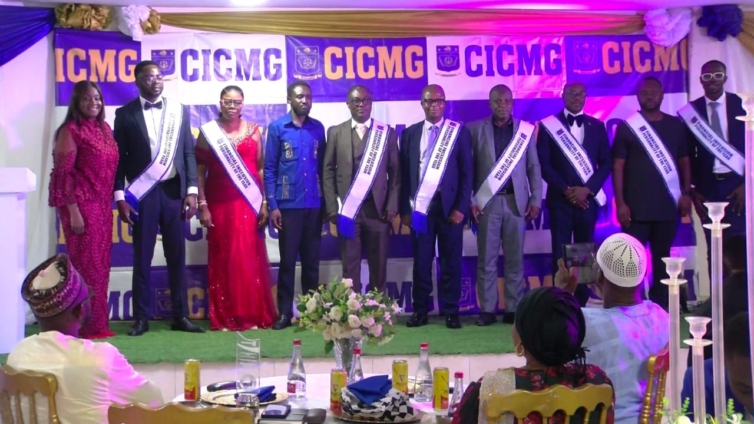
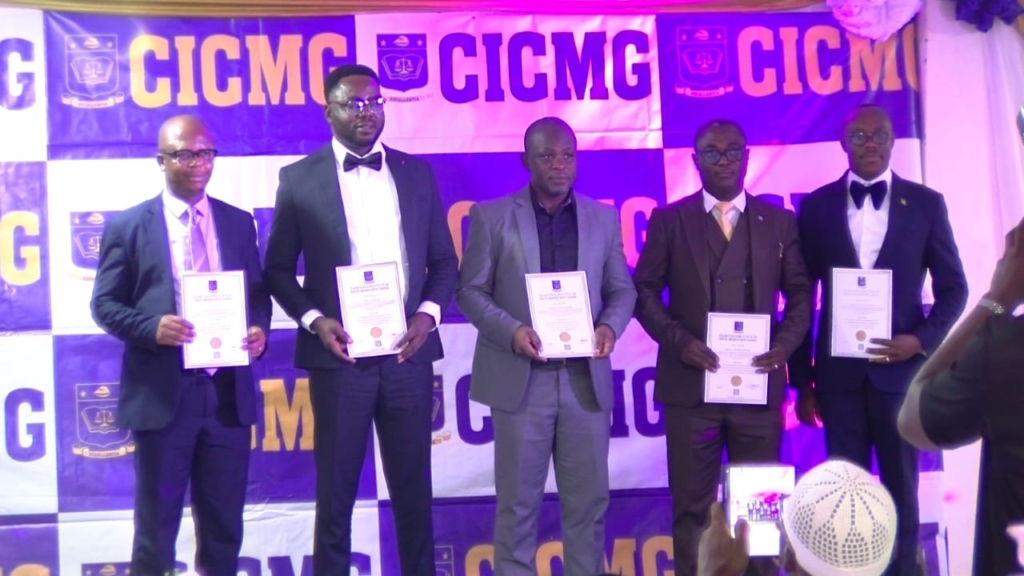
At the 2025 Induction and Graduation Ceremony, CICMG honoured seasoned credit professionals who have contributed decades of service to the financial industry.
According to President Evelyn Osei Tutu, recognising these industry veterans not only celebrates their dedication but also creates a platform for collaboration with financial institutions, SMEs, and the informal sector to ensure credit facilities are granted responsibly and recovered efficiently.
“If you give out facilities and you are not able to recover the monies, then you become a bad lender. That is why we are partnering institutions to ensure proper assessment, sound credit analysis, and effective recovery, so that together we can make positive moves in the economy.”
The Institute is also rolling out its New Year Debt Recovery School, which, according to Registrar Amo Agyapong, equips businesses and financial institutions with practical skills to manage credit and recover outstanding debts. The programme focuses on real-life recovery techniques, including the application of the Pareto principle, or 80–20 rule, to make debt recovery more efficient and reduce the burden of non-performing loans.
“We are introducing practical tools like the Pareto principle, the 80–20 rule, to help institutions manage their recovery processes more effectively. These are unique skills that empower organisations to reduce non-performing loans and make recovery easier and more structured", Mr. Amo said.
CICMG believes that through professional recognition, capacity-building, and strategic collaboration, Ghana’s financial institutions and businesses will be better positioned to improve recovery rates, promote sustainable lending, and contribute to economic growth.
The Institute continues to extend these services to both formal and informal sectors, aiming to bring more unbanked individuals into the credit system while fostering disciplined credit practices across the economy.
Latest Stories
-
Trump says he is considering firing US ambassador to Greece
1 minute -
Man City bananas ‘brought fun back’, says Varadi
5 minutes -
Meta releases Muse Wonder AI models to challenge Anthropic and OpenAI
14 minutes -
Daily Insight for CEOs: The CEO as Chief Decision Maker
15 minutes -
Burnham had formal meeting with Man City chair while mayor
21 minutes -
Is Ghana producing too many lawyers? What is the best lawyer-to-citizen ratio?
24 minutes -
NDC sinking Ghana’s democracy with Emelia Agbenyo’s appointment – Miracles Aboagye
33 minutes -
Seedorf back in football as Corinthians head coach
46 minutes -
Hincapié and Zubimendi injured in post-match training session
55 minutes -
Fridges in French supermarkets hit by cyberattack
1 hour -
Qantas flight grounded after bedbug outbreak
1 hour -
Reality Zone with Vicky Wireko: International Day of the Girl, shaping today’s girl for tomorrow’s future – ZONTA Clubs lead the way
1 hour -
Global health must be led by countries, not designed for them – Mintah Akandoh
2 hours -
Mahama honoured at 2026 World Health Summit in Berlin for global health leadership
3 hours -
Breast cancer is not a death sentence – Besease Kontire Obaapanin, Magmina Foundation lead awareness campaign
3 hours