

Audio By Carbonatix
Bonsa wears water like a cruel joke. Here, in a municipality where the sky weeps daily, residents are parched, their taps gasping for dust for months. They live a stone’s throw from their ancestral river—a river they now defecate in, bathe with, and pollute with a desperate, heartbreaking glee. In the midst of abundance, a community is poisoning its own lifeline, a stark metaphor for a climate crisis woven from both global forces and local failures.
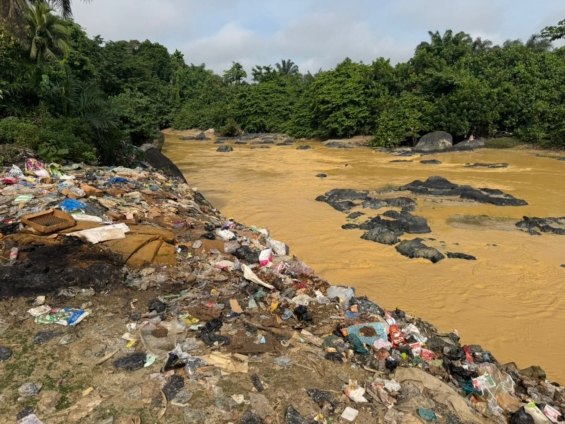
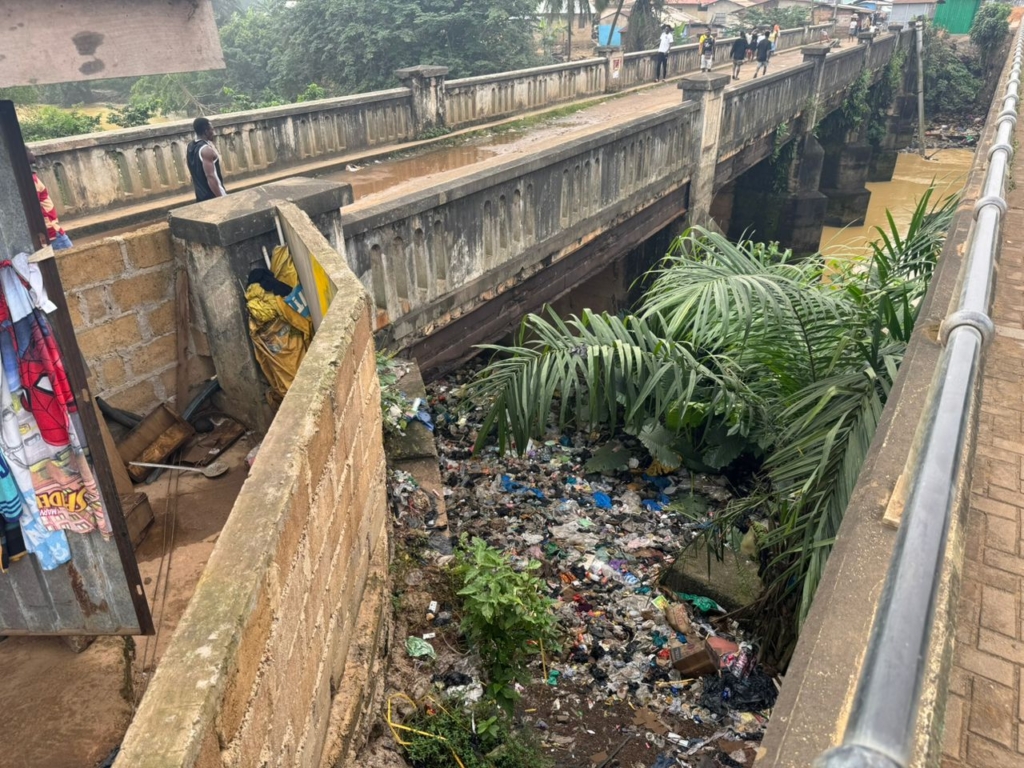
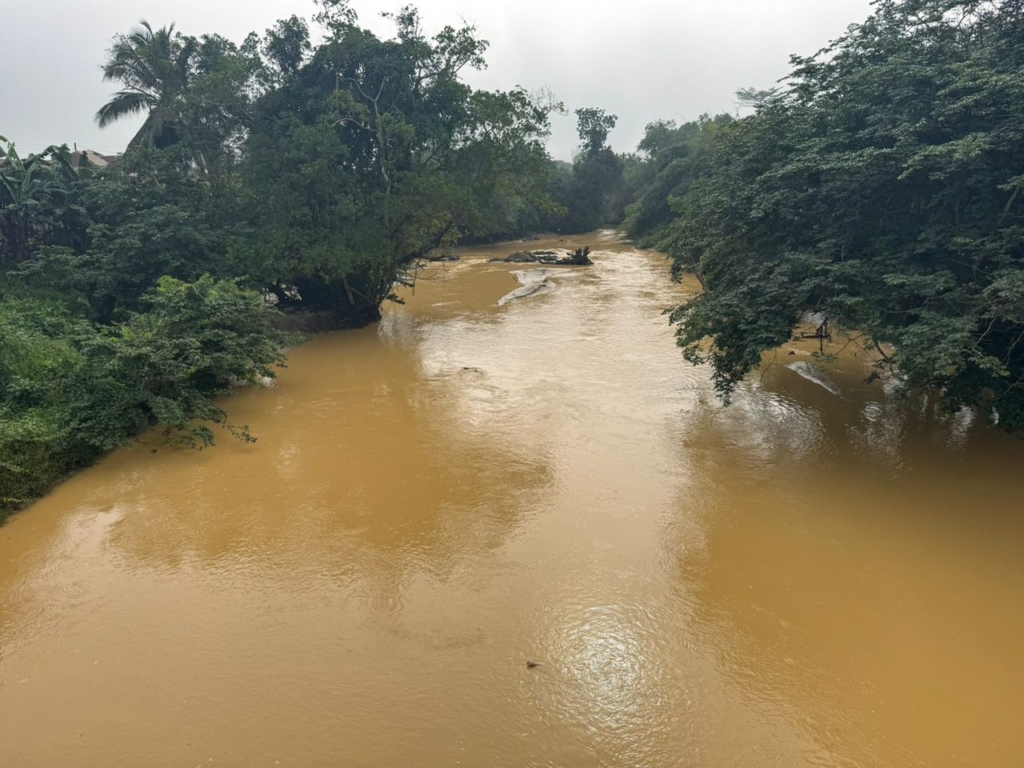
The Bonsa River, which snakes through the Tarkwa Nsuaem and the Prestea Huni Valley municipalities, is a study in ruination. Once a vibrant source of life, it now runs thick and muddy, its banks transformed into a sprawling refuse dump and an open latrine. During a visit to Bonsa, I witnessed a vicious cycle of degradation: children lathering their skin with its ochre water, adults casually discarding waste into the stream, and just downstream, others drawing the same contaminated liquid for domestic use.
“I am always insulted when I ask people to stop,” said Dora Kwofie, a unit committee member, her voice etched with frustration. “We stay close to the Bonsa, but our taps are bone-dry. It has been months.” Her statement encapsulates the absurd tragedy: a community besieged by water scarcity in the heart of a rainy region, driven to pollute the very source that could save them.
The pollution is twofold. First, the choking, muddy sediment from rampant illegal mining (galamsey), which locals trace to tributaries like the Whin River. Stephen Nketsia, Chairman of the Bonsa Unit Committee, noted that while mining existed in his youth, it was done with some responsibility. “Now, the river is heavily polluted, choked with sand. It is in a sorry state,” he lamented. Second, and more visceral, is the direct human assault: open defecation on its banks and the conversion of its periphery into a dumping ground. In a final, shocking twist of failed planning, a private borehole has been dug perilously close to a public toilet and its adjacent refuse dump, threatening groundwater with immediate contamination.
This is more than a story of poor sanitation; it is a frontline report on climate vulnerability. Ghana’s Updated Nationally Determined Contribution (NDC) under the Paris Agreement (2020-2030) explicitly prioritises water security and ecosystem restoration as critical climate actions. It commits to protecting water bodies, restoring degraded lands, and enhancing community resilience. The spectacle at Bonsa reveals a yawning gap between these national commitments and on-the-ground reality.
Furthermore, Ghana’s National Adaptation Plan (NAP) Framework stresses the need for integrated water resource management and climate-resilient infrastructure to safeguard against the increasing variability in rainfall patterns—a phenomenon residents already witness as rain falls without filling usable reserves. The pollution of the Bonsa cripples the region’s natural infrastructure, making it profoundly vulnerable to climate shocks. A depleted and poisoned river cannot buffer against more intense droughts or act as a reliable resource when rains become erratic.
The situation in Bonsa is a microcosm of a national challenge: climate adaptation is impossible without protecting and restoring freshwater ecosystems. Illegal mining and poor waste management are not just environmental crimes; they are acts of climate self-sabotage, stripping communities of their first line of defence against a changing climate.
Conclusion
The people of Bonsa are trapped in a cycle they did not create alone, caught between the avarice of illegal mining upstream and the crushing failure of basic service delivery and enforcement. Their actions, though self-harming, are born of necessity in the face of abandonment. As Ghana strives to meet its international climate pledges, the Bonsa River stands as a murky testament to the work undone. Ensuring water security, as outlined in the nation’s own climate plans, must begin not just with documents, but with reclaiming rivers from the dump, the excavator, and the despair of those left with no other choice.
This report is a project by JoyNews, the CDKN, and the University of Ghana’s C3SS, with funding from the CLARE R4I Opportunities Fund.
Latest Stories
-
Mobile Money Fintech LTD, UMB train hairdressers and beauticians
31 minutes -
Asylum votes show people want help, says Kemi Badenoch
2 hours -
Badenoch welcomes expanded grooming gangs inquiry
2 hours -
GACL MD sues Samuel Buabeng over alleged Facebook defamation
2 hours -
Christa Pike in critical condition after surviving two lethal injections, lawyer says
2 hours -
Kemi Badenoch backs face covering ban at protest
2 hours -
Man City not ‘above the rules’, says No 10 after backlash to Burnham remarks
2 hours -
Real Madrid submit ‘substantial’ dossier in Barca payments case
2 hours -
Messi completes purchase of second Spanish club
2 hours -
Government must engage horticulturists on tomato crisis – GhIH
3 hours -
King Promise’s ‘Can’t Tame Us’ becomes official Chelsea anthem
3 hours -
Afenyo-Markin demands Baffour Awuah’s release from EOCO’s custody, end to alleged political intimidation
3 hours -
Rapper Rick Ross arrested on domestic violence charges
3 hours -
Minority demands security review of Ghana-Colombia visa waiver and port deals
3 hours -
Pursue drug kingpins, not persecute political opponents – Afenyo-Markin tells EOCO
3 hours