

Audio By Carbonatix
The year 2025 will go down in Ghana’s economic history as the year the reset truly began.
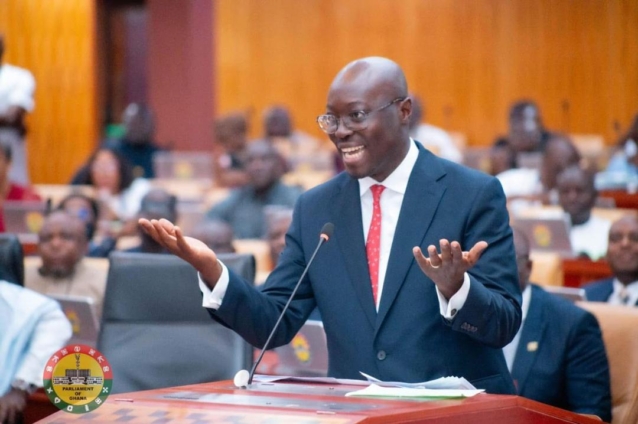
After inheriting an economy weighed down by inflation above 23%, interest rates north of 30%, a sharply depreciating cedi, battered investor confidence, and unsustainable debt dynamics, the Mahama Administration moved with speed and clarity to stabilise the fundamentals and rebuild trust. At the centre of this recovery drive was the Minister for Finance, Dr. Cassiel Ato Forson, backed by a President who provided stellar leadership and unwavering political support.
What follows are the 20 key macroeconomic achievements and reforms implemented in 2025 that together reset Ghana’s economy.
Growth Reignited
1. GDP expanded by 6.1% in the first three quarters of 2025, up from 5.7 percent over the same period in 2024 — the fastest growth since 2019.
2. Non-oil GDP growth surged to 7.5%, reflecting broad-based expansion in the real economy where most jobs are created.
These figures signalled a decisive end to the stagnation of previous years.
Inflation Brought Under Control
3. Headline inflation collapsed from 23.8% in December 2024 to 6.3% by November 2025, the lowest since February 2019.
4. Food inflation fell by 21.2 percentage points to 6.6%.
5. Non-food inflation eased by 14.2 points to 6.1%.
6. Inflation on locally produced items declined to 6.8% from 26.4%.
7. Imported inflation dropped to 5.0% from 18.0%.
For households, this meant restored purchasing power and relief at the market stalls.
Interest Rates Collapse
8. Treasury bill rates plunged from over 30% at end-2024 to about 11% in 2025, cutting government borrowing costs and unlocking credit to the private sector.
9. Cedi Makes History: For the first time in many years, the cedi recorded an annual appreciation against all major currencies:
• 40.7% against the US dollar
• 30.9% against the pound sterling
• 24.0% against the euro
This reversed the painful depreciation of 2024.
External Position Strengthened
10. Trade balance posted a surplus of US$8.5 billion by the end of October 2025, up from US$2.8 billion a year earlier.
11. Current account surplus widened to US$3.8 billion in the first three quarters, from US$0.6 billion in 2024.
12. Gross international reserves rose to US$11.41 billion, covering 4.8 months of imports.
13. Debt Turnaround: Public debt fell from GH¢726.7 billion (61.8% of GDP) in December 2024 to GH¢630.2 billion (45.0% of GDP) by October 2025, one of the sharpest debt reductions in Ghana’s history.
14. Investor Confidence Restored: Fitch, Moody’s and S&P all upgraded Ghana’s credit ratings — the first triple upgrade in years and a powerful endorsement of fiscal credibility.
15. Fiscal Discipline Return: A primary surplus of 1.9% of GDP was achieved by October 2025, tripling the initial target of 0.6%.
Pro-Growth Reforms
16. Major VAT reliefs including the abolition of the COVID-19 Levy, reduction of VAT to 20 percent, restoration of VAT input deductions, raising the VAT threshold to GH¢750,000, and zero-rating textiles to 2028.
17. Strengthened fiscal rules, amending the PFMA to cap debt at 45% of GDP by 2034 and require a minimum 1.5% primary surplus annually.
18. Abolished nuisance taxes such as the Betting Tax, Emission Tax and e-Levy to ease the cost of doing business.
19. Redirected oil revenues, mining royalties and DACF transfers to priority infrastructure under The Big Push and empowered local governments with at least 80 percent direct transfers.
20. Financial Sector Reset: A sweeping reset of the financial system saw:
• Recapitalisation of National Investment Bank with GH¢1.92 billion.
• Total funds under management rising to GH¢85.53 billion.
• GSE Composite Index delivering 27.82% return with volumes up 146%.
• Fixed income trading jumping to GH¢108.23 billion, a 51 percent year-on-year increase.
A Reset, Not a Pause
These 20 achievements are not just statistics; they represent a restored belief in Ghana’s future. They reflect long nights at the Ministry of Finance, hard political choices, and a President and Finance Minister working in lockstep to rescue the economy.
But 2026 is not a time for complacency. It is the year to deepen reforms, sustain discipline, and complete the reset — so that the gains of 2025 become a permanent foundation for growth, jobs and prosperity.
Latest Stories
-
Photos: Final-day shopping continues at Joy FM Back-to-School Discount Fair
6 minutes -
Darkey and Frimpong set up J30 Accra boys’ doubles final
8 minutes -
When war takes more than territory: The human cost of conflict
10 minutes -
Review SHS placement policy to give more BECE candidates access – Kwesi Kwarteng
16 minutes -
Tano South Municipal Assembly moves to curb road carnage with speed ramps
19 minutes -
Duvor Klu, Gakpo win J30 Accra girls’ doubles title
23 minutes -
ITF Juniors Tournament: Duvor Klu claims with straight-sets victory over Gakpo
34 minutes -
‘Decision to retire has been tough’ – Isaac Dogboe
52 minutes -
Domelevo backs OSP probe into alleged GH¢70,000 payment to Appiagyei
59 minutes -
Crowds swell as families make final shopping at Joy FM Back-to-School Fair
59 minutes -
‘Apologise if you accept you erred’ – Political analyst tells Chief Justice
2 hours -
Mahama’s board shake-up should not be linked to indiscipline – Akwatia MP
2 hours -
‘My Police, Your Police, Our Police’: the Aboso fire and a lesson in Policing together
3 hours -
Parliament backs OSP probe into alleged GH¢70k payment to Patricia Appiagyei
3 hours -
Photos: Joy FM Back-to-School Fair buzzes with excitement, strong patronage on Day 2
3 hours