

Audio By Carbonatix
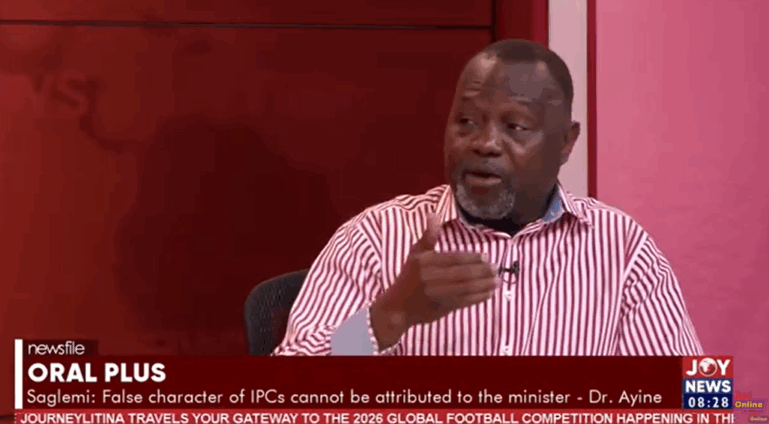
The Attorney-General, Dr Dominic Ayine, has defended his decision to discontinue several high-profile cases, insisting that many of them were poorly investigated and lacked the evidential strength required to sustain criminal trials.
Speaking on JoyNews’ Newsfile on Saturday, January 10, Dr Ayine said his actions were guided strictly by an objective assessment of the evidence available to his office and not by political considerations.
“I do not want to sound offensive, but I think that most of the cases, as I said earlier, were poorly investigated,” he stated. “That is the assessment that I came to...”
Dr Ayine referenced a commentary by private legal practitioner Thaddeus Sory, who had written in defence of the Attorney-General’s use of nolle prosequi. According to Dr Ayine, the article captured the essence of prosecutorial discretion.
He recalled that Mr Sory had argued that where an Attorney-General objectively evaluates a case and concludes that it is not worth proceeding to trial, it would be unreasonable to expect that matter to be pursued in court.
“If you have an Attorney-General who objectively assesses a matter and comes to the conclusion that it is not worth proceeding to trial, you don’t expect him to take that matter to trial,” Dr Ayine noted.
Responding to criticisms that he is being lenient towards members of the National Democratic Congress (NDC), Dr Ayine firmly rejected the accusation, describing it as unfounded.
He urged the public to judge his tenure by future actions rather than political speculation.
“I keep telling people that they should watch this space,” he said. “They should watch when there is malfeasance by a minister, a chief executive, or other appointees of this government. That is when they will see that the allegation that I am treating NDC people with kid gloves is not well-founded.”
The Attorney-General emphasised that in cases where he has proceeded with prosecution, the evidence has clearly demonstrated criminal conduct, particularly theft of public funds.
“In the cases that I have filed, most of them I have been able to show that there was theft,” he explained.
He cited the case involving Kwabena Adu-Boahen as a clear example, alleging that public funds were unlawfully diverted for private use.
“Very clearly, moving seven million dollars from a public account to a private account and disbursing it for private purposes is theft,” Dr Ayine stated.
Latest Stories
-
Nepal rescuers blast hillside in search of hydropower workers as families wait anxiously
14 minutes -
Teachers who pass promotional exam to get January 2026 start date after gov’t resolves promotion dispute – Apaak
17 minutes -
NSMQ 2026: St. John’s School rally from slow start to book semi-final spot
17 minutes -
Promotion pay row: Gov’t gives teachers September to complete salary adjustments
28 minutes -
Financial irregularities plummet by 62.9% as state tightens fiscal controls
29 minutes -
DVLA to expand mobile services to underserved communities in Ghana’s Eastern Corridor of the Northern Region
45 minutes -
GUTA urges GPHA to act swiftly to end Tema Port congestion to avert rising business costs
45 minutes -
Port congestion could undermine 24-hour economy policy – GUTA
46 minutes -
NSA opens three-day window to resolve national service biodata mismatches
55 minutes -
Abu Jinapor highlights increased gold exports after Domestic Gold Purchase Programme
59 minutes -
NPP UK branch calls for independent audit into gold purchasing operations and parliamentary probe
2 hours -
Zanetor Agyeman-Rawlings pledges decisive action on climate change, galamsey and environmental degradation
2 hours -
Bawumia was brainchild behind Domestic Gold Purchase Programme – Samuel Jinapor
2 hours -
Fuel prices set to go up from September 1, Petrol to sell at GHC 16.69 and Diesel, GHC 17.90 – COMAC
2 hours -
Our World Our People withdrawn due to curriculum duplication, not politics – Adutwum’s spokesperson
2 hours