

Audio By Carbonatix
The military extraction of Venezuelan President Nicolás Maduro and First Lady Cilia Flores by United States Delta Force units on January 3, 2026, marks a seismic shift in global politics. Codenamed Operation Absolute Resolve, the mission involved over 150 aircraft and targeted the Venezuelan capital, Caracas, with precision strikes.
The capture of a sitting head of state by a foreign power has triggered immediate comparisons to 19th-century "gunboat diplomacy." Ghana and the African Union (AU) view this precedent with extreme caution, fearing a return to an era where the sovereignty of smaller nations is secondary to the strategic interests of world powers.
ECOWAS Unified Front and Regional Anxiety
The Economic Community of West African States (ECOWAS) officially condemned the incursion from its Abuja headquarters. The bloc issued a stern warning regarding the "sovereignty and territorial integrity" of Venezuela. Leaders expressed profound concern over the precedent set by the American operation. While acknowledging the fight against organised crime, ECOWAS drew a firm line at unilateral military intervention.
The bloc invoked Article 2(4) of the UN Charter to remind the international community of its legal obligations. This unified response highlights growing anxiety among middle-power blocs that "might-is-right" diplomacy is replacing the rules-based order.
Condemnation from Accra and Addis Ababa
The Government of Ghana was among the first to issue a formal protest. On January 4, 2026, the Ministry of Foreign Affairs expressed strong alarm, describing the action as an "unauthorised invasion" and a "violation of the Charter of the United Nations, international law, and the principles of sovereignty." Accra specifically rejected the "Don-roe Doctrine," stating: "These declarations are reminiscent of the colonial and imperialist era and should have no place in the modern global order."
Simultaneously, AU Commission Chairperson Mahmoud Ali Youssouf issued a communiqué from Addis Ababa characterising the incident as an "abduction." The AU reaffirmed its commitment to the non-interference principle, stating: “The complex internal challenges facing Venezuela can only be sustainably addressed through inclusive political dialogue led by Venezuelans themselves.”
Sahelian Defiance and East African Outcry
The Caracas raid has triggered an immediate diplomatic response in the Sahel. The governments of Mali and Burkina Faso issued joint statements invoking the "principle of reciprocity," implementing travel bans on American officials. In East Africa, the Communist Party of Kenya (CPK) labelled the invasion an "illegal and imperialist act," warning that "today it is Venezuela, but tomorrow it will be the whole world, including Africa." This sentiment reflects a growing fear among non-aligned nations that the "Don-roe Doctrine" could be expanded to any state resisting Western hegemony.
From Sokoto to Caracas: A Pattern of Intervention
The Venezuela raid comes only nine days after the U.S. launched airstrikes in Northwest Nigeria on Christmas Day 2025. While Washington framed the Nigeria strikes as a moral mission to protect Christians from ISIS-Sahel militants—and Nigerian Foreign Minister Yusuf Tuggar noted it as a "joint operation"—the Caracas operation reveals a broader pattern of "kinetic diplomacy." For African analysts, the leap from targeted counter-terrorism in Sokoto to unilateral regime change in Caracas suggests a U.S. administration that no longer feels bound by traditional diplomatic protocols.
The Pretoria-Cairo Axis: Stability vs. Sovereignty
South Africa has emerged as the leading continental critic, with the Department of International Relations (DIRCO) describing the capture as a "manifest violation" of the UN Charter. President Cyril Ramaphosa is reportedly moving to chair an Extraordinary SADC Summit to address the implications for regional security. This regional mobilisation is underpinned by a firm legal stance from Pretoria, which views the operation as a direct challenge to the rules-based order.
"Unlawful, unilateral force of this nature undermines the stability of the international order and the principle of equality among nations," the South African government stated. Minister Naledi Pandor added that the UN Charter "does not authorise external military intervention in matters that are essentially within the domestic jurisdiction of a sovereign nation."
This sentiment is echoed in North Africa. Egypt has signalled deep concern through diplomatic channels, emphasising that the forced removal of a leader threatens the very concept of the "Nation-State." Together, Pretoria and Cairo are forming a diplomatic bulwark, viewing the raid as a dangerous erosion of the post-WWII international order.
African Diplomacy at the Forefront: The UN Emergency Session
On Monday, January 5, 2026, Somalia convened an emergency Security Council session in New York. The meeting focused on reaffirming the international rule of law following the U.S. raid. UN Secretary-General António Guterres issued a sharp rebuke through his representatives. He declared that the rules of international law were not respected. Guterres warned that the operation sets a dangerous precedent for global stability.
The debate highlighted a deep divide between world powers. U.S. Envoy Mike Waltz defended the mission as a necessary law enforcement action against a narco-state. Venezuelan Ambassador Samuel Moncada countered by calling the event an international kidnapping. The Somali presidency led the African bloc in a firm defence of Article 2(4) of the UN Charter. They argued that unilateral military force undermines the sovereignty of all smaller nations. Even European allies expressed concern over the erosion of traditional diplomatic protocols. The session concluded with a call from the Global South for the immediate restoration of multilateral order.
Ghana-Venezuela Relations and Regional Stability
The crisis hits home for Ghana, which has spent years strengthening ties with the Maduro administration. In late 2025, Venezuela announced plans to open a new embassy in Accra. For the Ghanaian government, the removal of Maduro is a disruption of a strategic partnership. Additionally, a 12% spike in Brent crude prices—driven by Trump’s declaration that the U.S. will "run" Venezuela's oil sector—threatens to raise domestic fuel costs in Ghana by 15%, potentially triggering a cost-of-living crisis across the ECOWAS region.
Economic Sovereignty and the "Don-roe Doctrine"
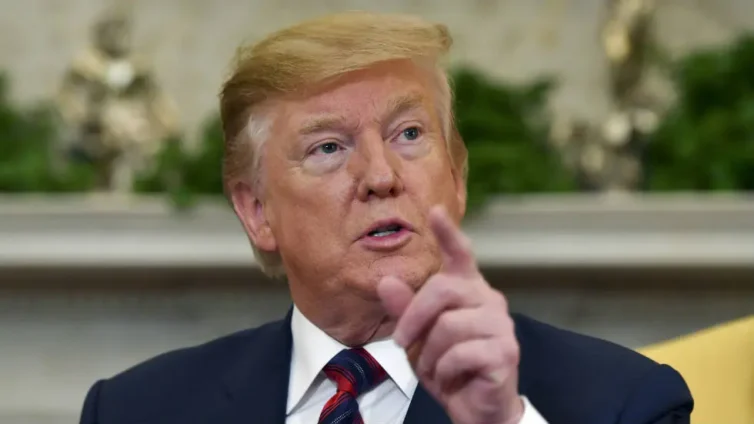
A primary concern for African nations is the explicit pivot to a transactional "Petro-Protectorate" model. President Donald Trump has introduced the "Don-roe Doctrine" (or the Trump Corollary to the Monroe Doctrine), asserting absolute U.S. dominance in the Western Hemisphere. Washington has characterised the operation not as a traditional war, but as a "necessary law enforcement action" to dismantle what Attorney General Pam Bondi calls a "narco-state."
Following the unsealing of indictments against Maduro and First Lady Cilia Flores for Narco-Terrorism Conspiracy, Bondi declared: "They will soon face the full wrath of American justice on American soil."
Beyond the legal pretexts, the economic implications are stark. Trump confirmed that the U.S. would "run" Venezuela temporarily, with major American oil companies slated to invest billions to fix "broken infrastructure." For Ghana, Nigeria, and Angola, the "oil-for-reimbursement" strategy—where a foreign power seizes a nation’s energy sector to pay for the costs of its own military intervention—is viewed as a terrifying revival of colonial-era resource extraction. This creates a dangerous precedent for "resource-driven regime change" that threatens the economic sovereignty of mineral-rich nations across the African continent.
Legal Precedent and Global South Solidarity
The United States justified the incursion as a law enforcement action based on narcoterrorism charges. However, the African Union and leaders like Brazil's Lula da Silva argue these charges do not grant legal authority to invade. African leaders are now aligning with China and Russia to demand a return to the UN Charter, fearing that "narcoterrorism" has become a new pretext for targeting any leader who resists U.S. corporate interests.
Latest Stories
-
GACL to hold full-scale emergency simulation exercise on October 15
2 minutes -
327 entries submitted for 30th GJA Media Awards
16 minutes -
Mahama proposes rent-to-own scheme for unfinished houses
18 minutes -
Mahama wants banks to introduce affordable housing loans within six months
19 minutes -
Photos from National Conference on Housing Finance
23 minutes -
Italy, Ghana unite 40 artists for ‘Beyond Creation’ exhibition at Accra Art Centre
42 minutes -
Premature to call for Sports Minister’s removal while CID probe is ongoing – Ernest Norgbey
1 hour -
NPP mourns Samuel Arthur Odoi-Sykes
1 hour -
Stay out of World Cup visa probe to avoid interfering with CID investigations – Ernest Norgbey to politicians
1 hour -
Bono East Minister inspects ‘Big Push’ roads; contractor on Tankor-Fiema-Busunya road ahead of schedule
2 hours -
Scrutiny is not disloyalty – Chief of Staff defends serious journalism at 30th GJA Awards launch
2 hours -
Abuse case: Nana Akua’s husband Harold unable to appear in court after hospital admission – Police
2 hours -
Mahmud Kabore picks NDC Ashanti Regional Communication Officer nomination forms
2 hours -
KNUST Career Services pioneer Selina Doe Angmor named among 2026 40 Under 40 honourees
2 hours -
Nana Akua domestic abuse case: Police to arraign husband after hospital discharge
2 hours