

Audio By Carbonatix
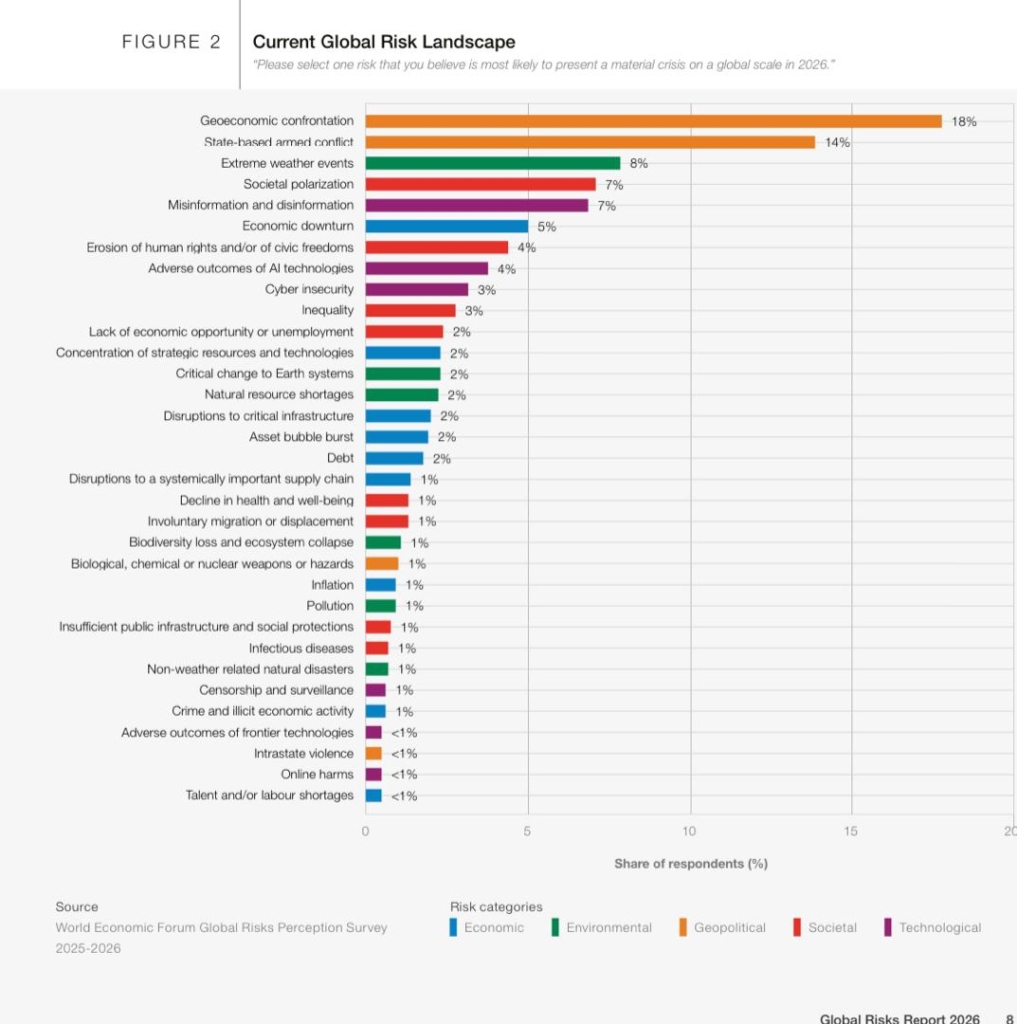
The World Economic Forum (WEF) has identified rising geoeconomic tensions as the world’s most pressing threat in 2026, highlighting a landscape of growing volatility and interconnection.
The WEF’s Global Risks Report 2026 warns that increasing trade disputes, sanctions, tariffs, and strategic competition between major powers are straining multilateral cooperation and fragmenting global markets, creating uncertainty for trade, investment, and long-term economic growth.
State-based armed conflicts are closely linked to these tensions, with geopolitical rivalries increasingly spilling over into military confrontations, proxy wars, and regional instability.
These developments are disrupting supply chains, energy markets, and capital flows, the report notes, adding to the economic and political uncertainty facing nations worldwide.
Climate-related risks remain critical, with extreme weather events imposing mounting economic costs through infrastructure damage, food insecurity, supply chain interruptions, and rising insurance claims.
Societal and political challenges are also escalating, as deepening polarisation and ideological divisions weaken policy effectiveness, undermine institutions, and complicate consensus-building.
The WEF further draws attention to the dangers of misinformation, noting that the deliberate spread of false information can distort public discourse, erode trust in institutions, and amplify market and political instability.
Other top concerns include the risk of economic downturns due to high global debt and tight financial conditions, the erosion of human rights and civic freedoms, rapid technological change and AI-related disruptions, cyber insecurity, and growing inequality, which can exacerbate social tensions and constrain growth.
The report stresses that these risks are increasingly interconnected rather than isolated. The WEF calls for proactive global cooperation, strengthened resilience, and forward-looking governance to address compounding threats in an increasingly fragmented world.
Latest Stories
-
How travel influencers can put a spotlight on Ghana’s hidden tourism gems
2 minutes -
Iran war escalation raises concern over civilian death toll
3 minutes -
Works and Housing Minister seeks shorter construction period for Kaneshie–First Light road works
4 minutes -
Toxic wildfire haze spreads across South East Asia as ‘super’ El Niño intensifies
12 minutes -
Man jailed 10 years for possessing 21 parcels of cannabis for trafficking
15 minutes -
Two security guards charged with defilement of 14-Year-old BOGISS student granted bail
15 minutes -
Here’s what to eat to support healthier mouth bacteria
16 minutes -
More than 80 feared dead after boat drifts in Atlantic for 27 days
18 minutes -
Gov’t mobilises resources to clear accumulated waste at Jamestown
19 minutes -
CJ comment on state institutions has stripped judiciary of its neutrality – Manhyia South MP
19 minutes -
Africa Prosperity Dialogues 2027 to push for ‘borderless Africa’ as registration opens September 7
23 minutes -
Northern region Minister rallies stakeholders’ support to tackle alleged irregularities in School Feeding Programme
23 minutes -
How Ghana can spread tourism development across all 16 regions
23 minutes -
GIF demands swift prosecution of attacks on Forestry Commission officers
26 minutes -
Constitution review implementation: NCCE, media have critical roles to play—EU
27 minutes