

Audio By Carbonatix
Ghana is not a poor country. It is a resource-rich nation trapped in what Professor Paul Yegandi Imhotep Paul Alagidede describes as a crisis of economic thinking rather than a crisis of wealth.
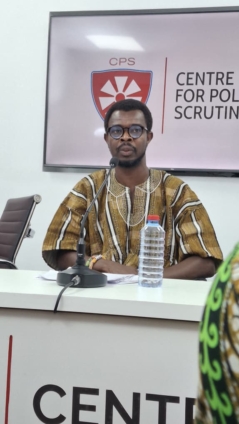
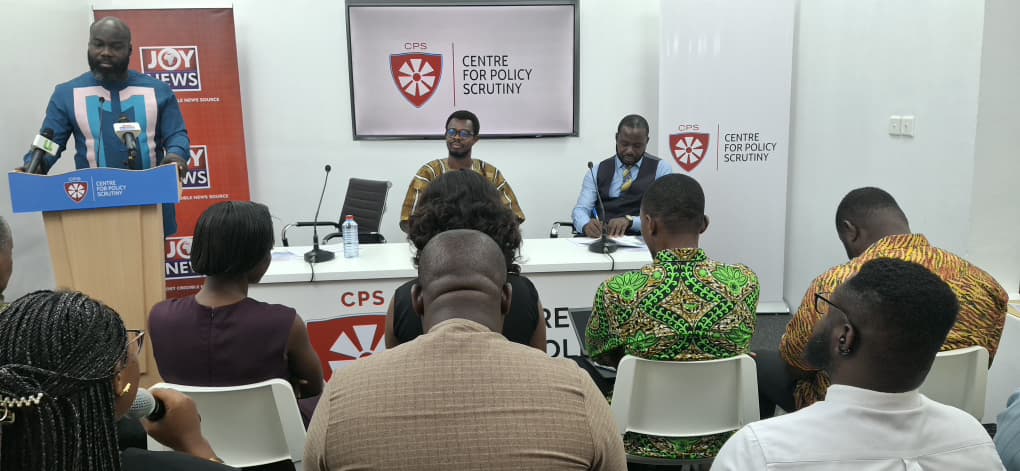
Speaking at a public lecture organized by the Centre for Policy Scrutiny (CPS) in partnership with Joy Business, the Professor of Finance and Bank of Ghana Chair in Finance and Economics at the University of Ghana argued that Ghana’s persistent liquidity challenges stem from how the country measures and understands its economy.
“In the midst of abundant gold, we are the liquidity trap,” he said, setting the tone for a lecture that questioned decades of orthodox economic practice.
According to him, Ghana’s development trajectory since independence has largely been shaped by two dominant traditions: orthodox and heterodox economics. While both have contributed to progress, neither has succeeded in lifting the country into sustained, high-level growth.
“These models have been quite limited in their ability, especially to take developing countries like Ghana or Rwanda into high-level, sustainable and steady-state growth,” he noted.
The result, he explained, is what he calls the paradox of scarcity in the midst of progress — an economy that shows growth on paper but remains perpetually short of liquidity.
Ghana’s repeated recourse to the International Monetary Fund (IMF) illustrates the problem. Over the past 60 years, the country has entered IMF programmes about 18 times, including 10 in the last 35 years of democratic governance.
“This is an economy that, at the same time, has a tremendous amount of resources that can be unlocked for domestic liquidity,” he said.
“But the accounting system and the economic thought running it are among the key problems that keep us returning outside for liquidity to finance an economy that is already rich.”
At the heart of the problem, Professor Alagidede argued, is the System of National Accounts, which measures economic performance largely through flows of goods and services. Under this system, Ghana’s Gross Domestic Product is valued at about US$82 billion, a figure he says ignores vast areas of economic activity.
“The current system of national accounting only counts visible gold that leaves our shores,” he said.
“That means we are forced to go for paper from abroad while sitting on the bedrock of wealth at home.”
In his view, this narrow framework creates an illusion of poverty. "Credit rating agencies focus on Ghana’s roughly US$60 billion in official reserves while ignoring an estimated US$1.5 trillion worth of gold and other natural assets embedded in the economy".
“Ghana is not a poor country,” he declared. “This is a very rich nation. It’s a rich house with a locked door.”
Latest Stories
-
About 14,800 candidates with aggregates 6–12 apply for 1,300 Achimota places – CSSPS
6 minutes -
PETROSOL engages dealers to strengthen retail network and improve customer experience
19 minutes -
GRIDCo warns encroachers as activities under high-voltage lines threaten power supply
25 minutes -
The coup doesn’t need soldiers anymore: Social media and the new assault on African democracy
35 minutes -
Works and Housing Minister pushes to cut Kaneshie road closure from one year to 6–9 months
38 minutes -
Joy FM Back-to-School Fair: Patrons to enjoy up to massive discounts from vendors
56 minutes -
Mahama gives TMA, TDC 14 days to resolve development control dispute
57 minutes -
‘We cannot arrest the entire school, but we know the ringleaders’ –– Police warns Okuapem, Mount Sinai students
1 hour -
UN warns of ‘supersized’ El Niño as countries prepare for impact
1 hour -
Channel smuggling gangs resort to ‘mega-dinghies’ as crackdown limits small boat supply
1 hour -
Embattled Spanish PM Sánchez insists no prior warnings before Ceuta crisis
1 hour -
Palestinian teens killed during settler attack on West Bank village, officials say
1 hour -
Foreign Affairs Ministry responds to Fourth Estate attestation investigation, bars middleman from premises
1 hour -
Zanetor Agyeman-Rawlings calls for balance between development and environment protection
1 hour -
About 17% of 2026 BECE candidates had aggregates 6–18 – CSSPS
1 hour