

Audio By Carbonatix
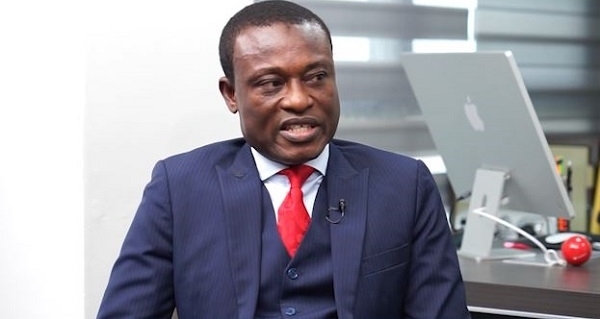
Special Prosecutor Kissi Agyebeng has described the final six months of 2025 as a period of "extreme resistance", criticising an "unfair" coordinated existential threat designed to terminate its independence.
In the OSP Half-Yearly Report covering July to December 2025, the Special Prosecutor detailed a turbulent chapter characterised by a high-stakes legislative attempt to subsume the Office under the Attorney-General’s Department.
The report paints a picture of an anti-corruption agency under siege by "those justly threatened by accountability".
According to Mr Agyebeng, the most significant threat materialised in the form of a Private Member's Bill introduced in Parliament aimed at abolishing the OSP.
Proponents of the bill argued that the Office was a "drain on national resources" and cited institutional friction and jurisdictional overlaps with the Attorney-General.
However, the bill was swiftly withdrawn following a direct intervention by President John Dramani Mahama.
The Special Prosecutor moved to commend the President for his decisive action, noting that the move preserved the gold standard of independent anti-corruption efforts.
“The President's action stamped firmly the well-considered collective wisdom... that the Attorney General, being a member of Cabinet and chief legal advisor to the Government, is not well-suited to investigate and prosecute members of a government to which he belongs,” the report stated.
The Special Prosecutor launched a vigorous defence against claims that the Office has failed to deliver impact relative to its operational costs. The report dismissed the memorandum accompanying the withdrawn bill as a collection of "bare statements" made without any empirical examination of the OSP’s actual performance.
The sponsors of the bill had claimed that consolidating power under the Attorney-General would enhance coordination and efficiency. The OSP, however, countered that these arguments lacked any demonstration of how a Cabinet member could more effectively fight corruption within their own administration.
“A careful examination of the stated reasons for the calls to abolish the Office clearly posits that the reasons are most unfair and that they were advanced without any reference to the actual performance of the Office and its demonstrated impact since its inception,” the Special Prosecutor maintained.
While the report acknowledged the nature of the challenges faced in late 2025, it emphasised that the OSP does not shy away from accountability.
The Office pointed to its "assiduous attendance" before Parliamentary oversight committees as proof of its transparency.
The Special Prosecutor concluded that the pushback experienced in the second half of the year was a direct consequence of the Office's effectiveness in threatening the status quo of impunity.
Some of the key performance records outlined by the OSP are꞉
i. The 2020 assessment of the risk of corruption in respect of the Agyapa Royalties transaction, which saved the nation billions of dollars and the potential loss of sovereignty over our natural resources.
ii. The 2022 investigation and measures instituted by the Office in respect of customs advance rulings, which led to reversion of discretionary discount on the free on board or freight on board (FOB) value of goods and the home delivery value (HDV) of used vehicles and effectively shut all avenues for officers of the Customs Division of Ghana Revenue Authority to grant discretionary markdowns and removed opportunity for corruption and corruption-related activities in that regard, thereby saving the nation millions of cedis;
iii. The 2023 investigation and measures instituted by the Office in respect of auction sales of vehicles and other goods which ushered in an e-auction application – a novel electronic medium for the auction of seized items at the ports – with an attendant increase of an average of 12% per month of revenue accruing from auction sales and consequential addition of millions of cedis to national coffers; and
iv. The 2023-2025 investigation of procurement contracts awarded by Ghana Revenue Authority and Ministry of Finance to Strategic Mobilisation Ghana Limited, which led to the cancellation of the contracts and saved the nation an aggregated Five Billion Seven Hundred and Thirty Million Nine Hundred and Seventy-Five Thousand Cedis (GH₵5,730,975,000.00); among others.
Latest Stories
-
Today’s front pages: Friday, September 18, 2026
53 minutes -
Prof Kwaku Asare questions legal basis of case against senior nursing officer linked to ‘Ghana Jollof’
56 minutes -
Financial inclusion must go hand in hand with investor protection – BoG Governor
1 hour -
Gender Ministry touts gains in LEAP, school feeding and disability support
3 hours -
72 vessels, 17,336 fishing hours: The monitoring gap at Ghana’s first Marine Protected Area
3 hours -
Ansa-Asare questions rush to lower presidential age to 30
3 hours -
Minority challenges claim all 431 government-sponsored World Cup travellers have returned
3 hours -
No evidence linking government, NDC members to cocaine probe – Kwakye Ofosu
3 hours -
Minority demands full breakdown of GH¢58.9m spent on Ghana’s World Cup participation
3 hours -
Stay away from negative peer influences – MP warns SHS students
4 hours -
Mahama to commission Agbogbloshie waste evacuation to Nsawam landfill today
4 hours -
Kwadaso NDC supporters demonstrate to demand removal of MCE
4 hours -
GSA records 18% revenue growth in 2025
4 hours -
2027 Budget to target nine sectors to create jobs – Mahama
4 hours -
GMC exploring partnership for concession at Takoradi Port – Deputy MD
4 hours