

Audio By Carbonatix
In today’s music economy, global success is no longer a happy accident or a viral miracle that strikes at random. It is engineered carefully and often ruthlessly, through deliberate policy choices, strategic partnerships, relentless promotion, and an almost obsessive attention to detail.
The days when raw talent alone could carry an artiste from local fame to global relevance are largely behind us. The world is simply too crowded, too competitive, and too data-driven for that.
This reality raises an uncomfortable, but necessary, question for Ghana’s creative industry. Do Ghanaian artistes have a coherent and intentional global strategy, or are we still hoping that exceptional talent will somehow break through the noise on its own and announce itself to the world?
There is no doubt that Ghana has talent, and in intimidating quantities. From Accra to Kumasi, Tema to Tamale, the country produces artistes with world-class songwriting, distinctive sounds, and performance energy that can stand confidently on any global stage. What is increasingly in doubt, however, is whether that talent is being systematically packaged, amplified, and positioned for global relevance. Talent, after all, is the raw material. Strategy is the machinery. Without the latter, even the richest creative resources risk remaining impressive, but invisible.
When Music Becomes National Strategy
Over the last decade, countries like Nigeria and South Africa have demonstrated how music can function as soft power. Afrobeats is no longer just a genre. It is a cultural export driving tourism, foreign investment, and global curiosity. According to the Nigerian Bureau of Statistics, the country’s creative sector contributed over ₦239 billion to GDP in 2022, with music and film as major drivers. Lagos has become synonymous with nightlife, fashion, and sound, largely because the world followed its music there.
South Africa, on the other hand, has used institutional support and export-ready infrastructure to globalise Amapiano. With structured publishing systems, international touring circuits, and strong brand alignment, South African artistes consistently appear on global festival line-ups and European club circuits. Tourism South Africa has openly acknowledged music and lifestyle culture as pillars of its global branding.
Music, in these contexts, is not merely entertainment. It is diplomacy.
The Grammy Silence and What It Signifies
Against this backdrop, the absence of a Ghanaian nominee at the Grammys this year felt particularly heavy. Not because awards are the ultimate validation, but because nominations spark conversations. They drive industry respect, continental relevance, and global curiosity. A single nomination can unlock international press, festival bookings, sync placements, and long-term catalog value.
Ghana’s absence from that global conversation is not a reflection of quality. It is a reflection of positioning.
This is especially painful when one considers the sheer depth of Ghanaian talent. There are artistes whose creativity, originality, and performance quality rival, and in some cases surpass, Africa’s most globally visible names. From highlife-infused contemporary sounds to drill, soul, rap, and alternative fusions, Ghana’s sonic diversity is world-class. What it lacks is coordinated propulsion.
Talent Is Not the Problem
The myth that Ghanaian artistes are “not global enough” does not hold up under scrutiny. The real issues are structural and strategic. Ghana’s music ecosystem remains fragmented, underfunded, and largely inward-facing. Government involvement in creative export is minimal compared to peer countries, and when support exists, it is often symbolic rather than strategic.
There is also an unintentional push problem. In Nigeria, media, brands, and diaspora communities aggressively amplify local artistes. In Ghana, even breakout moments are often met with muted institutional backing. Too many global opportunities are left to individual hustle rather than collective momentum.
Equally important is the question of artiste intent. Global success requires deliberate choices, sometimes uncomfortableones. Language selection, branding, touring discipline, release timing, and international collaborations all matter. Yet many Ghanaian artistes approach global reach as an aspiration rather than a structured goal.
Do Ghanaian Artistes Have a Global Playbook?
A true global strategy is measurable. It shows up in streaming data, touring footprints, and cross-border collaborations. On streaming platforms, Nigerian and South African artistes dominate African export playlists and algorithmic discovery. Spotify’s Loud & Clear Africa report consistently ranks Nigerian acts among the continent’s top global streamers, with billions of annual streams originating outside Africa.
Ghanaian artistes, by contrast, often perform strongly domestically but struggle to convert that success into sustained international listenership. Touring patterns reveal a similar trend, with sporadic diaspora shows rather than structured international circuits.
Language plays a role, but it is not a limitation. Global audiences increasingly embrace authenticity. The challenge is not singing in Twi or Ga. It is packaging, storytelling, and strategic exposure.
Black Sherif and Digital Signals
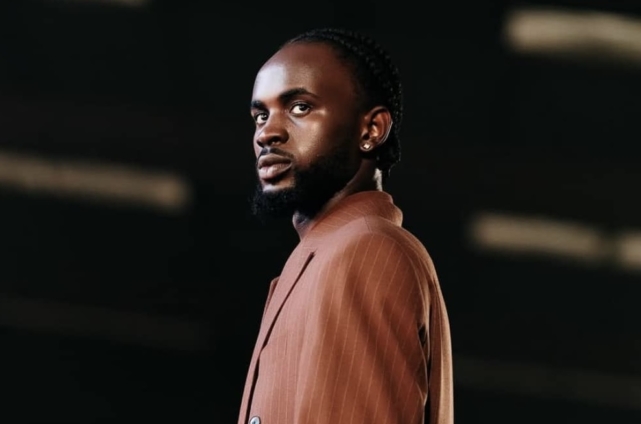
There are, however, signs of what is possible. Black Sherif’sIron Boy era in 2025 demonstrated how emotionally resonant storytelling, combined with digital momentum, can travel far beyond borders. His music found traction across Europe and North America, driven by organic fan discovery rather than heavy industry machinery.
Digital indicators back this up. Tools like Shazam Fast Forward, which track songs with rapid discovery velocity, increasingly show Ghanaian records gaining early international traction. These are signals, data-driven proof that global ears are listening. What often fails is follow-through, including international PR, playlist pitching, touring, and sustained engagement.
Turning the Tide
If Ghana is serious about global music relevance, several shifts must occur.
First is policy alignment. Music export should be treated as an economic priority, not a cultural afterthought. Dedicated creative export offices, funding for international showcases, and partnerships with global festivals can change trajectories.
Second is ecosystem collaboration. Labels, managers, media, and brands must move in concert. Global success is rarely a solo act.
Third is data-led decision making. Streaming analytics, audience geography, and discovery tools should inform release strategies and touring plans.
Finally, there is the artiste mindset. Global reach requires patience, sacrifice, and intentional branding. It is not about chasing trends, but about positioning identity for the world.
Strategy Over Sentiment
Ghana does not lack talent. It lacks alignment. Until music is treated as both art and export, Ghanaian artistes will continue to flirt with global relevance rather than inhabit it.
The world is listening, quietly, curiously, and increasingly through data. The question is whether Ghana is ready to speak back with a plan.
Latest Stories
-
A person stopped by police can record for evidence – NRSA
18 minutes -
New Road Traffic Law introduces separate licensing regime for commercial drivers
31 minutes -
Ghana must move beyond enforcement to tackle road deaths – Appiah Kusi Adomako
57 minutes -
Kusi Adomako calls for road crashes to be declared a public health emergency
1 hour -
Ghana makes history with international karting debut
2 hours -
Playback: The Law discussed new road traffic rules
2 hours -
What’s driving men to get penis fillers, despite the risks?
2 hours -
The world’s oldest president left for a ‘brief stay’ in Europe, he hasn’t returned in two months
2 hours -
Trapped driver rescued after accident on Kintampo–Tamale highway
3 hours -
Civil Service must put citizens at centre of decision-making – Vice President
3 hours -
Firefighters battle blaze at Accra New Town apartment
3 hours -
Ghana receives five new envoys to strengthen diplomatic relations – Ablakwa
3 hours -
Europe’s tallest Virgin Mary statue unveiled in rural Poland
3 hours -
Sammi Awuku denies reports of EOCO arrest
3 hours -
Stonebwoy makes history at OVO Arena Wembley with monumental BHIM Festival
4 hours