

Audio By Carbonatix
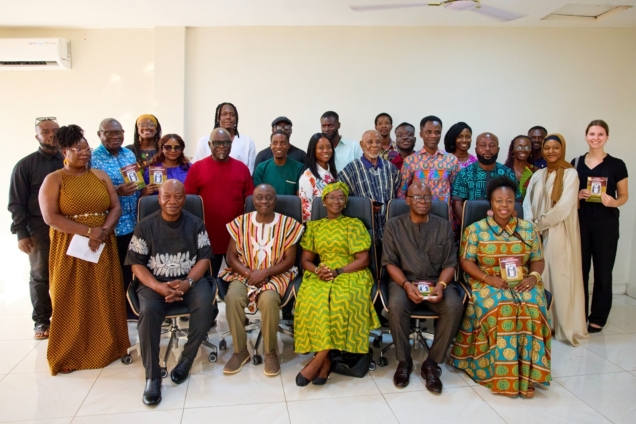
Scholars, diplomats, cultural advocates and members of the public gathered at the library of the Kwame Nkrumah Memorial Park in Accra on March 5 for the launch of the Restitution Africa Forum, an initiative aimed at advancing discussions on the return of Africa’s looted cultural heritage and the broader restoration of historical dignity and identity.
The event also featured the presentation of the book Osagyefo Kwame Nkrumah, Sankofa, written by researcher and forum convenor Kwasi Nkrumah Boadi. The book revisits the political philosophy of Ghana’s founding president, Kwame Nkrumah, and the Akan concept of Sankofa as a framework for rethinking governance and cultural consciousness in Africa.
Opening the programme, moderator Dr Portia Bansa welcomed participants and acknowledged representatives from academia, the diplomatic community and cultural institutions, including officials from UNESCO and other organisations with an interest in cultural heritage and restitution. She noted that the gathering was intended to spark meaningful conversations about Africa’s past and the responsibility of contemporary generations to reclaim their heritage.
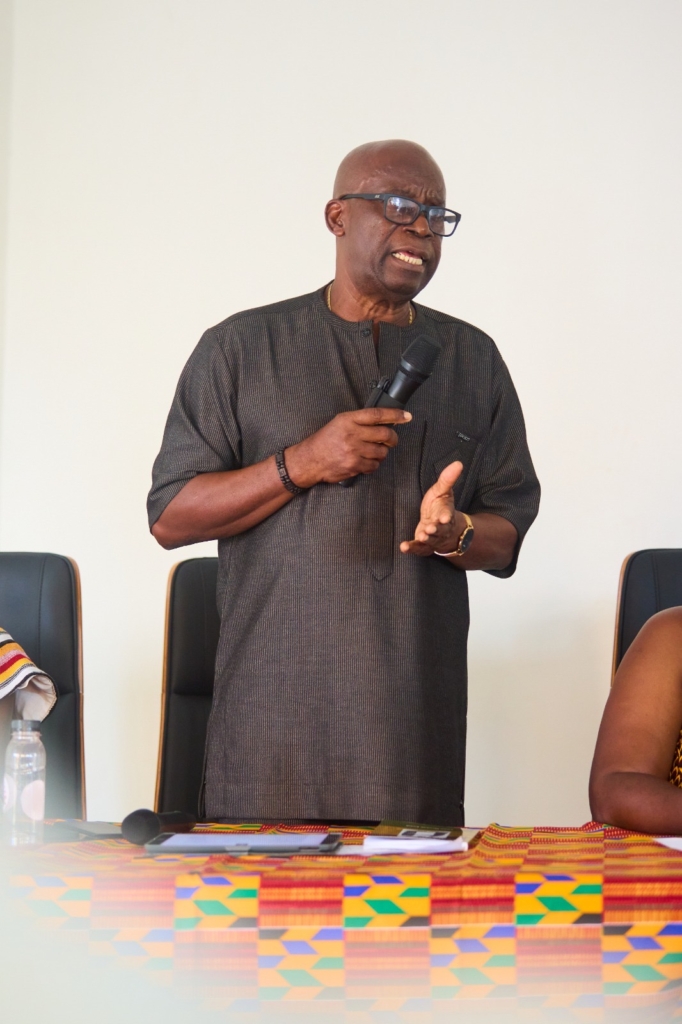
Chairing the programme, retired Professor of African Studies, Professor Pashington Obeng, encouraged participants to broaden their understanding of restitution beyond the return of artefacts taken during the colonial era. While the repatriation of cultural objects has dominated global debates in recent years, he argued that the concept carries deeper intellectual and cultural implications.
“For some people it simply refers to the return of cultural artefacts,” he told the audience, explaining that restitution should also involve a process of reflection and renewal within African societies. According to him, the continent must examine its own intellectual traditions and rediscover the foundations upon which its institutions and social systems were built.
The book presented at the event explores these ideas through the lens of Nkrumah’s political philosophy and Africa’s traditional systems of governance. In his work, Boadi argues that African societies should revisit their indigenous traditions of consensus building and communal decision making as part of efforts to strengthen democratic governance on the continent. Drawing inspiration from the Sankofa philosophy, he suggests that looking back to retrieve valuable elements of the past is essential for shaping a more grounded and authentic future.
The book also revisits historical debates within Ghana’s nationalist movement, including ideological disagreements between Nkrumah and nationalist leader J. B. Danquah during the late colonial period. One such debate concerned the symbolism proposed for the United Gold Coast Convention in 1948, when Danquah suggested the two headed crocodile, known as Funtum Denkyem, as a symbol of political unity. Nkrumah reportedly rejected the symbol at the time, describing it as representing conflicting interests, and instead advocated the eagle as a more fitting national emblem. In Boadi’s reinterpretation, however, the imagery of the two headed crocodile becomes a metaphor for consensus and shared destiny, illustrating the idea that different perspectives can coexist within a unified political framework.
Beyond the intellectual themes explored in the book, the launch of the Restitution Africa Forum also drew attention to the broader global debate surrounding the return of African cultural heritage taken during colonial rule. A statement delivered on behalf of UNESCO’s representative in Ghana, Edmond Moukala, emphasised that restitution is increasingly understood not only as the recovery of objects but also as the restoration of dignity, identity and collective memory.
“Today, the discourse on restitution, whether of objects, knowledge or shared histories, looks beyond the return of material treasures,” the statement said. “It speaks to the restoration of dignity, memory and identity that were disrupted through colonial expropriation and illicit trafficking of cultural property.”
The statement highlighted the scale of Africa’s cultural losses, noting that vast numbers of artefacts, archives and sacred objects were removed from the continent over centuries through colonial conquest and unequal power relations. According to UNESCO, more than seventy percent of ancient African cultural objects remain outside the continent, often held in museums and private collections abroad.
“For centuries, vast portions of Africa’s cultural heritage were displaced, looted or taken under exploitative conditions, severing communities from their tangible links to history and tradition,” the statement noted, adding that the return of such heritage is essential to restoring cultural continuity.
Participants at the event also emphasised the intellectual and psychological dimensions of restitution. During discussions following the presentations, speakers argued that colonial rule disrupted not only Africa’s material heritage but also its systems of knowledge and education, creating a lingering dependence on Western frameworks of thought.
Prof. Kodzo Gavua, Lead Investigator of the Restitution Africa Forum, observed that many African academic institutions continue to rely heavily on foreign intellectual traditions, sometimes at the expense of indigenous knowledge systems and philosophies. For him, restitution should therefore include the recovery of intellectual confidence and the revitalisation of African perspectives within scholarship and public discourse.
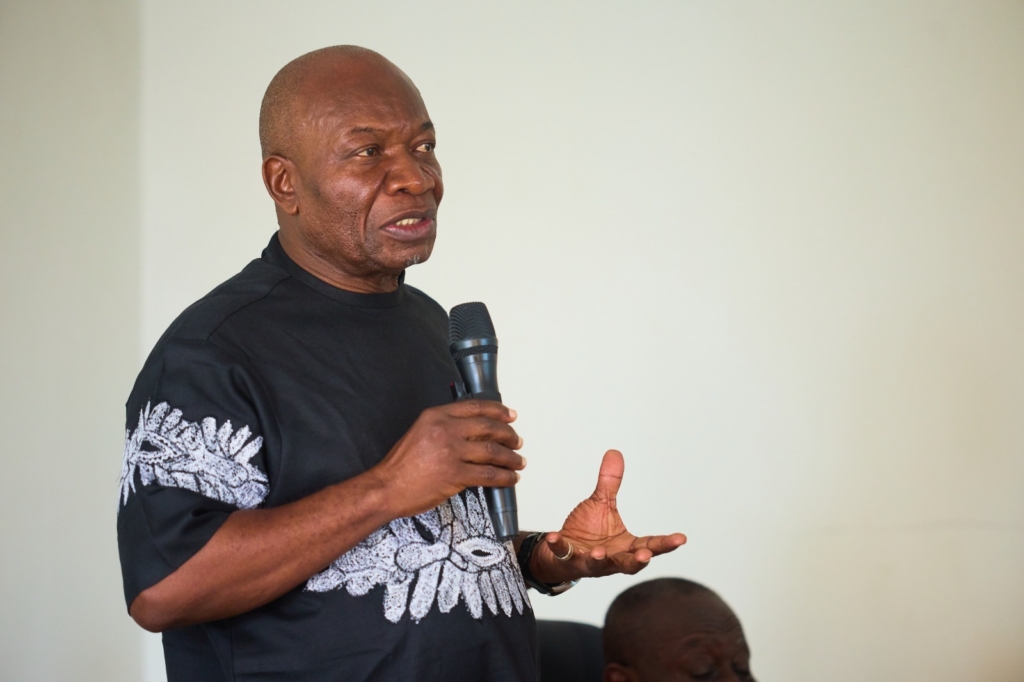
“Restitution should not only be about returning artefacts,” he said. “It should also be about restoring what we have lost, including confidence in our own knowledge systems.”
Another speaker raised questions about the tendency for conversations about Africa’s development to take place outside the continent. He argued that Africans must create their own platforms for debating the continent’s future rather than relying on international venues to shape discussions that directly affect African societies.
“Why should Africans converge in places like China or Germany to discuss Africa’s development?” he asked. “We must create our own spaces for these conversations.”
The establishment of the Restitution Africa Forum, organisers say, is intended to provide one such platform. The initiative aims to bring together scholars, policymakers, cultural practitioners and communities to advocate for the return of African heritage while promoting research and public dialogue on restitution.
According to its founders, the forum will collaborate with universities, cultural institutions and governments to support restitution initiatives and raise awareness about the historical displacement of African cultural assets. It also seeks to encourage deeper engagement with Africa’s intellectual traditions and strengthen connections between the continent and its global diaspora.
As the programme drew to a close, participants returned to the symbolism of Sankofa as a guiding principle for the work ahead. Rooted in Akan philosophy, the concept teaches that societies must return to the past to retrieve valuable knowledge in order to move forward wisely.
The UNESCO statement echoed this idea, describing Sankofa as an invitation to draw lessons from history to shape ethical futures.
For many participants, the launch of the forum represented more than the creation of a new organisation. It marked the beginning of a broader effort to reclaim Africa’s cultural heritage, restore historical memory and strengthen the intellectual foundations needed for the continent’s future development. Guided by the legacy of Nkrumah and the philosophy of Sankofa, organisers expressed hope that the initiative would contribute to a renewed sense of cultural confidence and historical awareness across Africa.
Latest Stories
-
AMA orders Accra businesses to close for September sanitation exercise
15 seconds -
Chief Justice’s comment on state institutions ‘extremely unfortunate’ – Baffour Awuah
6 minutes -
Justice moves fast for opponents, slow for allies – NPP accuses CJ
7 minutes -
Awudi wins Emerging Act of the Year at Ghana Music Awards USA
11 minutes -
Call A-Plus to order – Effutu Traditional Council tells gov’t after deadly New Winneba clash
12 minutes -
NPP accuses Chief Justice of neglecting dilapidated courts
16 minutes -
Matilda Domfegro crowned Miss Tourism Ghana 2026
20 minutes -
Check out the offerings of vendors for Joy FM’s Back-to-School Discount Fair
28 minutes -
‘Resign and join NDC’ – NPP tells Chief Justice over alleged political commentary
33 minutes -
Minority caucus demands immediate recruitment of qualified graduates with disabilities
43 minutes -
Underage riders driving motorcycle crashes, union claims
45 minutes -
About 14,800 candidates with aggregates 6–12 apply for 1,300 Achimota places – CSSPS
58 minutes -
PETROSOL engages dealers to strengthen retail network and improve customer experience
1 hour -
GRIDCo warns encroachers as activities under high-voltage lines threaten power supply
1 hour -
The coup doesn’t need soldiers anymore: Social media and the new assault on African democracy
1 hour