

Audio By Carbonatix
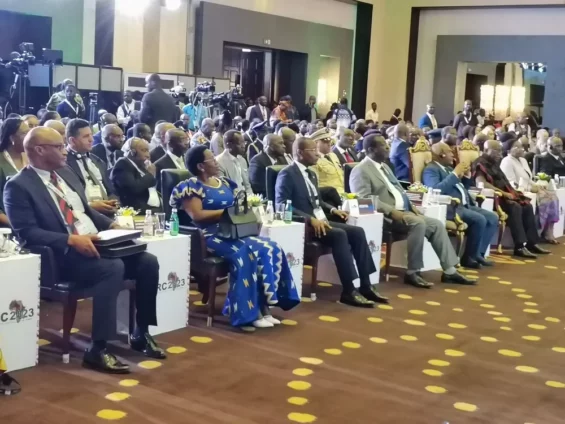
Some African leaders participating in the maiden Accra Reparations Conference (ARC) have called for reparation and restitution for the crimes committed in the trans-Atlantic slave trade.
They argued that the injustices and inhumane treatment meted out to the people continued to haunt the African society and those in the Diaspora.
Those atrocities have robbed the people of their self-esteem, dignity and image.
President Nana Addo Dankwa Akufo-Addo, addressing the opening session of the four-day Conference, being hosted by Ghana, said the trans-Atlantic slave trade “is the most barbaric episode in human history.
He said the effects of the slave trade had been devasting to the continent and to the African people.
The entire period of slavery, the President noted, meant that Africa’s progress, economically, culturally, and psychologically was stifled.
“You cannot quantify the effects of such tragedy, but there is a need to recognise that African people lost tremendously in that period, and its recorded ripple effects are still being felt right to this day.
“Reparations for Africa and the African Diaspora are long overdue,” he stated.
President Akufo-Addo stressed however that no amount of money can restore the damage caused by the transatlantic slave trade because its consequences will be felt for many centuries.
“But surely, this is a matter that the world must confront and can no longer ignore.
“And even before these discussions on reparations conclude, the entire continent of Africa deserves an apology from European nations who were involved in the slave trade for the crimes and damage that has been caused to the population, psyche, image, and character of the African the world over.
“The call for reparation is not a plea for arms, but a call for justice,” he said.
The conference is being co-organised by Ghana and the African Union (AU) Commission.
It seeks to promote dialogue, knowledge sharing and actionable strategies among diverse and relevant stakeholders on the way forward regarding addressing historical injustices against Africans and people of African descent.
Under the theme; “Building a United Front to advance the cause of justice and the payment of reparations to Africans,” the programme also aims to facilitate meaningful discussions among experts, policymakers, academics, and stakeholders on the topic of reparations.
It examines the legal and moral grounds for reparations and explores different models of reparatory justice.
The Conference is also exploring mechanisms for truth-telling, acknowledgement, reconciliation, and healing both within African societies and in relationships with former colonial powers.
President Nana Akufo-Addo was optimistic the Conference would help develop an action plan for a sustainable reparatory justice process in Africa, considering the historical context, current challenges, and prospects.
“We believe the calls for reparations to Africa are just,” he emphasised.
It is estimated that the trans-Atlantic slave trade transported between 10 million and 12 million enslaved Africans across the Atlantic Ocean to the Americas from the 16th to the 19th century.
A substantial percentage of the people taken captive were women in their childbearing years and young men who normally would have been starting families.
Mr Moussa Faki Mahamat, Chairperson of the AU Commission, in a message delivered on his behalf, said Africa had borne the brunt of injustices – slavery, colonisation and racial discrimination for far too long.
Consequently, the continent should work collectively with their counterparts in the Diaspora to correct the wrongs as Africans strive to chart the course for sustainable growth and development.
Mr Azali Assoumani, the AU Chairperson, said the call for reparations is a call for justice to right the wrongs of the past and the present.
This was intended to transform the vicious cycle of impoverishment of Africa and its people into a virtuous cycle for shared prosperity.
Mr. Cyril Ramaphosa, President of South Africa, in a message delivered on his behalf, affirmed his country’s support for the actions to be taken at the ARC for the benefit of the continent.
He stressed the need for the leaders to work together in championing the worthy cause of Africa.
Madam Mia Amor Mottley, the Prime Minister of Barbados, said racial discrimination and segregation in whatever form was a hindrance to the cause of humanity.
As such, African leaders should work with their counterparts in the Caribbean to address these development challenges.
Latest Stories
-
Former SIC Savings and Loans MD Amma Frimpomaa Dwumah honours EOCO invitation
3 minutes -
Meta removes 3.7 million accounts in international fraud crackdown linked to UK, US victims
4 minutes -
Gold Stars CEO Kwasi Adu sanctioned by GFA over misconduct
16 minutes -
AFCON 2027Q: ‘We should assemble the best squad’ – George Afriyie speaks on Black Stars’ team
23 minutes -
Public money belongs to the people, not government officials – Ato Forson
32 minutes -
Power, politics and the battle for electoral credibility: Is Ghana’s electoral commission truly independent?
35 minutes -
Sports Fund Administrator urges boxing fraternity to pursue partnerships beyond government funding
37 minutes -
Total number of jobs advertised increased 32% year-on-year to 3,578 in 7 months of 2026
60 minutes -
KNUST to receive 2,000 additional laptops for One Million Coders Programme
1 hour -
President Mahama urges churches to provide safe spaces for children and vulnerable people
1 hour -
George Dadzie Junior highly tipped in NDC regional secretary race due to grassroots experience
1 hour -
Passenger arrivals at airport improved by 23% in first 7 months of 2026
1 hour -
Aklerh returns to reggae roots with new single ‘Wo Dor’
1 hour -
Stacy Mense’s ‘W’ahyira Me’ gains airplay on radio, digital platforms
1 hour -
Economic activities mixed in 7 months of 2026; Cement sales decline by 10%
2 hours