

Audio By Carbonatix
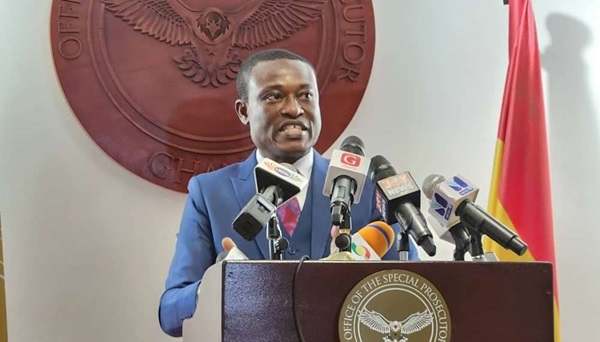
Special Prosecutor Kissi Agyebeng has raised alarm over what he describes as a deepening cultural identity crisis in Ghana, blaming the country’s colonial-influenced education system for eroding indigenous languages, traditions, and self-awareness.
Delivering a thought-provoking address at the 95th Anniversary Speech and Prize-Giving Day of Accra Academy on Saturday, March 28, Mr Agyebeng argued that Ghana’s formal education system systematically alienated generations from their cultural roots.
“Our lot was that our own languages were banished from schools as uncultured vernacular,” he said. “And the older folk here can all relate and recount stories of how they were flogged in school for speaking their own languages.”
He noted that this historical suppression went beyond language to include a broader dismissal of African identity, traditions, and belief systems.
“Our languages became unspeakable taboos; our culture and traditions were labelled barbarous,” he stated, adding that religious and colonial influences further compounded the erosion of identity.
Identity Crisis and Cultural Displacement
According to Mr Agyebeng, the long-term effects of this legacy are evident in modern Ghanaian society, where foreign cultural markers often overshadow indigenous identity.
He pointed out that many Ghanaians today bear non-African names, a reflection of the enduring impact of colonial and religious systems.
“Indeed, with the added pinch of the advent of Christianity and Islam, our heritage was further eroded to the point that the vast majority of us bear Christian, Jewish, European, and Arabic first names,” he observed.
He questioned societal norms that prioritise foreign identity markers, particularly in southern Ghana, where individuals are often asked to provide “Christian names” as a default expectation.
“To what purpose – the mindful person ponders,” he remarked.
Concern Over Place Names and Historical Identity
My Agyebeng also criticised the continued use of colonial-era spellings and names for Ghanaian towns and regions, describing it as a symbol of unresolved identity challenges.
He cited examples such as “Ashanti” instead of "Asante", “Kumasi” instead of "Kumase", and “Cape Coast” instead of "Oguaa", questioning why such forms persist decades after independence.
“Curiously, we seem to proudly maintain such names, spellings, and renditions sixty-nine years after independence,” he said.
For Mr Agyebeng, these choices reflect a deeper issue, one that goes beyond language to the very essence of national identity.
“We Are in the In-Between”
In one of the most striking moments of his address, the Mr Agyebeng described Ghana’s current cultural state as one of confusion and disconnection.
“My point is this: We are losing ourselves – and with ourselves, our aspirations. We are not recognisable," he declared.
“We are copying hard to be like others. We make believe that we are like them… Yet we know we are not like them and they know we are not like them.”
He continued: “In the end, we are not us anymore. We are not them either… We are in the in-between – and sometimes more of them than us.”
The remarks drew attention to what he sees as a lingering identity struggle, where Ghana is caught between preserving its heritage and imitating foreign systems.
“What then are we now? Us? Them? Us-Them? I do not know,” he concluded.
Call for Educational Reform
Mr Agyebeng’s comments form part of a broader call for reforming Ghana’s education system to prioritise cultural preservation alongside innovation and leadership development.
Education experts say his remarks resonate with ongoing debates about the role of local languages in schools, the decolonisation of curricula, and the need to redefine Ghana’s development path.
The anniversary event brought together alumni, students, and dignitaries, serving not only as a celebration of Accra Academy’s legacy but also as a platform for reflection on Ghana’s cultural and educational future.
Mr Agyebeng’s address is expected to spark renewed national conversation on identity, heritage, and the role of education in shaping the country’s direction in a globalised world.
Latest Stories
-
Renewed flood intervention at Mallam Junction raises hopes among residents, businesses
33 minutes -
St Augustine’s College retain National Investment Quiz title after nail biting grand finale
42 minutes -
Education infrastructure investment will drive Banda’s development – Ahmed Ibrahim
50 minutes -
Teacher unions strike: Gov’t presents fresh proposals as talks end inconclusively
2 hours -
51,000 teachers’ promotion arrears to be validated for October payment – Education Minister
2 hours -
Kwabena Boamah appointed Board Chair for Impact Investing Ghana
2 hours -
Striking teacher unions to meet Fair Wages and Salaries Commission on October 6
2 hours -
EOCO working with AG to arraign Nana Baffour Awuah before weekend court
2 hours -
Duraplast reassures customers after fire, announces October 5 reopening
3 hours -
Call off strike, gov’t will not renege on promotion arrears pledge – Haruna Iddrisu appeals to teacher unions
3 hours -
Committee set up to validate teachers eligible for 20% deprived-area allowance – Education Minister
3 hours -
Five-member committee to search for new Black Stars coach after Sports Ministry-GFA meeting
3 hours -
Pinktober: Breast cancer survival exceeds 90% when detected early – Breast Society of Ghana
3 hours -
TCDA to adopt Upper West’s MATCO mango farm as northern prototype, issues warning against felling shea trees
4 hours -
‘Fear delegates’ tag: Afoko touts genuineness among delegates ahead of NPP delegates conference
4 hours