

Audio By Carbonatix
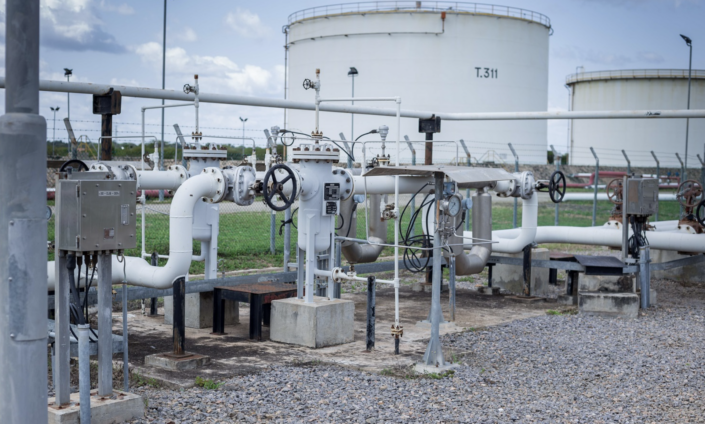
Ghana’s energy security is expected to remain stable despite global oil market tensions, supported by the resumption of operations at the Tema Oil Refinery.
A report by Fitch Solutions, an international rating agency, said the development would reduce the economy’s exposure to external supply disruptions.
The report said recent volatility in global energy prices, driven by geopolitical tensions in the Middle East and strained relations among major oil producers, had raised concerns for import-dependent economies.
However, it said Ghana was relatively insulated following the restart of operations at the Tema Oil Refinery (TOR) in December 2025, after years of shutdown due to debt and maintenance challenges.
The report said the resumption restored domestic refining capacity and reversed Ghana’s recent position as a net oil importer.
“With TOR operational, Ghana is projected to be broadly oil-trade neutral or a modest net exporter in 2026, limiting the direct impact of global price spikes on the country’s trade balance,” it said.
It noted that the development was significant amid persistent risks of supply disruptions, including possible escalation in tensions between the United States and Iran, which could affect shipping routes and crude availability.
Data from the Ministry of Finance and the Bank of Ghana indicated that Ghana’s hydrocarbons trade position was nearing balance, suggesting that higher crude prices would not necessarily worsen the current account.
Under favourable conditions, it said higher prices could boost export receipts from crude oil.
Consequently, the report projected Ghana’s current account surplus at about 4.2 per cent of GDP in 2026, above the historical average deficit recorded between 2010 and 2024.
It said the surplus would support macroeconomic stability and ease pressure on the local currency.
The report said strong export earnings and prudent external financing had strengthened foreign exchange reserves, which stood at about US$14.4 billion at the end of the first quarter of 2026, equivalent to approximately six months of import cover.
It said the reserve buffers provided adequate capacity for the Bank of Ghana to intervene in the foreign exchange market in the event of external shocks, including those from global energy markets.
Latest Stories
-
Ghana Enterprise Brands Awards 2026: Leading brands, business trailblazers to shine on November 30
5 minutes -
T-bills auction: Demand improves as government exceeds target by about 76%; interest rates soften
11 minutes -
Ziope undertakes initiative to build a technologically inclined community, commissions self-help ICT lab
35 minutes -
ECG announces power outage in parts of Tema, Central Region due to network fault, maintenance
1 hour -
When the Gospel Becomes a Weapon: The church, blackmail and the abuse of faith
1 hour -
JoyNews’ Jacqueline Ansomah Yeboah selected for UK Media Excellence for Emerging Technology Fellowship
2 hours -
Mental Health Alliance urges government to operationalise Mental Health Fund
2 hours -
Ghana–Holy See agreement heads to Parliament after Cabinet approval
2 hours -
Luv FM Corporate Games 2026: Kumasi Central Prisons, Amanfiman Bank win big amid fun
2 hours -
WAFU B U17: Ghana top Group A after win over Togo
3 hours -
Ho Central Mosque reopens amid unresolved leadership dispute that led to closure
4 hours -
Minority caucus questions GH¢16.4m in Ablakwa’s SA evacuation spending, demands independent audit
4 hours -
Gender Ministry meets Nana Akua Addo’s husband over domestic violence after hospital discharge
5 hours -
UG Vice-Chancellor urges swift operationalisation of National Research Fund
5 hours -
Pope Leo to have surgery after lump found in lung
5 hours