

Audio By Carbonatix
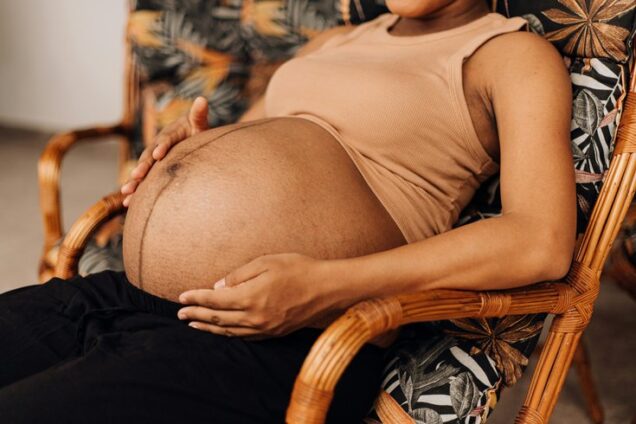
Every year, thousands of Ghanaian women give birth by Caesarean section. Some knew it was coming; many did not. The surgery happens, the baby arrives, and within days, the mother is expected to go home and get on with her recovery and life. What that actually looks like, for a woman with limited finances in a public hospital, is a story that is not told enough.
The average lower-class Ghanaian relies on Ghana's National Health Insurance Scheme (NHIS) to cover medical costs.
The NHIS is supposed to cover C-sections. And technically, it does. But research by Dr. Edmund Wedam Kanmiki of the University of Queensland, based on direct interviews with 414 mothers leaving Ghanaian hospitals, found that 97 per cent still paid out-of-pocket for antenatal care, and 65 per cent paid for delivery services. Medications run out.
Supplies are not always stocked. The gap between what the policy promises and what the hospital can actually provide gets filled by the mother's pocket, or it doesn't get filled at all.
For a woman whose household income is tight, the bill that accumulates is real and is immediate. A 2024 study tracking Ghanaian maternal healthcare costs found the median out-of-pocket spend sits at over GHS1,211.81/US$109. For context, researchers found that roughly 1 in 3 Ghanaian households ends up spending more than 10% of their total income on maternal care. Some families use savings. A study in rural Northern Ghana found that 19% sold assets such as livestock, land, and personal items to cover the cost of childbirth.
And if the money simply is not there? Several individuals, organisations, and workers inside Ghanaian hospitals have documented cases of mothers being unable to leave until bills are settled. A woman recovering from major abdominal surgery, with a newborn, waiting in a hospital ward, not because she needs more medical attention but because she cannot afford to be discharged, is the reality.
Getting home is its own challenge. A woman discharged after a C-section travels back home in whatever means she can, be it a trotro, a shared taxi, despite the many stops it may take to get back to wherever she lives. She arrives home with a healing wound, a newborn, and the full weight of a household waiting for her.
The recommended follow-up appointment is within two to three weeks. Whether she makes it depends on money, childcare for other children, how long the queue is when she arrives, and whether she even knows how important the follow-up is.
Recovery from a C-section takes six to eight weeks. During that time, a woman should not lift anything heavier than her baby, should keep the wound clean and dry, and needs adequate nutrition to heal and produce milk. These are not complicated requirements. But for a mother with limited resources, no household help, and other children to care for, each one of those requirements seems barely impossible to meet.
The broader picture makes this harder to ignore. Ghana's C-section rate sits at nearly 27 per cent, according to a 2024 study led by Dr. Alfred Kwesi Manyeh of the University of Health and Allied Sciences, which is more than five times the sub-Saharan Africa average of 5 per cent. Across sub-Saharan Africa, maternal mortality stands at 302 deaths per 100,000 live births. Ghana's rate is lower than the average, but progress is uneven, and it is marginalised, low-income, and rural mothers with limited medical support who remain furthest from this.
A 2025 study in BMJ Global Health by Akazili and colleagues confirmed what community workers on the ground already see daily: the financial burden of maternal care in Ghana is not shared equally. It lands hardest on the women who can least absorb it.
This is the reality we are working in. Our project documents the lives of these women, not to subject them to pity, but to make their situation visible to the people who have the means to help. The women we meet are resourceful, strong, and managing. But they should not have to manage this alone.
This C-Section Awareness Month and Mother’s Day, we are collecting wound care supplies, postpartum and sanitary essentials, nutritional food items, and financial contributions. Every donation goes directly toward hospital bill settlement, procurement of supplies, and transportation support for mothers who need it.
If you can give something, please do. If you lead an organisation, consider what a meaningful contribution or partnership could look like. And if you know someone who should read this, send it to them.
These women are not waiting for sympathy; they are waiting for support.
To donate or partner with us, kindly reach out to She Captures Humanity on 0243988888, at shecaptureshumanity@gmail.com.
This piece is published as part of a C-Section Awareness Month humanitarian initiative supporting vulnerable mothers in Ghanaian hospitals through donations of essential supplies, financial contributions, and advocacy. In our next piece, we take a closer look at what the C-section crisis looks like, specifically in Ghana and across Africa and the challenges marginalised mothers encounterwith C- section births.
Latest Stories
-
Journalism must prioritise public interest over attention — Kwesi Pratt
19 minutes -
Ghana Mineworkers Union demand suspension of contract mining directive, threaten industrial action
45 minutes -
ADB Ghana Medicals constructing and equipping new Cardiothoracic Centre at Komfo Anokye
52 minutes -
AFREIKH Summer School challenges Africa to harness critical minerals
1 hour -
Government plans 2,000-acre pharmaceutical innovation park in Osudoku to boost local drug production
1 hour -
Partey undergoes medical ahead of Al Shabab move in Saudi Arabia
1 hour -
Today’s front pages: Friday, August 21, 2026
1 hour -
Power outages could drive up cost of digital services — NITA
1 hour -
Patients face basic sanitation gaps in West African health facilities — WHO / UNICEF
2 hours -
Competence has no age; let’s stop punishing new businesses
2 hours -
JoyNews Republic Bank Habitat Fair 2026 opens today at Achimota Mall
2 hours -
What Is Wrong With Us: The roads that keep counting our dead
2 hours -
MTN condemns recent xenophobic attacks on Ghanaians in South Africa
2 hours -
Philip Nai: What happens at your front desk can make or break your brand
2 hours -
Ghana’s mining deaths fall sharply, but Chamber insists ‘three deaths are too many’
4 hours