

Audio By Carbonatix
The US has warned shipping companies they could face sanctions if they pay Iran for safe passage through the Strait of Hormuz.
An alert on Friday by the US Office of Foreign Assets Control (OFAC) warned US persons and companies were generally banned from paying Iranian government entities, and non-US persons may risk exposure to sanctions if they pay.
"Maritime industry participants involved with vessels calling at Iranian ports face significant sanctions risk under multiple sanctions authorities targeting Iran's shipping sector and ports", OFAC said.
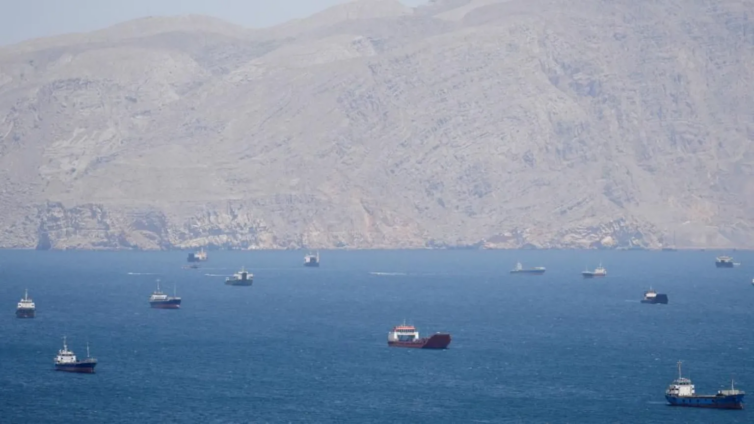
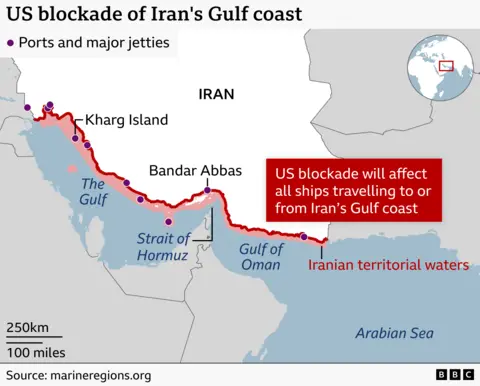
Iran has severely limited traffic through the strait since the war began in February. The US has also enforced a naval blockade on Iranian ports.
Iran has called the US interception of ships entering and leaving Iranian ports under the blockade "piracy".
Tehran says it has collected tolls from ships in order to navigate freely through the strait, with Hamidreza Haji Bababei, deputy speaker of Iran's Parliament, last week claiming the first toll revenue had been deposited with the country's Central Bank.
No further detail was provided on the amount of the toll, the method of collection nor who paid it. The BBC could not independently verify this claim.
OFAC's alert said payments could involve cash as well as "digital assets, offsets, informal swaps, or other in-kind payments," including charitable donations and payments at Iranian embassies.
The agency warned that non-US persons who pay could also face civil and criminal enforcement liability if payments cause US persons, such as insurers and financial institutions, to violate sanctions.
OFAC said it "will continue to aggressively target Iran's main revenue-generating sectors, in particular its petroleum and petrochemical sectors".
The US Treasury also announced sanctions on three Iranian foreign currency exchange houses on Friday, saying they have converted oil revenue into more usable currencies.
Treasury Secretary Scott Bessent said his agency would "relentlessly target the regime's ability to generate, move and repatriate funds, and pursue anyone enabling Tehran's attempts to evade sanctions".
After the US and Israel attacked Iran on 28 February, Iran has been targeting and striking ships passing through the Strait of Hormuz, including seizing two of them.
The US has also enforced a naval blockade since 13 April, stopping all ships from travelling to or from Iranian ports. Trump had hoped the blockade would put pressure on Iran by targeting its revenue from the tolls and oil sales.
US Central Command (Centcom) said on Friday that 45 commercial ships have been told to turn around since the blockade began.
About 3,000 ships typically pass through the strait each month, but that number has dropped sharply to just a handful each day.
The strait is a crucial shipping channel for oil and other goods including food, medicines and technological supplies.
UNHCR, the UN refugee agency, said on Friday that the closure of key maritime routes has forced the use of longer and more expensive alternatives to transport aid.
Higher transport and fuel costs "disproportionately affect people in emergencies", including refugees and displaced people, the agency said.
The cost of delivering aid to Sudan, in its fourth year of war, has doubled in recent months, as rerouting shipments around the Cape of Good Hope in South Africa adds 25 days to delivery time.
The UN agency said it has adapted quickly by rerouting sea cargo and relying more on land corridors. But it warned that "if instability in the Middle East persists, rising costs, delays and limited transport capacity are likely to constrain humanitarian operations further."
The US and Iran began a fragile ceasefire on 8 April. Since then, the two countries have held talks, but no long-term deal has been reached.
Iran gave mediators in Pakistan a proposal to end the war on Thursday night, according to Iran's state-run IRNA news agency. However, US President Donald Trump has responded negatively to the proposal.
"They want to make a deal, I'm not excited, so we'll see what happens," Trump said on Friday.
He added: "Because they have no military left, essentially. I'm not sure if they ever get there."
The president did not give details about the proposal or explain why he was not satisfied, but said: "They're asking for things that I can't agree to."
He also voiced frustration with Iran's leadership, saying: "It's a very disjointed leadership. They all want to make a deal, but they're all messed up."
After Iran's Supreme Leader Ali Khamenei was killed in US and Israeli strikes on the first day of the war, his son Mojtaba Khamenei succeeded him. However, decision-making seems less centralised than it was before the war.
On Thursday, Trump said he was briefed on options for Iran ranging from "blast the hell out of them and finish them forever" to "make a deal".
The conflict began after the US and Israel carried out wide-ranging strikes on Iran in February. Iran responded by launching attacks on Israel and US-allied states in the Gulf.
The US and Israel said Iran was trying to develop a nuclear bomb, which Tehran has strongly denied.
Latest Stories
-
AngloGold Ashanti empowers 22 Sanso women through apprenticeship to entrepreneurship programme
2 minutes -
Gov’t advances National Data Exchange Hub under US$50m digital project – Sam George
9 minutes -
Alex Asmah Foundation launched in Kumasi to support youth development across Ghana
9 minutes -
School placement is absolutely free – Education Ministry
10 minutes -
Burkina Faso FA Prez Oumarou Sawadogo takes over as WAFU B President
12 minutes -
CSSPS self-placement portal opens for candidates unable to secure choices
16 minutes -
James Korsah-Brown calls for Tourism Minister to be changed
18 minutes -
Death in the dark: Family demands answers after dialysis patient dies at TTH during power outage
25 minutes -
11 Ghanaian Universities to embed One Million Coders certifications in degree programmes
26 minutes -
Government to pilot Electronic Document Wallet in fourth quarter – Sam George
29 minutes -
Kenya minister warns foreigners against ‘misusing’ visas to trade
32 minutes -
NACOC shuts down Amsterdam pub at Laboma over suspected Narcotics activities
32 minutes -
Rescuers dig through debris as seven dead in building collapse in Delhi
33 minutes -
Sam George directs Communications Ministry staff to enrol on One Million Coders programme
40 minutes -
China to pump $54bn into state banks and insurers to boost economy
41 minutes