

Audio By Carbonatix
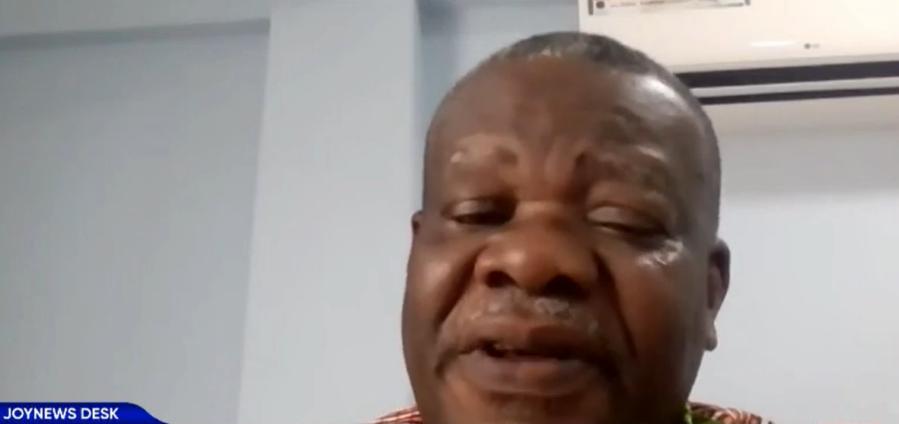
Former Registrar of the Medical and Dental Council, Dr Eli Atukpui, has called for hospital authorities to also be held accountable over the circumstances surrounding the death of Charles Amissah, insisting that responsibility should not rest solely on the medical staff who were on duty.
Speaking on JoyNews Desk on Thursday, May 7, Dr Atukpui said institutions involved in the case must also answer questions about their systems, protocols and standards of care.
According to him, the hospitals visited by the patient should not escape scrutiny if evidence confirms that Mr Amissah was indeed taken to those facilities.
“They went to three main hospitals, Police Hospital, the Greater Accra Regional Hospital and then Korle-Bu Teaching Hospital,” he said.
“Once evidence is adduced that these people really were in those hospitals, then the hospitals should equally be held accountable.”
Dr Atukpui said that public discussions on the matter have focused heavily on individual health workers while paying less attention to institutional failures that may have contributed to the incident.
“I think most of the time we shy away from holding institutions accountable for some of these things that happen,” he stated.
He criticised attitudes that treat such incidents as unfortunate events that should simply be forgotten.
“People will get up and say that ‘Fa ma Nyame, it has already happened’. But I think that we need to go beyond that,” he said.
The former Registrar explained that hospitals owe patients a legal and professional duty of care once they arrive at the facility.
“We should be able to establish what the protocols are at the Police Hospital when the patient comes in,” he noted.
“Once you get into a hospital, the hospital owes you a duty of care.”
According to him, if that duty of care is breached and the patient suffers harm as a result, then negligence may arise not only against individual practitioners but also against the institution itself.
“And if there is that breach of duty of care, and as I said, that breach really causes harm, then there is an element of negligence,” he explained.
“So, the Police Hospital as an institution could also be held accountable.”
Dr Atukpui said similar questions must also be asked about the actions and systems at the Greater Accra Regional Hospital and the Korle-Bu Teaching Hospital.
“Then you go to the Greater Accra Hospital, and the same thing happens. You go to Korle-Bu Teaching Hospital, a similar thing happens,” he stated.
He questioned why attention appeared to be centred mainly on the practitioners who were on duty at the time rather than the wider institutional environment within which they worked.
“Why do we just pick up only the practitioners who were on duty at that time and want to hold them accountable?” he asked.
“What is the situation in the institution that put them there? Should the institution just be put aside, and we just hold the individuals accountable?”
“In this case, my answer is no,” he added.
Latest Stories
-
Salomey Baffoe bail denied: Cyber-related investigation poses risk of witness interference – High Court
7 minutes -
Court is being too ‘high-handed’ by keeping Salomey Awiti Baffoe in custody – Criminologist
8 minutes -
Lawyer for Salomey Baffoe appeals bail refusal, petitions CJ to intervene
12 minutes -
Washington State delegation explores healthcare partnership with Ghana Medical Trust Fund
16 minutes -
BoG backs cedi payments for Ghana-China trade
17 minutes -
EPA shuts down Earl International mining operation at Gbane over environmental breaches
20 minutes -
GoldBod resumes significant gold shipments, supporting reserves – BoG
23 minutes -
FX interventions are rules-based, not discretionary-BoG
27 minutes -
DVLA explains delinquency charges related to expired driver’s licences
35 minutes -
High Court denies bail application for Salomey Awiti Baffoe
37 minutes -
GES urges communities to help provide kitchens for school feeding programme
43 minutes -
Mahama invokes Nkrumah, says Ghana’s freedom must serve Africa
44 minutes -
From Cotonou to Bata: Ghana and Côte d’Ivoire’s rivalry enters a new chapter
46 minutes -
UN Charter must reign supreme over ‘might makes right’ – Mahama
48 minutes -
BoG to introduce new Heritage Series banknotes in November 2026
49 minutes