

Audio By Carbonatix
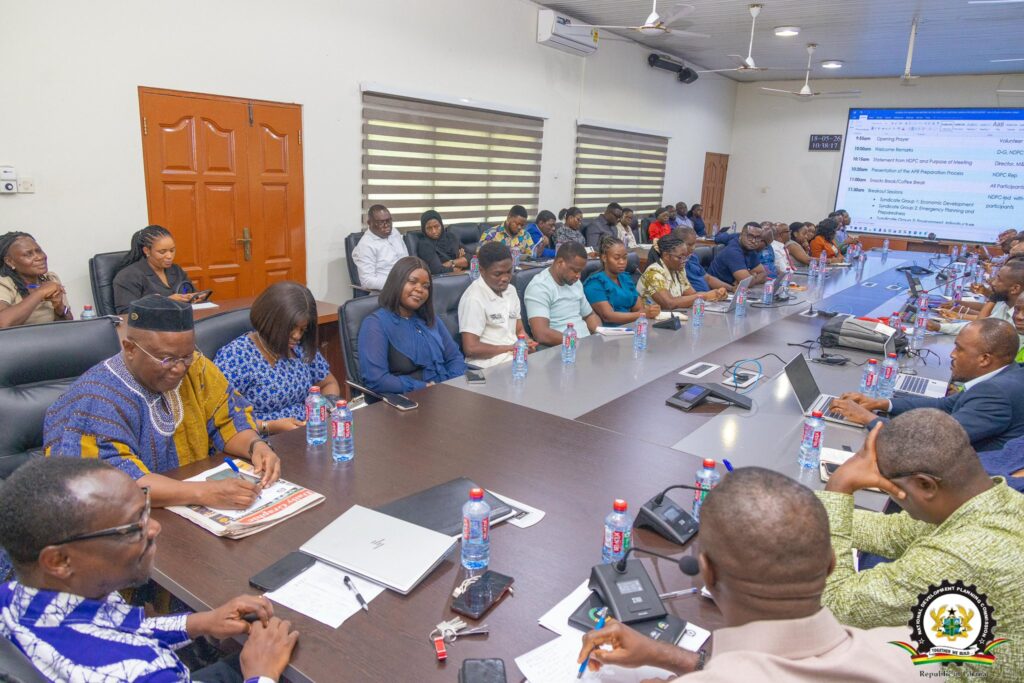
The National Development Planning Commission (NDPC) has commenced a three-day validation meeting on the draft 2025 National Annual Progress Report (APR), bringing together representatives from Ministries, Departments and Agencies (MDAs), Regional Coordinating Councils (RCCs), Metropolitan, Municipal and District Assemblies (MMDAs), development partners and students.
The meeting, which opened on Monday, May 18, 2026, is aimed at reviewing progress made under Ghana’s 2022–2025 Medium-Term National Development Policy Framework.
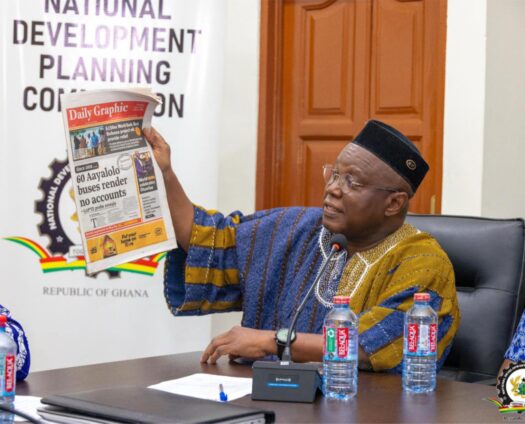
In his opening remarks, Richard Tweneboah-Kodua underscored the importance of stakeholder collaboration and evidence-based reporting in national development planning.
According to him, the Annual Progress Report has remained a critical accountability tool since its introduction under the Fourth Republican Constitution.
“The Annual Progress Report serves as an important instrument for measuring Ghana’s progress in implementing nationally agreed development plans. It also enables us to track our commitments under regional, continental, and global development frameworks and protocols,” he stated.
Mr Tweneboah-Kodua explained that the work of institutions goes beyond data collection and reporting, noting that the information generated contributes to improved healthcare delivery, better livelihoods, stronger businesses, enhanced environmental management and more efficient public services.
He commended MDAs, RCCs and MMDAs for their continued support for the APR process and described the 2025 reporting cycle as an important learning opportunity ahead of the 2026–2029 Medium-Term Development Framework.
“This final reporting cycle under the current framework should help us refine our indicators, strengthen data quality, improve timeliness, and enhance overall reporting systems going forward,” he added.
Delivering the keynote address, Chairman of the Commission, Nii Moi Thompson, urged participants to move beyond routine reporting and focus more on impact, performance and productivity.
“It is not enough to go through the motions or fulfil procedural requirements. We must be equally concerned about the actual results and impact of our efforts,” he stated.
Dr Thompson observed that although Ghana has consistently developed plans and produced Annual Progress Reports, implementation gaps continue to hinder national transformation.
Referring to Monitoring, Evaluation and Learning, he stressed the need for stronger feedback mechanisms to improve policy implementation and outcomes.
“The challenge is not the absence of plans. The challenge is implementation,” he emphasised.
He further highlighted the importance of discipline, accountability, productivity and strong institutions in achieving sustainable development, while identifying electricity, water, transport and logistics, and digital infrastructure as critical pillars for industrialisation and competitiveness.
The Director of Monitoring and Evaluation at the Commission, Bright Atiase, also highlighted increasing parliamentary scrutiny of the APR process and cautioned institutions against delays in submitting reports.
He disclosed that some institutions had already appeared before Parliament’s Select Committee on Economy and Development to account for the implementation of their 2024 plans and programmes.
According to him, only 28 institutions had submitted their reports out of the expected number, with 10 still outstanding. He warned that stricter enforcement measures could be introduced for institutions that consistently fail to comply with reporting requirements.
Meanwhile, the Chief Analyst of the Commission, Isaac Eweh, guided participants through the APR preparation process and stressed the importance of linking data and indicators to policy outcomes and development objectives.
“As participants review the reports, they are expected not only to present the data, but also to explain the implications of the findings for the goals and objectives outlined in the policy framework,” he said.
He further stressed that each indicator must have a corresponding target and baseline to allow for effective assessment of institutional performance.
“These reports must reflect the true realities and lived experiences of Ghanaians. There should be no disconnect between what is documented and what citizens experience on the ground,” he added.
The meeting concluded with participants breaking into four syndicate groups to review sector-specific findings, assess data quality, validate indicators and make recommendations towards the finalisation of the 2025 National Annual Progress Report.
Latest Stories
-
Toobu rejects calls to recall Parliament over 3.9-tonne cocaine shipment
13 minutes -
Residents in 5 Northern Regions warned of approaching rainstorm
15 minutes -
Constituency Games still a work in progress – Sports Minister
33 minutes -
Team Ghana set for historic Karting Africa Showrun in Angola
37 minutes -
52-year-old South African arrested with suspected heroin after arriving from Accra
50 minutes -
Shatta Wale challenges UPSA students to build entrepreneurial mindsets
1 hour -
Finance Minister advises African governments to strengthen regional tax cooperation
3 hours -
NPP accuses NDC of master-minding demolition of Ho regional office fence
3 hours -
Ghana plans stronger regional power trade with Nigeria
3 hours -
GRA Commissioner-General calls for stronger tax cooperation to boost regional revenue mobilisation
3 hours -
NACOC needs more personnel to tackle drug trafficking – Toobu
3 hours -
Railway workers resist KMA eviction order, demand consultation
3 hours -
Legacy Leadership Africa Institute to host boardroom women’s leadership programme
3 hours -
Ghana needs a law to sustain constitutional reforms – CDD-Ghana
6 hours -
COVID fumigation audit: Auditor-General has a lot of questions to answer – Akwatia MP
6 hours