

Audio By Carbonatix
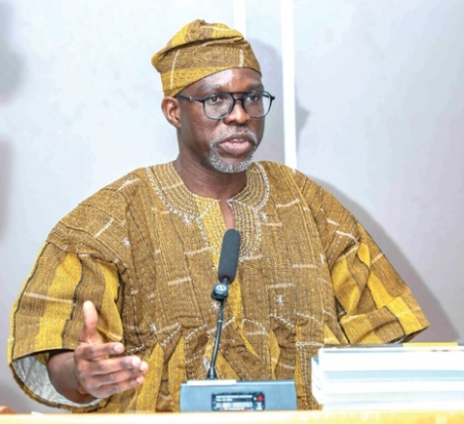
The Executive Secretary of the Inter-Ministerial Coordinating Committee on Decentralisation (IMCCoD), Dr. Gameli Kewuribe Hoedoafia, has stressed the critical role of the media in advancing Ghana’s decentralisation and local governance reforms.
He said effective communication, civic education, and sustained public engagement were crucial to ensuring that citizens understood, supported, and actively participated in the implementation of decentralisation policies.
Dr Hoedoafia made the remarks at a media sensitisation and policy orientation workshop on decentralisation and local governance reforms in Accra last Thursday.
It was attended by journalists, bloggers, and morning show hosts of some radio and television stations, with the longest-serving minister of local government in the Fourth Republic (from 1993 to 2001), Prof. Kwamena Ahwoi, and a local governance expert, Dr. Esther Ofei-Aboagye, as key speakers.
Policy reforms
The IMCCoD was established under Sections 204 to 207 of the Local Governance Act, 2016 (Act 936) as the key national institutional mechanism responsible for coordinating decentralisation and local governance policies in the country.
Operating under the Office of the President, the committee comprises key ministers, heads of service, and representatives of major state institutions. It is supported by a technical committee and a secretariat headed by an executive secretary.
Since 2010, the committee has spearheaded major decentralisation reforms through the development of national decentralisation policies and strategic frameworks aimed at strengthening local governance, participatory development, and service delivery.
The committee is currently leading the development of a new National Decentralisation Policy and Strategic Framework (2026–2030), designed to deepen administrative, political, and fiscal decentralisation across the country.
Dr. Hoedoafia said the new framework would serve as a transformative blueprint to guide the next phase of decentralisation reforms.
According to him, strong local governance systems remained essential for inclusive development, democratic participation, and resilient communities.
“Governance must be brought closer to the people it serves.
This requires institutions that are efficient, accountable, participatory, functional, and responsive to translate policy intent into tangible improvements in people’s lives,” he said.
Media partnership
Dr. Hoedoafia commended the media for contributing to national discourse on governance and development, noting that journalists had consistently amplified citizens’ voices and deepened public understanding of governance issues.
He said the IMCCoD regarded the media as a strategic partner in the discharge of its mandate and had, over the years, institutionalised engagements with media practitioners to strengthen collaboration and public communication on decentralisation reforms.
“The media occupies a strategic position in our governance ecosystem.
It is the essential bridge between government and citizens, reinforcing accountability and enabling informed public dialogue,” he stated.
Inclusive governance
Dr. Hoedoafia expressed confidence that the workshop would strengthen collaboration between policymakers and the media, deepen public awareness, and sustain momentum for reforms aimed at improving local governance systems.
He urged the media to continue playing its “historic role” not only as observers of governance but also as active partners in shaping governance outcomes.
He further called for a national conversation on decentralisation that was informed, constructive, and solution-driven.
“Together, we can build communities where opportunity is not concentrated but shared; where governance is not distant but responsive; and where no citizen is left behind,” he added.
Dr. Hoedoafia also acknowledged the contributions of the Chair of the IMCC Technical Committee, Prof. Ahwoi, and a member of the committee, Dr. Ofei-Aboagye, to decentralisation and local governance reforms in the country.
Latest Stories
-
Black Stars: Godwin Attram replaces Desmond Ofei as assistant coach
2 minutes -
Nkrumah never dies
33 minutes -
CalBank ‘Abakade Promo’ rewards 5 customers with GH¢25,000 in first draw
40 minutes -
Ecobank, Joy Business to host financial dialogue on green finance and inclusive agri-growth in Ghana
1 hour -
Nkrumah’s vision remains relevant to Ghana’s future — Mahama
1 hour -
Hitz FM announces Beach Rave for October 31
1 hour -
CPP calls for protection and revival of state-owned enterprises to honour Nkrumah
2 hours -
emPLE Life Insurance named Rising Brand of the Year at 6th CIIG Insurance Excellence Awards
2 hours -
St Peter’s old boys to build 1,000-seater dining hall and modern kitchen for 70th anniversary
2 hours -
St Peter’s old boys kick off 70th anniversary journey with ‘Run to 70’
2 hours -
Agyemang-Badu urges GFA, Sports Ministry to disclose Carlos Queiroz’s contract terms
2 hours -
Ghana and Panama sign MoU to deepen bilateral political consultations and cooperation
2 hours -
Black Stars: Mohammed Fuseini receives late call-up for September-October games after head injury
2 hours -
Traders reselling GH¢25k Kejetia phase one shops for up to GH¢120k — Local Government Ministry
2 hours -
Korle Bu begins work on 400-bed Mother and Child Block with IVF, NICU and theatres
3 hours