

Audio By Carbonatix
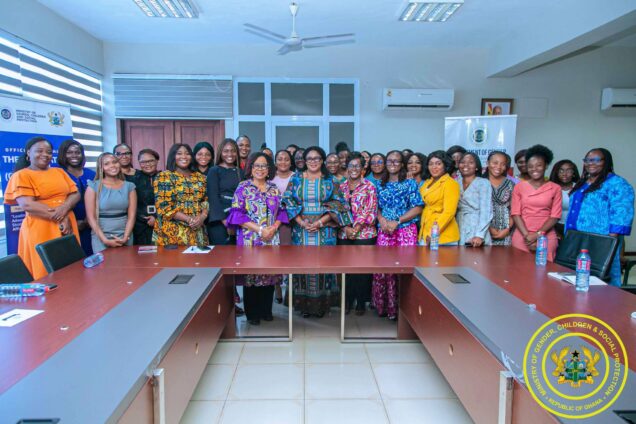
The Ministry of Gender, Children and Social Protection has called on women in the media to play a leading role in educating the public, monitoring compliance and keeping institutions accountable for the implementation of the Affirmative Action (Gender Equity) Act, 2024 (Act 1121).
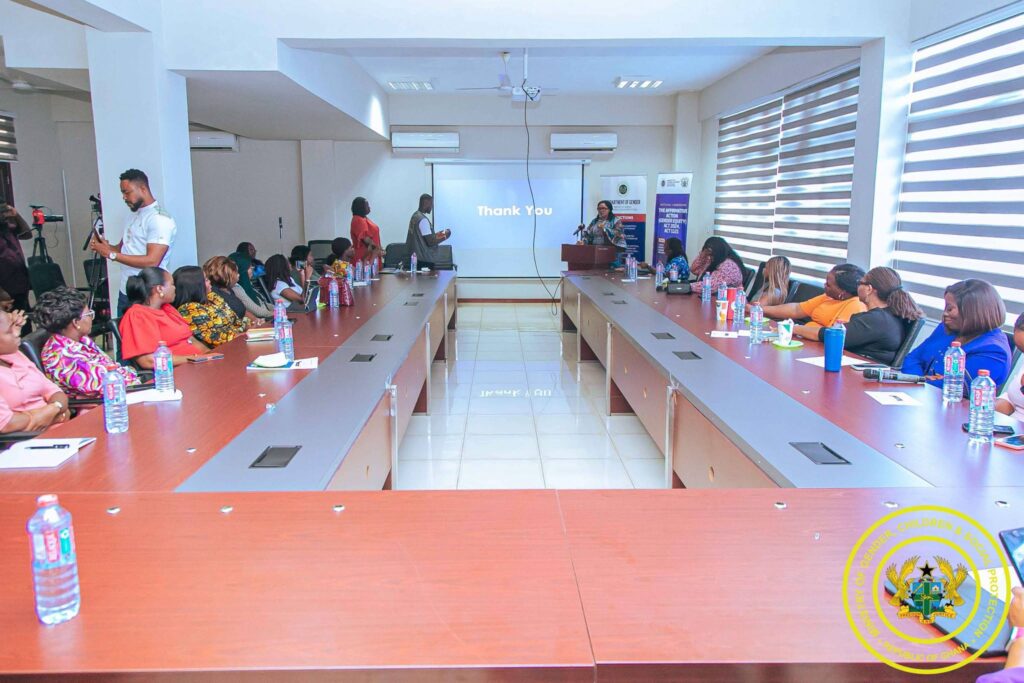
The call was made at a capacity-building workshop organised by the Ministry for Women in the media on Thursday, September 17.
The workshop sought to improve participants' understanding of the Act and strengthen their ability to report accurately, fairly and sensitively on gender equity issues.
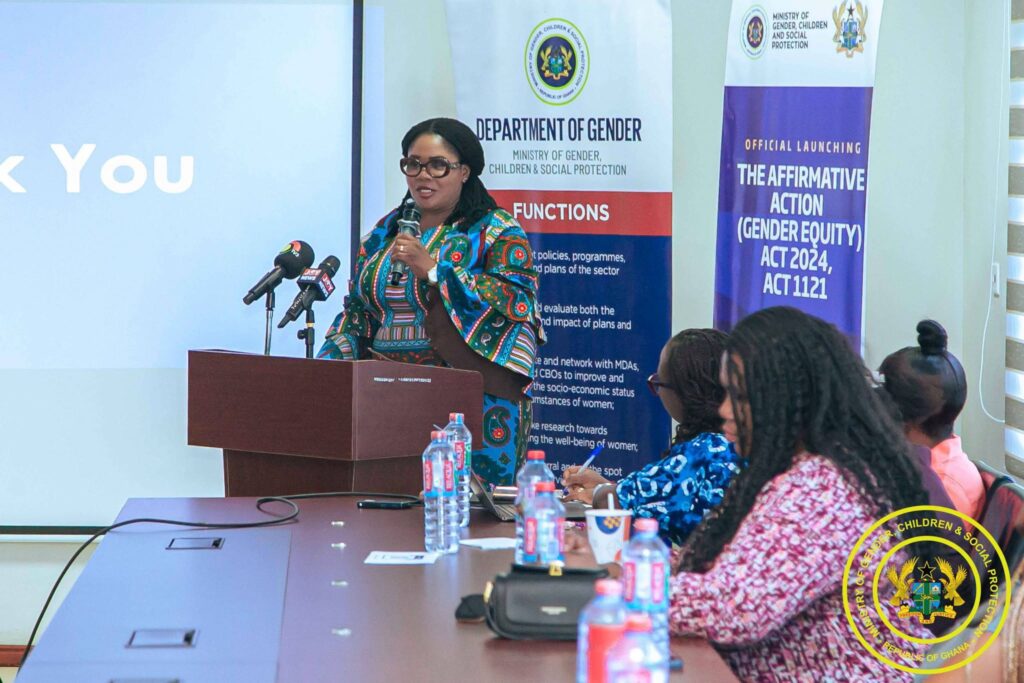
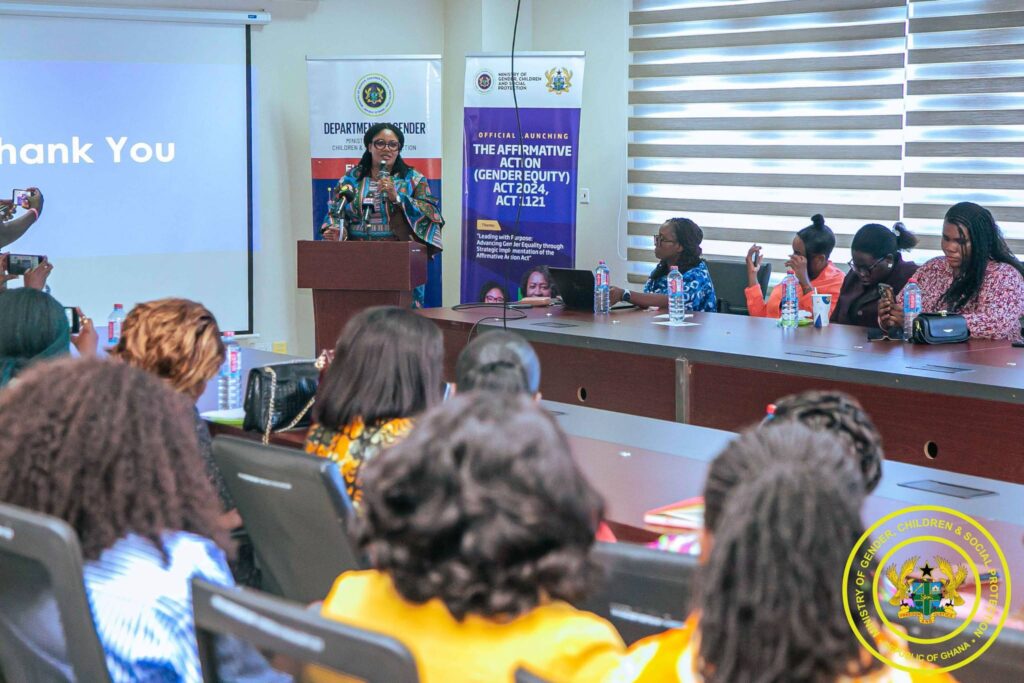
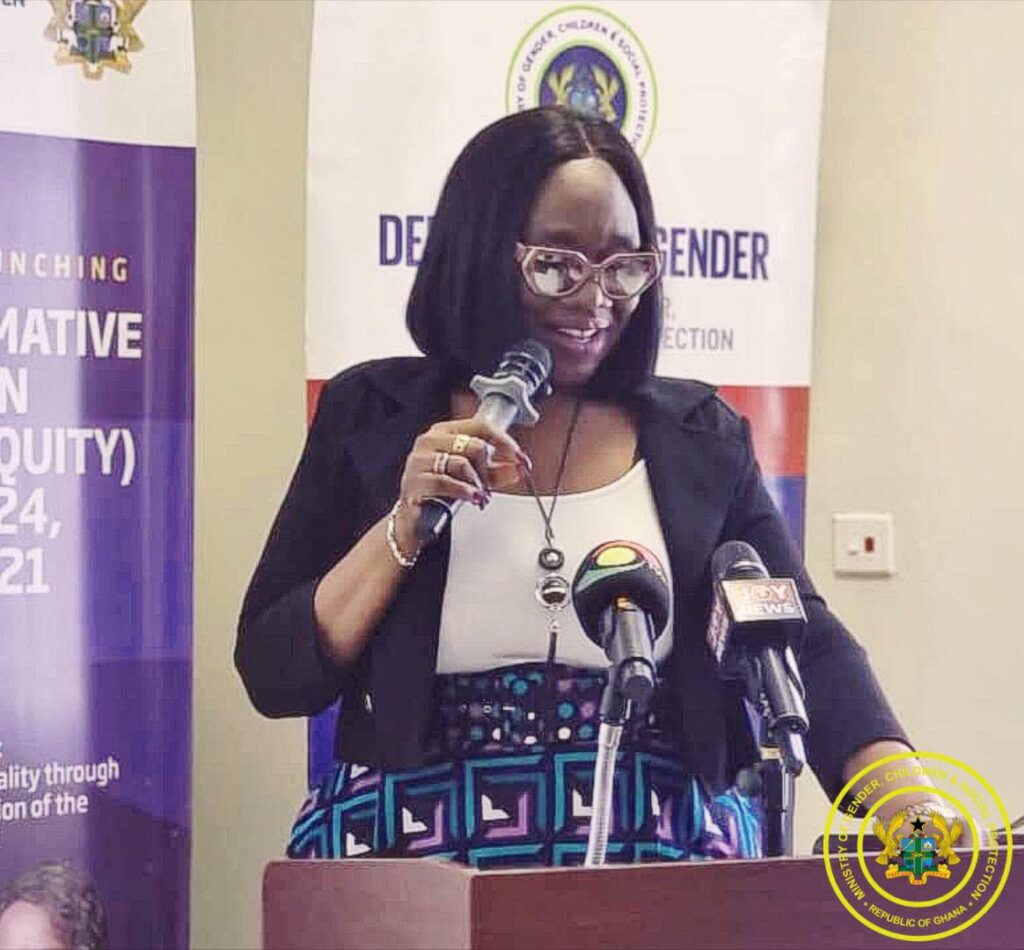
The Minister for Gender, Children and Social Protection, Dr Agnes Naa Momo Lartey, said the media had taken on a responsibility that was central to the Ministry's work.
“I just want you to know that you have taken on a responsibility which is at the heart of everything we do, which is at the centre of everything we do,” she said.
According to her, the passage of the law had shifted the focus from advocacy for affirmative action legislation to ensuring that the law was effectively implemented and produced results.
“The issue of affirmative action, like many laws and policies we are having in the ministry, has moved from advocating for a law to the law being there and seeing to its effective implementation,” she said.
“What we want to see is the impact.”
Dr Lartey said the workshop was organised deliberately to bring women in the media into the implementation process and encourage them to champion the cause of greater representation of women in leadership.
She said the issue should not be seen as one concerning women alone, but as a national development matter requiring the involvement of men and other stakeholders.
“It is not about an individual, it is not about a group of people, it is not about one of the sexes, it is about the nation,” she said.
“It is about the country Ghana that is dear to us. If two sexes make up the nation, we cannot grow or develop with just one sex being at the helm of our affairs.”
Dr Lartey said the Ministry wanted the media to help bring the implementation of the Act closer to the public, including at the community level, while also drawing international attention to Ghana's efforts to promote women in leadership.
“We are humbled that you've taken on this great responsibility to make sure that the Affirmative Action Act is translated into real action where Ghanaians and those it's meant to serve will actually feel it,” she said.

Dr Lartey acknowledged that more work was needed to increase women's representation, particularly in elected political positions.
She pointed to Parliament and local government as areas where the country still needed to make progress.
The Minister said the timing of elections made it particularly important for stakeholders to act early, because opportunities to increase women's representation in elected positions could not simply be created outside the electoral cycle.
“When you miss one, especially in the political space, it's difficult to catch up,” she said.
“You can do with appointments, but when it comes to the elected positions, they have periods within which elections take place.”
She also said public education was necessary because some women could become accustomed to existing arrangements when they did not see alternative possibilities.
“Sometimes when you don't see the options so clearly, you become so comfortable with what you see because it becomes the norm,” she said.
She said exposing women and girls to other possibilities could help them become more aware of their potential contribution to society.
The Minister assured the participants that the Ministry was prepared to work with them and other stakeholders to translate the law into practical outcomes.
“The ministry is prepared to work with you every step of the way, all other stakeholders on board, to make sure that we translate this law into reality for every woman, every man in Ghana,” she said.
“Because when the women stand better, the men also enjoy better. And our children are the end beneficiaries of it all.”
The Chief Director of the Ministry, Dr Mariam W.A. Kpakpah, said the Ministry had a mandate to ensure that both state and non-state actors understood the purpose of the Act and their responsibilities under it.
She said the Ministry had therefore begun a series of sensitisation and dissemination activities, with women in the media being targeted because of their ability to reach a wider audience.
“As women in media, you first of all are a woman yourself, and so you understand the issues of gender,” she said.
“But more importantly, you are also a media practitioner, and you'll be able to put the information out there, let people understand what their role is in implementing the Act, and be able to also bring to the Ministry issues and concerns that we may be able to take forward.”
Dr Kpakpah said the Act required 30 per cent representation of women in public institutions and on boards, as well as within private institutions.
“We are all supposed to have 30% representation of women in public institutions, on boards, even within private institutions,” she said.

She added that the Ministry would monitor implementation and collect information from stakeholders at the end of the year.
“At the end of the year, the Ministry will go round, and we will collect information from all stakeholders. We will also issue certificates at the end of the year, to be able to see where we are, how we progress,” she said.
She urged women in the media to help disseminate information about the Act and also serve as a channel through which concerns about its implementation could be brought to the Ministry.
The Chair of the African Women Leaders Network (AWLN), Dr Charity Binka, said the passage of the Affirmative Action Act was the result of years of advocacy and should not be taken for granted.
She said the journey towards the law had taken 13 years, with sustained efforts to push the affirmative action agenda before the legislation was finally passed in 2024.
“It took us 13 years to get to where we are today,” she said.

Dr Binka said the law should not be viewed simply as legislation for women, but as a development tool aimed at addressing barriers to women's participation in decision-making.
“This is not just a favour to women. People think it's a women thing, but it's not. It is a development tool,” she said.
She said the law's implementation was now the major challenge, particularly in achieving its targets for women's representation.
“The passage of the Act was indeed an important milestone because we can work with it. At least it gives us structure,” she said.
“However, passing a law is different from living it. Implementation is where many laws fail and where the media must not fail.”
Latest Stories
-
Premature to call for Sports Minister’s removal while CID probe is ongoing – Ernest Norgbey
1 minute -
NPP mourns Samuel Arthur Odoi-Sykes
19 minutes -
Stay out of World Cup visa probe to avoid interfering with CID investigations – Ernest Norgbey to politicians
29 minutes -
Bono East Minister inspects ‘Big Push’ roads; contractor on Tankor-Fiema-Busunya road ahead of schedule
32 minutes -
Scrutiny is not disloyalty – Chief of Staff defends serious journalism at 30th GJA Awards launch
33 minutes -
Abuse case: Nana Akua’s husband Harold unable to appear in court after hospital admission – Police
53 minutes -
Mahmud Kabore picks NDC Ashanti Regional Communication Officer nomination forms
59 minutes -
KNUST Career Services pioneer Selina Doe Angmor named among 2026 40 Under 40 honourees
1 hour -
Nana Akua domestic abuse case: Police to arraign husband after hospital discharge
1 hour -
NHIS coverage rises to 70% after government uncaps levy – Health Minister
1 hour -
World Cup visa scandal: I’ll go after anyone who dents Mahama’s gov’t – Ernest Norgbey
1 hour -
GCNM calls for a permanent office complex, more funding for specialist nursing training
1 hour -
Salomey Awiti Baffoe reunites with family after GH¢100k bail
2 hours -
We’ll modernise Accra without losing its heritage – Roads Minister assures Ga Mantse
2 hours -
Rent Control urges Parliament to expedite amendment of outdated rent laws
2 hours