

Audio By Carbonatix
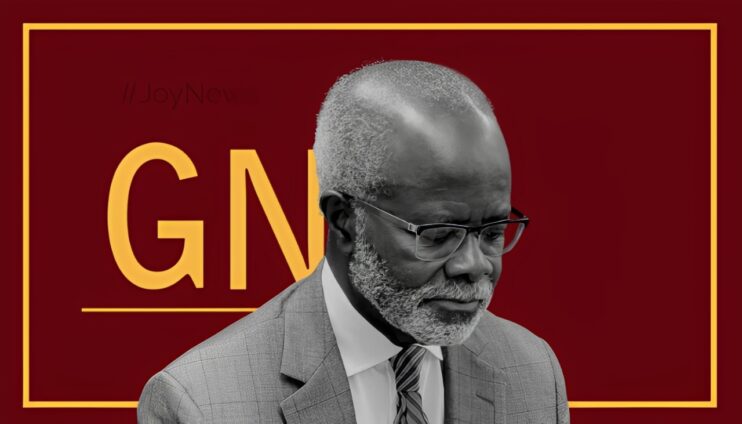
A three-member panel of the Court of Appeal has unanimously overturned the Bank of Ghana's 2019 revocation of GN Savings and Loans Company Limited's operating licence, ruling that the central bank's decision was unfair and unreasonable. The court has ordered the Receiver to return possession, management and control of the company to its shareholders.
The judgment delivered in Accra on Thursday morning quashes both the August 2019 revocation order issued by the Bank of Ghana and the January 2024 High Court ruling that upheld it. It is the most significant legal setback the central bank has faced from its 2018 to 2019 banking sector clean-up exercise.
What the Court Decided
The appellate panel found that the central bank's grounds for revocation did not meet the standard of reasonableness. The court directed the Receiver, Eric Nana Nipah, to hand back possession, management and control of the company's assets and ongoing activities to shareholders led by Dr Papa Kwesi Nduom, the founder of Groupe Nduom.
In effect, the ruling sets aside everything that flowed from the 2019 action, including the revocation itself, the receivership, and the High Court's later validation of both. On paper, GN Savings and Loans is once again a licensed financial institution.
It is not yet an operating one. Restoring a licence by judicial order and resuming regulated banking activity are two different processes, and the gap between them is where the next round of contention is likely to take place.
How the Case Began
The story of GN's collapse began with a downgrade rather than a revocation. On January 4, 2019, the institution then operating as GN Bank, a universal bank under the Groupe Nduom umbrella, was reclassified by the Bank of Ghana as a savings and loans company and renamed GN Savings and Loans Company Limited. The central bank cited persistent breaches of prudential requirements: capital adequacy shortfalls, liquidity problems, large exposures to related parties, and weak governance.
Seven months later, on August 16, 2019, the Bank of Ghana, then under Governor Dr Ernest Addison, revoked the new entity's licence outright and appointed Eric Nana Nipah as Receiver. The move was part of the broader financial sector clean-up initiated under former Finance Minister Ken Ofori-Atta in 2018, an exercise that swept away the licences of more than twenty savings and loans and finance house companies, on top of nine commercial banks earlier in the cycle.
The Bank of Ghana's Case
The regulator's case against GN was detailed. By the Bank of Ghana's accounting, the institution's capital adequacy ratio stood at negative 61.20% at the end of May 2019, with adjusted net worth at negative GH¢30.70 million. Those figures showed the company was in violation of the Banks and Specialised Deposit-Taking Institutions Act, 2016 (Act 930).
The central bank also pointed to exposures to related companies that consistently breached the 25% regulatory limit, a failure to publish 2018 audited accounts, and the alleged transfer of more than $62 million in depositor funds to International Business Solutions, an affiliated US based entity, without supporting documentation. The Bank of Ghana characterised these as breaches of the Foreign Exchange Act and successive central bank notices.
Groupe Nduom's Response
Groupe Nduom rejected the regulator's narrative from the start. The company argued that an honest assessment of its books would have shown solvency, and that the central bank had ignored a portfolio of government infrastructure receivables worth more than GH¢2.2 billion held through Gold Coast Advisors. That money, the company maintained, was owed by the state and its agencies to Nduom affiliated entities and was the real source of any liquidity strain.
In Groupe Nduom's telling, the revocation was political rather than regulatory, and was executed without regard for arrears the government itself had created. The family also argued the action violated their fundamental human rights and amounted to discrimination, as other troubled institutions were treated differently.
The Long Road Through the Courts
On August 30, 2019, Dr Nduom and the shareholders filed suit at the Human Rights Division of the Accra High Court, seeking to quash the revocation and recover control of the company. The case took almost five years to reach a first instance judgment, slowed by a procedural detour over jurisdiction.
The Bank of Ghana argued that disputes over revocation should go to arbitration, not the courts, and persuaded the Court of Appeal in 2022 to refer the matter to the Ghana Arbitration Centre. Dr Nduom appealed to the Supreme Court, which ruled in July 2023 that the High Court did have jurisdiction. That was the first significant judicial win for the shareholders.
The case returned to the High Court. On January 24, 2024, Justice Gifty Agyei Addo dismissed the application in its entirety. She held that the Bank of Ghana had acted within its powers, that GN had failed to demonstrate solvency at the time of revocation, and that allegations of malice, unreasonableness, and discrimination were unfounded. The court awarded GH¢50,000 in costs against the applicants.
Five days later, on January 29, 2024, Nduom's legal team, led by Dr Justice Srem-Sai, lodged an appeal.
The Year of Rumour
The appeal was scheduled, then rescheduled. Through 2025 and into early 2026, the matter generated more social media traffic than courtroom activity. Repeated claims that President John Dramani Mahama, who took office after the December 2024 elections, had restored GN Bank's licence circulated on TikTok, Facebook and X, sometimes attributed to NDC communicators or to alleged off the record assurances.
Each wave of rumour was met with the same response. The Bank of Ghana's official list of licensed banks, published on its website, continued to show 23 institutions, none of them GN. Fact-checkers at Dubawa and GhanaFact rated the restoration claims false on multiple occasions. The Progressive People's Party, founded by Dr Nduom, itself acknowledged on radio in October 2025 that no restoration could occur while the appeal remained pending.
The temperature rose sharply in February 2026. On February 6, the Daily Graphic carried a interview in which the new Bank of Ghana Governor, Dr Johnson Asiama, appeared to rule out any reinstatement, telling the paper the matter had been conclusively settled and that the central bank would only entertain a fresh application from parties unconnected to the defunct company's directors. Groupe Nduom hit back the same day, accusing the regulator of misrepresenting the legal position and noting that no apex court had ruled on the substantive question of the revocation. Three days later, the Daily Graphic issued a clarification stating that the Governor's remarks had referred to a different defunct bank, not GN.
The Court of Appeal finally heard the substantive appeal on February 10, 2026. The hearing was procedurally uneventful. Counsel for the Bank of Ghana, Kweku Boamah Kwakye, applied for and was granted seven days to file written submissions, with the appellants given a further seven days to respond. After that, the parties waited. Thursday's judgment came at the end of that wait.
What Happens Next
The Bank of Ghana has not yet publicly responded to the ruling. The regulator's options are limited but not absent. It can apply to the Court of Appeal for a stay of execution to suspend the order to return assets to shareholders, and it can pursue a further appeal to the Supreme Court. Given how vigorously the central bank has defended the 2019 clean-up, and how central GN's collapse has been to the political contest over that exercise, both moves should be considered likely.
Even if the ruling holds, there is a significant practical gap between a court ordered restoration and a functioning bank. GN Savings and Loans does not currently appear on the Bank of Ghana's register of licensed institutions. The Receiver's work over six years has involved the disposal or warehousing of assets, the partial settlement of depositor claims through the government backed clean-up framework, and the running down of the company's commercial footprint. Reconstituting any of that into a going concern would require both regulatory cooperation and substantial recapitalisation.
There are wider implications. The ruling is the first appellate finding that one of the clean-up era revocations was unreasonable. Other former owners of collapsed banks, savings and loans companies, and microfinance institutions have long argued that they were treated similarly, and several have pending claims of their own. A precedent at the appellate level changes the calculus for those cases, even if each turns on its own facts.
For Groupe Nduom, the judgment is a vindication of the position the family has held publicly since the day the licence was withdrawn. For the more than 3,000 households connected to former GN employees who have campaigned for restoration over the past six years, it is the first concrete legal step toward what they have been asking for.
For the Bank of Ghana, it is the most significant judicial rebuke it has received on the clean-up, and it arrives at a moment when the political environment around that exercise has shifted against the previous administration's framing of it.
Latest Stories
-
Toobu rejects calls to recall Parliament over 3.9-tonne cocaine shipment
16 minutes -
Residents in 5 Northern Regions warned of approaching rainstorm
18 minutes -
Constituency Games still a work in progress – Sports Minister
36 minutes -
Team Ghana set for historic Karting Africa Showrun in Angola
40 minutes -
52-year-old South African arrested with suspected heroin after arriving from Accra
53 minutes -
Shatta Wale challenges UPSA students to build entrepreneurial mindsets
1 hour -
Finance Minister advises African governments to strengthen regional tax cooperation
3 hours -
NPP accuses NDC of master-minding demolition of Ho regional office fence
3 hours -
Ghana plans stronger regional power trade with Nigeria
3 hours -
GRA Commissioner-General calls for stronger tax cooperation to boost regional revenue mobilisation
3 hours -
NACOC needs more personnel to tackle drug trafficking – Toobu
3 hours -
Railway workers resist KMA eviction order, demand consultation
3 hours -
Legacy Leadership Africa Institute to host boardroom women’s leadership programme
3 hours -
Ghana needs a law to sustain constitutional reforms – CDD-Ghana
7 hours -
COVID fumigation audit: Auditor-General has a lot of questions to answer – Akwatia MP
7 hours