

Audio By Carbonatix
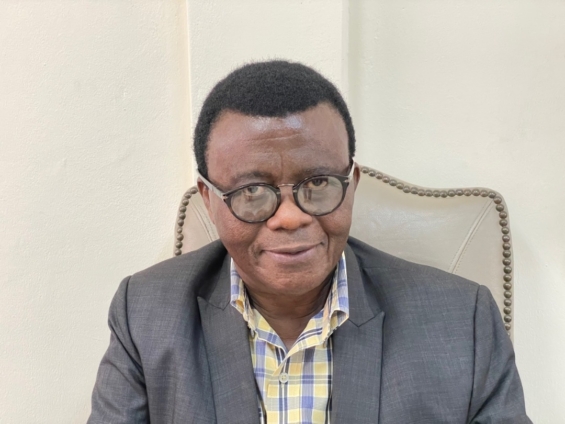
Governance expert Prof. Baffour Agyemang-Duah has raised concerns about the increasing number of awards being presented to public officials by private organisations.
He argues that the true measure of their performance should come from the electorate rather than award schemes.
Speaking on Channel One TV on Monday, June 8, Prof. Agyemang-Duah acknowledged that public servants may deserve recognition for exceptional work but cautioned against award programmes that honour large numbers of government appointees without clearly outlining the assessment standards.
He maintained that democratic accountability remains the most credible mechanism for evaluating public office holders.
“Public officials are elected or appointed to serve the public, and the best to judge the performance of such officials would be the public, not a small group of people who will sit somewhere without even sharing the criteria for these awards with the public that put them there,” he suggested.
The governance analyst further argued that elections provide the ultimate test of performance in a democracy, as citizens have the opportunity to either endorse or reject leaders through the ballot box.
In his view, attempts to replace that process with privately organised recognition schemes raise important questions about transparency, legitimacy and purpose.
He also criticised what he described as the growing proliferation of awards in Ghana, particularly those targeting political office holders, many of which, he said, lack clear justification and publicly available assessment criteria.
"Public officials are elected or appointed to serve the public, and the best to judge the performance of such officials would be the public, not a small group of people who will sit somewhere without even sharing the criteria for these awards with the public that put them there,” he said.
His remarks come amid ongoing debate over the Ghana Ministers of State Excellence Honours, which recently recognised several government officials, including Greater Accra Regional Minister Linda Obenewaa Akweley Ocloo.
The controversy has prompted intervention from the Presidency, which has directed ministers, chief executives of state institutions and other political appointees not to accept or participate in awards organised by private entities without prior approval.
In a directive signed by Secretary to the President Callistus Mahama, the Presidency cited concerns that many such organisations have unclear credentials and fail to provide transparent and verifiable standards for evaluating public officials.
Latest Stories
-
Ghana needs a law to sustain constitutional reforms – CDD-Ghana
3 hours -
COVID fumigation audit: Auditor-General has a lot of questions to answer – Akwatia MP
3 hours -
Stranded Ghanaian medical graduates in Cuba appeal to Mahama for immediate return
3 hours -
GNFS contains fire outbreak at Teshie Lekma Road near Lekma Hospital
9 hours -
Samia Nkrumah rejects the narrative that Ghanaians were happy after Nkrumah’s overthrow
10 hours -
A Mother’s pain: Tribute by Ivan Baidoo’s mother
11 hours -
‘Forgive us for staying away’ — Samia Nkrumah leads family back to Nkroful, pledges to preserve Nkrumah’s legacy
11 hours -
Ernest Nuamah scores twice as Lyon beat Rennes
11 hours -
‘My dear Ivan’ – A father’s tribute to a son tragically killed
11 hours -
GNPC Explorco advances Voltaian Basin drilling preparations with 13.5km access road
11 hours -
Cabinet approves facility manager for Borteyman Sports Complex – Kofi Adams
12 hours -
Sanitation is improving; critics may be ‘living in another world’ – Salaga South MP replies Bekwai MP
12 hours -
Government must do more to tackle sanitation crisis – Bekwai MP
12 hours -
World Cleanup Day: GFF begins sanitation education in local communities
12 hours -
EU Ambassador, IGP discuss stronger cooperation on policing and security
12 hours