

Audio By Carbonatix
Attention is not the same as progress. After a decade building productions across the continent, this is the future I believe we should be demanding.
"Africa forward." You hear it everywhere now — in the titles of summits, on the opening slides of brand decks, in the careful language of development funds and the captions of well-meaning posts. It has become one of those phrases that sounds like a destination while quietly avoiding the harder question of direction. Forward, yes. But toward what, exactly — and owned by whom?
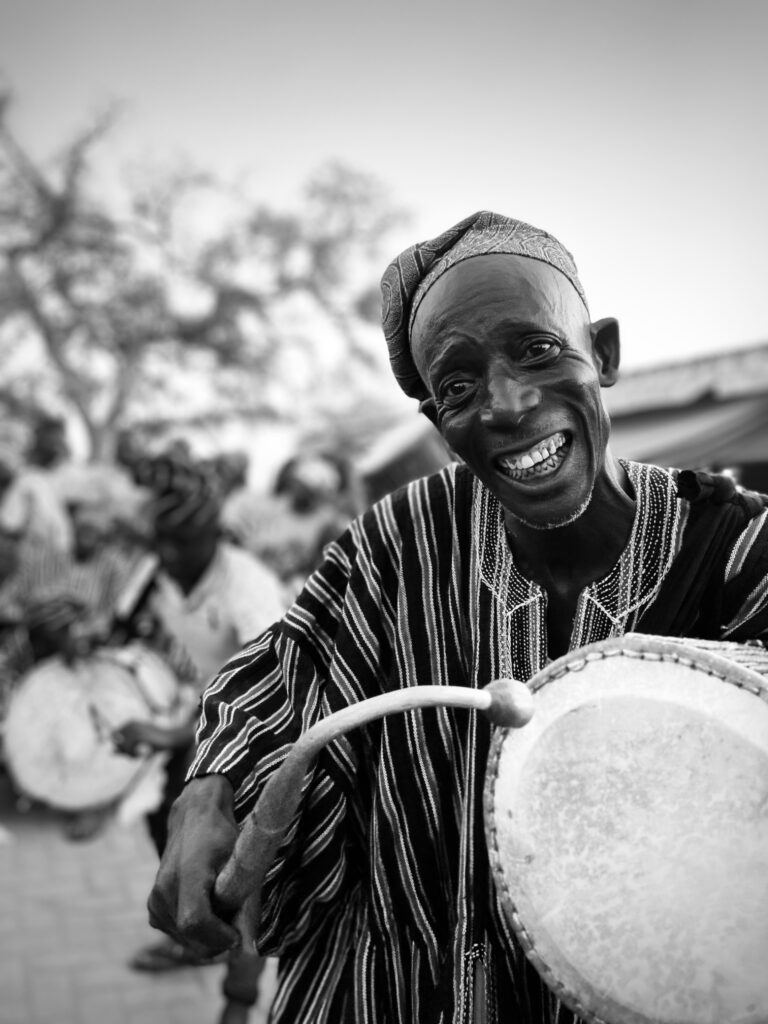
We are living through what the world likes to call Africa's moment. Our music sets the tempo for global pop. Our designers are studied and borrowed from every fashion capital. Our films travel, our writers win prizes, our cities turn up as backdrops in campaigns shot for audiences far from here. The attention is real, and after years of being condescended to or ignored, it is tempting to mistake that attention for arrival. But a moment is not a direction, and being noticed is not the same as moving forward.
Because for all the talk of partnership and progress, "forward" has too often meant the same old motion dressed in kinder language: the world arriving to take. To take the talent and credit it elsewhere. To take the sound and own the master. To take the image and keep the copyright. To shoot here, finish there, and bank the value somewhere the rest of us will never see it. That is not forward. It is extraction with better manners — and a continent cannot build a future on being the world's most generous, least compensated supplier of culture.
I have seen the choreography of it up close more times than I can count. A production arrives. Everyone is dazzled by the place, the faces, the light, the effortless excellence of the local crew. The work gets made, and it is often beautiful. Then the cameras pack up, the edit happens in another time zone, the ownership settles into a contract no one here was ever invited to read, and what remains on the ground is a day rate and a story about how Africa is having a moment. We have learned to call this a win. It is time we learned to call it what it is.
So let me say plainly what I think "Africa forward" has to mean, because I am tired of the phrase floating free of any content. Forward means ownership. It means that when something is made here, the value of it stays here — the masters, the IP, the catalogue, the long tail of money that a good idea keeps earning for decades after it is made. Forward means infrastructure: studios in Accra and Lagos and Nairobi where work can be finished and not merely started; financing that doesn't require a flight to London or Los Angeles to be taken seriously; institutions that turn a generation of individual brilliance into a sector that employs millions. And forward means our cities are understood as centres in their own right, not outposts of someone else's culture — Dakar and Johannesburg and Kigali as capitals, not locations.
It means narrative ownership, too. For most of modern history the continent has been narrated by other people, for other people — explained, diagnosed, pitied, and occasionally admired, but rarely permitted to be the author of how it is seen. Forward is the day we tell the story ourselves, and are paid and credited for telling it, and decide for ourselves which parts are worth telling. That is not vanity. The right to author your own image is the most basic form of ownership there is.
I have spent a decade building productions across this continent, and I can tell you talent was never the question. I have never once struggled to find an African who could do the job at the highest level in the world. What I have struggled to find is the scaffolding to keep them here doing it — the ownership structures, the capital, the patient belief that what we make is worth building permanence around. We have exported genius and imported dependency, and we have called the exchange a partnership.
None of this is an argument against the world. It is an argument for a different deal with it. And we started to see the outline of that deal last month at the Africa Forward summit in Nairobi. When France and Kenya co-hosted that space, the vocabulary finally shifted from patronizing cultural exchange to actual economic co-investment. Seeing the French delegation back our creative and digital industries with billions in hard structural commitments means the tools for infrastructure and IP ownership are finally on the table. But billions on paper are just a starting gun; a commitment is only as good as our willingness to enforce it.
When the partners come — and in a year when the whole planet's attention keeps turning toward us, they will keep coming — the questions we ask them have to change. Not only "what will you pay?" but "what will you build?" Not only "will you feature us?" but "will you leave capacity behind?" Not only "can we appear in your story?" but "can we own a share of the one we make together?" These are not ungrateful questions. They are the questions every economy that ever industrialised learned to ask. The distance between a place that exports a few viral moments and one that builds an industry is precisely the willingness to ask them out loud.
And forward, properly understood, is long. It is generational. The seduction of a moment is that it asks only to be enjoyed; the discipline of a future is that it asks to be built, often by people who will not live to see it finished. The infrastructure I am describing — the studios, the catalogues, the ownership, the institutions — is not the work of a single campaign or a single summit. It is the work of decades, and it requires us to stop measuring success by how much the world admires us and start measuring it by how much of what we make we actually keep.
That is the Africa I picture when I hear the phrase "Africa forward." Not an Africa waiting to be discovered, flattered by attention, grateful for its season in the sun. An Africa that owns what it makes, finishes what it starts, and sets its own price. An Africa whose culture is not borrowed from but built with, on terms it writes itself. The world has finally come to the table; that much the moment has achieved. What we decide now is whether we arrive as suppliers to be sourced from, or as authors of our own future. Forward, if the word is going to mean anything at all, can only mean the second.
Ekow Barnes is a culture writer and creative producer who has built writing and productions from Ghana and across the continent to the global stage.
Latest Stories
-
Fr Andrew Campbell honoured among 100 Africa Most Influential Persons in Rwanda
8 minutes -
Ghana to mark World Cleanup Day with National Sanitation Day on October 3
14 minutes -
Ignite Social Enterprise to partner Ghanaian watch manufacturer to boost global sales
41 minutes -
Ignite Social Enterprise does not condone fraud – Bola Ray
44 minutes -
Mr Eazi returns with new single ‘Comfort’ featuring Moliy
1 hour -
‘I don’t hire coaches, and I don’t fire coaches’ – Kofi Adams
2 hours -
NPP sets up 31 voting centres to speed up national executive elections
2 hours -
Demolition begins at La Pleasure Beach amid heavy security presence
2 hours -
Senyocue: Highlife will dominate global music in the next 20 years
3 hours -
Innovare Limited congratulates Ahantaman Community Bank PLC on ISO/IEC 27001:2022 certification urges others to follow suit
3 hours -
Today’s front pages: Friday, October 2, 2026
3 hours -
GPL 2026/27: Opoku Agyemang strike sends Kotoko third after Karela win
3 hours -
Government ‘cannot dissolve’ GFA – Sports Minister Kofi Adams
3 hours -
“Every genre we create doesn’t have to be ‘Afro’ something” – M.anifest
4 hours -
GMTF marks first anniversary with lifesaving equipment for 9 more hospitals
5 hours