

Audio By Carbonatix
A growing waste management challenge in parts of the Greater Accra Region has left hundreds of refuse transport operators stranded, raising fresh concerns about sanitation and public health.
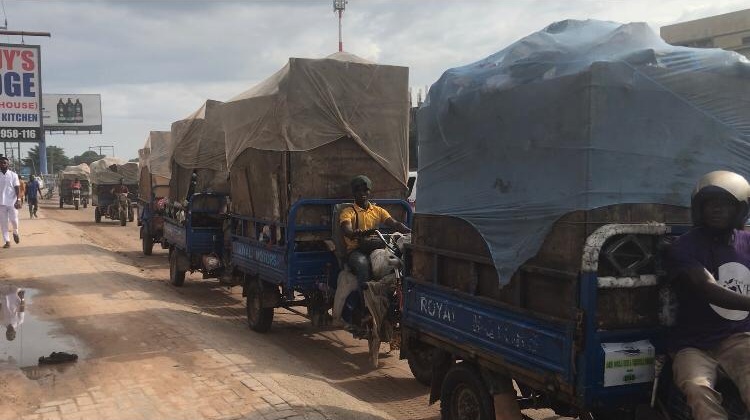
More than 500 operators of aboboyaa tricycles used for waste collection are reportedly experiencing severe delays in disposing of refuse after key dumping facilities became either inaccessible or overwhelmed by increased demand.
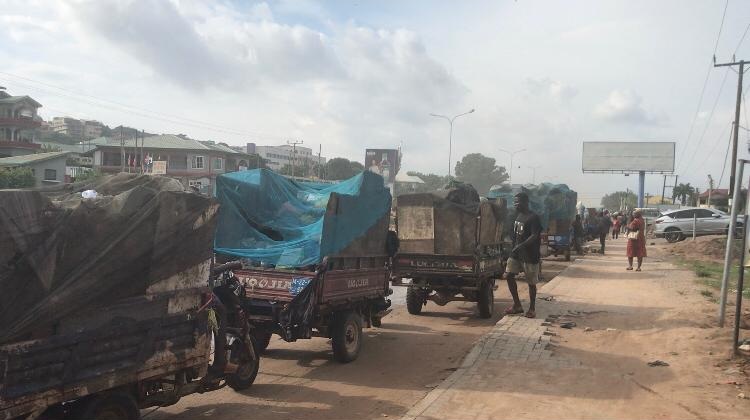
The situation has resulted in long queues of refuse-laden tricycles and trucks along sections of the busy Mallam–Kasoa Highway, creating both traffic and environmental concerns.
According to operators, the crisis stems from the closure of a major dumping facility located on the Mortuary Road, as well as flooding at the Weija-Oblogo landfill site, which has significantly reduced the number of operational waste disposal points available to collectors.
As a result, waste transporters have been compelled to redirect their loads to the McCarthy Down disposal site, which has become the primary destination for refuse from several communities across the capital and its surrounding areas.
The sudden surge in patronage has reportedly overwhelmed the facility, forcing drivers and tricycle operators to spend several hours, and in some cases an entire day, waiting for access to dispose of collected waste.
Speaking to Adom News, some of the affected operators said the situation was severely affecting their livelihoods and disrupting waste collection services in numerous communities.
One of the riders explained that refuse collectors who previously relied on multiple disposal sites are now converging on a single facility, creating unprecedented congestion.
He noted that waste is collected daily from densely populated communities such as Madina, Pokuase, Kasoa and adjoining settlements, making efficient disposal critical to maintaining sanitation standards.
The operators complained that the additional travel distances and prolonged waiting times have increased fuel consumption and operating costs, reducing the number of trips they can undertake each day.
Many expressed concern that if the situation persists, refuse could begin accumulating in homes, markets and public spaces, potentially creating health risks and worsening sanitation conditions.
The congestion has also attracted the attention of motorists and residents using the Mallam–Kasoa corridor, where lengthy queues of waste transport vehicles have become a common sight.
Residents fear that delays in waste disposal could lead to indiscriminate dumping and exacerbate environmental challenges, particularly as the rainy season heightens the risk of blocked drains and flooding.
Sanitation experts have long warned that disruptions in waste collection and disposal chains can have far-reaching consequences, including the spread of diseases, environmental pollution and deterioration in urban cleanliness.
The affected operators are therefore calling on metropolitan, municipal and district authorities, as well as waste management agencies, to urgently intervene by addressing the challenges at the affected landfill sites and identifying alternative disposal facilities to ease pressure on the remaining operational sites.
They believe swift action is necessary to restore efficiency to the waste management system and prevent a larger sanitation crisis in the Greater Accra Region.
As of Friday, authorities had not issued an official statement on the situation or indicated when normal operations at the affected dumping sites would resume.
Latest Stories
-
Alima Mahama Refund: Jinapor challenges Ablakwa’s authority, says only Auditor-General can surcharge
41 seconds -
Wontumi Conviction: 2 star witnesses placed under police protection amid death threats
15 minutes -
Srem-Sai reveals surge in death threats after Wontumi conviction
24 minutes -
GCB, Ecobank, 4 others are top tier banks in Ghana – PwC Banking Survey
32 minutes -
Today’s front pages: Tuesday, August 18, 2026
1 hour -
Banks’ sustainable success will be defined less by interest margins – PwC
2 hours -
CJ Baffor-Bonnie was part of ‘grand conspiracy to remove Torkornoo – Afenyo-Markin alleges
2 hours -
The GIPA Act: Resetting Ghana’s investment framework
3 hours -
GIPA secures investor leads at Invest Fest 2026
3 hours -
Ghana’s missing billions: What 16 years of Auditor-General reports show
3 hours -
Police disown viral flyer on AirPods, earphones use while driving
3 hours -
Stop using media to challenge judicial decisions – Thaddeus Sory to lawyers
3 hours -
The next generation expects more than degrees from universities
4 hours -
Ebenezer Dwomoh to stage fourth stand-up comedy special in Kumasi
4 hours -
Central Regional Minister urges traditional leaders to hold public officials accountable
4 hours